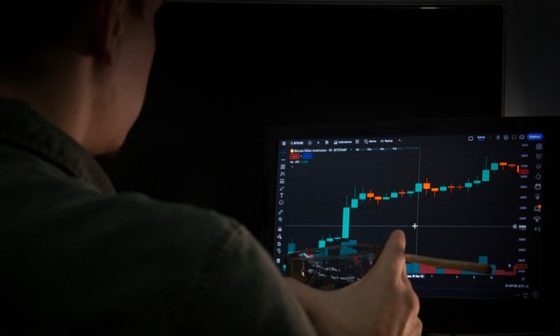
Struggling to choose between cryptocurrency vs stocks? You’re not alone. While both are popular ways to build wealth, they represent fundamentally different asset classes with unique risks and rewards.
This isn’t just a choice for the wealthy—it’s a critical decision for any modern investor.
In this definitive guide, we cut through the noise to provide a clear difference between stocks and cryptocurrency. We’ll break down the stocks vs crypto debate with performance charts, analyze their volatility, and give you the insights you need to make an informed investment decision.
What is Crypto vs. Stocks about?
In recent years, investors have shown a strong interest in cryptocurrencies. Trading volumes and token values spiked in 2017, then fell for a few years before surging again in 2020.
Bitcoin (BTC +1.17%) had a market cap of $2.29 trillion, near its most recent peak of $126,210 in October 2025, while Ethereum (ETH +2.30%) tokens were around a total of $502 billion.
coinmarketcap.com
Bitcoin price coinbase.com
The quick and dramatic shifts in cryptocurrency prices can be thrilling. On a good day, the cryptocurrency market can appear to be a successful get-rich-quick plan, particularly when it comes to smaller and more volatile altcoins.
However, the peaks are typically followed by equally abrupt collapses and corrections. Although Bitcoin and Ethereum have been around for a long time, many of the most fascinating altcoins have faded away, leaving investors unsatisfied.
Of course, many of these characteristics also apply to stocks. There are no guaranteed things in any market, and you must always take some risk while investing your hard-earned money.
As more and more investors and speculators swarm towards crypto as an asset class, many people have begun to compare them to stocks. Although there are some similarities between stocks and cryptocurrencies, they are fundamentally distinct.
Stocks: A Quick Review
The first distinction between crypto and stocks is that a share of stock indicates a percentage of business. The stock values correspond to the financial health and performance of the business.
Regardless of the changing dynamics of the stock market, the stock itself still represents a portion of a working company at a price that reflects the worth of that company.
Cryptocurrency: A Quick Review
Cryptocurrencies are digital assets that are created and kept digitally through the use of blockchain technology. The primary distinction between cryptocurrencies and stocks is their intrinsic value. Stocks’ value is determined by the success of real-world firms, but cryptos have no intrinsic value. Unlike fiat currencies like the US dollar, which are created and backed by a central bank or government, cryptocurrencies function decentralized without the scrutiny of a government, bank, or any other central authority.
Most varieties of cryptocurrency aren’t currencies in the classic sense because they’re highly volatile. Their real-world value as a way of acquiring goods and services is now limited.
A crypto’s value is determined by several factors, including the currency’s current supply and demand. In other situations, it also symbolizes trust in the underlying technology that supports the money or a specific breakthrough that a particular crypto represents.
Cryptocurrency vs. Stocks: Similarities
Nowadays, many investors just log on to a brokerage account, mobile application, digital exchange, or any other online platform to interact with financial markets. In terms of structure, order-book-based liquidity systems, and trading options, most stock and crypto platforms provide a comparable user experience. It is now simpler than ever to purchase and sell securities, and crypto exchanges have made trading in digital assets just as straightforward as investing in traditional markets.
Retail trading platforms often provide access to the same three trading order types: market, limit, and stop (or stop-loss). To refresh your memory:
- A market order represents an order to purchase or sell an asset right away at (or near) the present bid (like for a sell order) or request (for a buy order) price. A market order assures that the order will be performed but doesn’t assure the price.
- A limit order is intended to buy or sell an asset at a certain price – or better if feasible. A purchase limit order may be executed at or below the limit price, while a sell limit order can be executed at or above the limit price.
- A stop order (also known as a stop-loss order) is intended to limit excessive losses. It is a purchase or sale order placed when the price of an asset reaches a predetermined level, referred to as the stop price. A stop order transforms into a market order when the stop price is reached.
Most decentralized crypto exchanges (DEXs) presently only provide market orders, but most established centralized exchanges (CEXs) offer a full range of orders (market, limit, stop, and others).
As the crypto trading ecosystem evolves, these options are expected to extend to more crypto exchanges. Buying and selling crypto and stocks can seem very similar on platforms created for optimized user experiences, however, there are numerous major differences when dealing with these two very different asset classes.
Crypto vs. Stocks: Key Differences
Cryptocurrencies and stocks are two completely different types of investments. Here are some of the qualities that make them unique.
Concept & Underlying Technology
At their heart, stocks and cryptos are two distinct notions. Stocks are a claim on a portion of an actual organization’s assets and earnings. They are profoundly embedded in our financial system and linked to real-world, tangible commercial activities. Stock investors can make investment decisions based on company performance, cash reserves, growth potential, and other factors.
On the other hand, cryptocurrency is a considerably more recent creation. It is a digital asset or virtual currency that is encrypted for security and uses blockchain technology – a decentralized ledger system, which verifies and records transactions.
Each cryptocurrency, whether it’s a means of exchange, a store of wealth, or a utility token, performs a role inside its original ecosystem.

Market Structure & Regulation
The stock market is heavily regulated and structured. National authorities, such as the Securities and Exchange Commission (SEC) in the United States, oversee stocks and stock markets. The regulation by these organizations ensures a certain amount of transparency in publicly traded companies. Moreover, an abundance of rules applies to protect investors and help them manage their stock portfolio, with serious obligations for corporations to report accurate financial information regularly.
In contrast, cryptocurrency markets have an unregulated nature and are more decentralized. While some governments have begun to establish regulatory frameworks, others have outright prohibited cryptocurrencies. Because of the lack of standardized global regulation, cryptos may offer enhanced privacy and independence, but they also carry a greater chance of fraud or manipulation.
Stocks and Crypto Volatility
Cryptocurrencies outperform stocks in terms of volatility. Crypto values can swing significantly daily, frequently driven by investor sentiment and speculative trading instead of real business performance.
Stocks, in general, are less volatile and are linked to business results. While they may shift with business cycles, they don’t experience the same magnitude of price volatility as cryptocurrencies. However, stocks aren’t immune to risk; market downturns, shifts in industry trends, or poor management can all have an impact on a stock’s price.
Market Access
Stock trading is often constrained by fixed business hours for the great majority of investors. For instance, stock exchanges in North America typically operate between 9:30 a.m. and 4:30 p.m. Eastern Standard Time. Conversely, a crypto market never closes, even on holidays. This allows anyone to take fresh positions and enter or exit the market whenever they want, irrespective of where they live.
Crypto VS. Stocks: Liquidity
Smaller markets also have an impact on your capacity to trade in and out of your investments, whether stocks or cryptocurrencies. The ability to trade whenever one wants is referred to as liquidity.
Because there are so many active traders in the stock market, investors often consider stocks to be extremely liquid.
In contrast, cryptocurrency varies in terms of liquidity. Bitcoin is more liquid than most other cryptocurrencies due to its larger trading volume. That means more buyers and sellers are looking to trade if you want to get in or out of that specific cryptocurrency.
Slippage can affect both stock and crypto investors, and it occurs when you have to sell a substantial amount of an asset at a time of low liquidity. However, due to the reduced levels of liquidity in the crypto markets, the risk is larger for crypto owners.
Crypto VS. Stocks: Exchanges
Stock exchanges have been around in some manner or another for over three centuries, most notably on Wall Street in New York City. Conversely, cryptocurrency exchanges are relatively new, with important platforms like Binance and Coinbase launching only in the previous decade.
As of October 2025, Binance reported a daily trading volume of around $96 billion. At the same time, the Nasdaq, which is only a minor part of the global stock market, recorded roughly four times the trading volume of that amount.
According to some estimates, the Nasdaq accounts for only 21% of the total stock market.
Trading Crypto vs. Stocks
As mentioned earlier, the basic experience is not very different when you buy cryptocurrency or stock. You set up an account with a crypto brokerage, deposit funds into it, choose a cryptocurrency, and make an order with the brokerage.
Following a brief break, you will have a few cryptocurrency tokens (or a portion of a token) within your crypto wallet.
The gears may move entirely differently behind the scenes, but the crypto-buying technique should feel similar if you’ve ever purchased a stock. However, there are some differences:
- Crypto brokers are likely to impose trading fees for each transaction, a trend that most stock brokers abandoned in 2018 and 2019. For instance, the prominent Coinbase (COIN -5.87%) platform levies a 0.6% transaction fee on crypto transactions of less than $10,000.
- Stock transactions can be completed in a matter of seconds, with algorithmic trading algorithms closing a deal in a matter of microseconds. Crypto trades are lengthier because each new transaction has to be approved and validated by the blockchain network of the digital currency – a process that normally takes approximately 15 seconds with Ethereum trades and several minutes for Bitcoin trades.
- Unless you demand a printed stock certificate, your stock broker is going to act as the custodian of your stock-based interests. That isn’t always true with cryptocurrencies, as some investors demand to withdraw their digital coins from the centrally administered brokerage platform in exchange for a cold wallet in their possession.
Why Should You Trade Cryptocurrencies?
- Trading Hours: A crypto market stays open 24 hours a day, seven days a week, enabling traders to perform trade at any time without bank or traditional market constraints.
- High return potential: Because of its volatility and novelty, crypto can offer significant gains on investments that usually outperform a more established asset class. However, it is noteworthy that greater returns imply a higher chance of loss.
- Diversification and innovation: Trading cryptocurrencies provides exposure to the most recent technology advancements as well as a tool to diversify a portfolio.
Why Should You Trade Stocks?
- Dividends: many stocks pay dividends to their shareholders, offering a consistent stream of income along with any possible capital gains.
- Regulatory supervision: Stock markets are controlled by government authorities, offering investors a degree of protection that is not seen in the largely unregulated crypto world.
- Established market: Unlike many cryptocurrencies, which are essentially speculative investments, stocks signify ownership in established companies with real assets and revenues.
Conclusion
Stocks and cryptos couldn’t be more dissimilar. Stocks provide investors with a tangible piece of fractional ownership in a firm, whereas crypto-assets do not have an intrinsic value. They are digital currencies that are entirely decentralized, which means they are not regulated by a central body like the Securities and Exchange Commission, one of many bodies that assist in managing the stock market and maintaining its safety for investors.
That being said, cryptocurrencies are new and interesting investments that provide numerous opportunities that regular stocks may not.
To some extent, especially these days, investors can gain from investing in both stocks and cryptocurrency. Stocks currently appear to be a relatively stable long-term play as compared to crypto. Investing in cryptocurrency will be required to participate in the rising global digital markets, such as Web 3.0.
FAQ: Crypto vs Stocks
Q: Cryptocurrency or stocks: which is the better investment for your portfolio?
A: As crypto and stocks continue to capture headlines, investors are faced with a complex choice. Despite both being tradable assets, the difference between trading stocks and crypto is vast—from regulation and volatility to potential returns.
Q: What is the difference between stocks and cryptocurrency?
A: Stocks represent ownership shares in publicly traded companies, giving you partial ownership and often dividend rights. Cryptocurrencies are decentralized digital assets that operate on blockchain technology, functioning as currency, store of value, or utility tokens.
Key differences include:
- Regulation: Stocks are heavily regulated by government agencies; crypto operates in a largely unregulated space
- Underlying Value: Stocks derive value from company performance and assets; crypto value comes from adoption, utility, and market sentiment
- Trading Hours: Stock markets have set hours; crypto markets operate 24/7
- Ownership: Stocks give you company ownership; crypto gives you digital tokens
Q: Is Bitcoin a stock?
A: No, Bitcoin is not a stock. Bitcoin is a cryptocurrency—a decentralized digital currency that operates on blockchain technology without central authority.
Unlike stocks, Bitcoin doesn’t represent ownership in a company, doesn’t pay dividends, and isn’t regulated by traditional financial authorities. However, Bitcoin can now be accessed through stock-like instruments like Bitcoin ETFs, which track Bitcoin’s price while trading on traditional exchanges.
Q: Are stocks and crypto the same?
A: No, they are fundamentally different asset classes. While both can be traded and represent investment vehicles, stocks are regulated financial instruments representing company ownership, while cryptocurrencies are digital assets on decentralized networks.
They differ in:
- Regulatory oversight and protection
- Market hours and liquidity
- Valuation methods
- Risk profiles and volatility
- Historical performance data
Q: What’s the difference between trading stocks and crypto?
A:
- Trading Hours: Stocks trade during market hours (9:30 AM-4 PM ET); crypto trades 24/7
- Leverage: Crypto often offers higher leverage (up to 100x) vs. stocks (typically 2-4x)
- Volatility: Crypto is significantly more volatile than most stocks
- Fees: Crypto trading fees are generally lower than traditional broker commissions
- Settlement: Stock trades settle in 2 days (T+2); crypto settlements are nearly instant
- Short Selling: More complex in crypto compared to established stock market mechanisms
Q: Which is more volatile: crypto trading vs stock trading?
A: Cryptocurrency is dramatically more volatile than stocks. Major cryptocurrencies like Bitcoin regularly experience daily price swings of 5-10%, while most stable stocks might see 1-2% daily moves.
The crypto market’s 24/7 operation, lower market capitalization, and sensitivity to news/sentiment create this heightened volatility. For comparison:
- S&P 500: Average annual volatility of ~15-20%
- Bitcoin: Average annual volatility of ~70-80%
- Altcoins: Often see volatility exceeding 100% annually
Q: Can you trade cryptocurrency on stock exchanges?
A: Yes, indirectly through several instruments:
- Crypto ETFs: Funds like Bitcoin ETFs (IBIT, FBTC) and Ethereum ETFs that trade like stocks
- Crypto Futures: Derivatives contracts on regulated exchanges like CME
- Stock-based Exposure: Companies like Coinbase (COIN) and MicroStrategy (MSTR) that provide crypto exposure
- Crypto Mining Stocks: Publicly traded mining companies (RIOT, MARA)
However, you cannot directly trade Bitcoin or Ethereum on traditional stock exchanges like NASDAQ or NYSE—these require cryptocurrency exchanges.
Q: Is day trading crypto different from stocks?
A: Yes, significant differences include:
- Hours: Crypto allows 24/7 day trading; stocks are limited to market hours
- Patterns: Crypto lacks traditional technical patterns seen in stocks
- Liquidity: Varies greatly between crypto projects vs. more consistent stock liquidity
- Regulations: Stock day traders face PDT rules ($25k minimum); crypto has no such restrictions
- Tools: Advanced trading tools and data are more established for stocks
- Overnight Risk: Crypto positions can gap significantly overnight since markets never close
Q: Should I invest in stocks or cryptocurrency for better returns?
A: Historically, both have delivered strong returns but with different risk profiles:
- Stocks: Offer more predictable long-term growth (S&P 500 averages ~7-10% annually)
- Cryptocurrency: Has delivered higher returns but with extreme volatility (Bitcoin returned ~150% in 2023)
Consider your:
- Risk tolerance (can you handle 50%+ drawdowns?)
- Time horizon (long-term favors both, but crypto may be more suitable for longer timelines)
- Diversification needs (many experts suggest both as part of a balanced portfolio)
- Investment knowledge (crypto requires understanding blockchain technology)
Most financial advisors recommend stocks as a core holding with crypto as a smaller, speculative allocation (typically 1-5% of portfolio).
Our Historical Data and Backtest Library
To make truly informed decisions in the volatile crypto market, you need to move beyond speculation and leverage historical data.
A powerful first step is to analyze the complete historical price charts for major cryptocurrencies like Bitcoin, Solana, and Ethereum, allowing you to identify patterns and key volatility periods.
Once you have a hypothesis, the next critical phase is to explore our comprehensive library of pre-built trading strategy backtests, including popular indicators like the Exponential Moving Average (EMA).
This process allows you to validate trading ideas against historical data before risking capital. Don’t just guess—backtest your strategy.