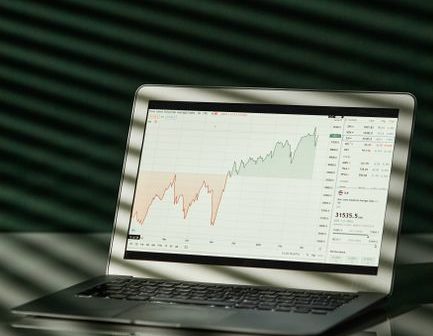
The Legacy of the Turtle Traders: How Michael Covel Documented a Revolution explores the groundbreaking experiment by Richard Dennis and William Eckhardt, proving that elite trading skills could be taught to anyone. This historical narrative is a vital component of The Definitive Guide to Trend Following: Mastering Michael Covel’s Investment Philosophy. By chronicling how a diverse group of novices outperformed seasoned professionals, Covel dismantled the myth of the “natural-born trader.” His documentation highlights that success stems from a systematic approach rather than intuition. This revolution paved the way for modern Quantitative Backtesting of Trend Following Systems, illustrating that discipline and rules are the ultimate market edge.
Validate your strategy with instant backtesting
Backtest LibraryThe Core Principles of the Turtle Revolution
The Turtle Traders succeeded because they followed a rigid, rules-based system that removed emotional bias. Michael Covel’s documentation of these rules emphasizes that the “what” you trade is less important than the “how” you trade. Central to this approach was the use of specific entry and exit signals, often based on Donchian Channels.
To understand the mechanics, traders often start with Essential Technical Indicators for Building a Trend Following Model – Michael Covel. The legacy of the Turtles is built on these foundational pillars:
- Mechanical Execution: Decisions are based on price action, not news or forecasts.
- Volatility-Based Position Sizing: Using “N” (the Average True Range) to adjust position sizes.
- Unwavering Discipline: Sticking to the system during inevitable periods of drawdown.
Actionable Insights: Implementing the Turtle Legacy Today
While markets have evolved, the core logic documented by Covel remains effective. Modern traders can apply these insights by focusing on robust Risk Management and Position Sizing: The Core of Trend Following Success – Michael Covel.
| Concept | Original Turtle Rule | Modern Application |
|---|---|---|
| Entry | 20-day or 55-day breakout | Custom timeframe breakouts or moving average crosses |
| Position Sizing | 1% risk per “Unit” of ATR | Fixed fractional risk adjusted for portfolio volatility |
| Exit | 10-day or 20-day low/high | Trailing stops or ATR-based exit levels |
Case Studies: The Success of the Turtle Progeny
Michael Covel’s work didn’t just document a single experiment; it followed the long-term careers of the participants, proving the strategy’s longevity.
- Jerry Parker: Perhaps the most famous Turtle, Parker founded Chesapeake Capital. He maintained a strict trend-following discipline for decades, proving that the system scales effectively even in Trend Following in Futures Markets: Diversification Strategies from Covel’s Playbook.
- Liz Cheval: She demonstrated that the Turtle rules worked across diverse market environments, consistently managing risk during high-volatility periods. Her success underscored the importance of The Role of Discipline: Trading Psychology in Michael Covel’s Trend Following.
- Modern Crypto Adaptations: Today’s traders use the same breakout logic for Applying Trend Following to Cryptocurrency Markets: A Modern Approach – Michael Covel, capturing massive moves in Bitcoin and Ethereum.
The Evolution of Systematic Trading
The legacy of the Turtles is the transition from “gut feeling” to “systematic verification.” Covel’s documentation provides a blueprint for Building a Custom Trend Following Indicator: From Theory to Code. It teaches us that while markets change, human behavior—which creates trends—does not. When comparing Trend Following vs. Mean Reversion: Which Strategy Wins in Volatile Markets?, the Turtle legacy suggests that following the trend provides a more consistent edge during major market shifts.
Conclusion
The Legacy of the Turtle Traders: How Michael Covel Documented a Revolution serves as the ultimate proof that a disciplined, systematic approach to the markets can yield extraordinary results. By focusing on price action, volatility-adjusted position sizing, and rigid risk controls, the Turtles changed the landscape of investing forever. These lessons are not just historical footnotes but active strategies used by the world’s most successful hedge funds. To dive deeper into these mechanics and learn how to build your own system, revisit The Definitive Guide to Trend Following: Mastering Michael Covel’s Investment Philosophy.
Frequently Asked Questions
What was the main goal of the Turtle Trader experiment?
The experiment aimed to settle a bet between Richard Dennis and William Eckhardt regarding whether great traders were born or made. It proved that a rules-based trend following system could be taught to novices who then achieved market-beating returns.
How does Michael Covel’s book differ from other trading literature?
In A Deep Dive into Michael Covel’s ‘Trend Following’ Book: Key Lessons for Traders, we see that Covel focuses on evidence and historical performance rather than theoretical predictions, making it a practical guide for systematic investors.
Are the original Turtle rules still profitable today?
While the specific 20-day breakout might be more crowded now, the core principles of trend following and volatility-adjusted risk remain highly profitable, especially when applied across a diversified basket of global markets.
What role did psychology play in the legacy of the Turtles?
The experiment proved that the hardest part of trading isn’t the rules, but the discipline to follow them during losing streaks. This is a central theme in The Role of Discipline: Trading Psychology in Michael Covel’s Trend Following.
How did the Turtles manage their risk?
They used a sophisticated method of position sizing based on the Average True Range (ATR) of a market. This ensured that every position had the same dollar-risk volatility, regardless of whether the market was gold, oil, or stocks.
Can the Turtle system be applied to modern digital assets?
Yes, the trend-following logic is highly effective in volatile environments. Many traders are currently Applying Trend Following to Cryptocurrency Markets to capture the significant price swings characteristic of the crypto space.
How do I start building a system like the Turtles?
Begin by studying Essential Technical Indicators and then move toward Quantitative Backtesting to verify your rules before committing real capital.