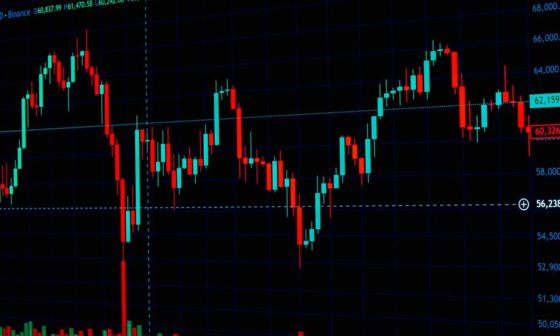
Evaluating Trend Following vs. Mean Reversion: Which Strategy Wins in Volatile Markets? – Michael Covel requires an understanding of how price behaves under stress. While mean reversion strategies rely on the assumption that prices will return to a historical average, Michael Covel demonstrates that in highly volatile or “black swan” environments, prices often move much further than expected. This distinction is central to The Definitive Guide to Trend Following: Mastering Michael Covel’s Investment Philosophy. In volatile markets, mean reversion can lead to significant losses as traders “catch falling knives,” whereas trend followers profit by capturing the sustained momentum of the market’s response to fear or greed.
Master Relative Strength Index signals for profitable trading
Analyze Relative Strength IndexThe Fundamental Difference: Stability vs. Chaos
The debate between trend following and mean reversion often comes down to one’s view of market efficiency. Mean reversion traders believe that prices are anchored to a “fair value.” When volatility spikes, they bet on a return to the norm. However, Michael Covel argues that in volatile markets, the “norm” no longer exists.
Trend following does not predict where a price should be; it reacts to where the price is actually going. By utilizing Essential Technical Indicators for Building a Trend Following Model – Michael Covel, such as moving average crossovers or breakout systems, traders can stay on the right side of a massive market shift.
Why Trend Following Wins in High Volatility
Volatile markets are characterized by “fat tails”—extreme price movements that occur more frequently than standard statistical models suggest. Mean reversion strategies often suffer during these periods because they lack an exit strategy for a trend that refuses to reverse.
- Crisis Alpha: Trend following provides “crisis alpha,” performing best when traditional markets are crashing. This is a core theme in A Deep Dive into Michael Covel’s ‘Trend Following’ Book: Key Lessons for Traders.
- Uncapped Gains: Unlike mean reversion, which has a limited profit target (the mean), trend following allows for unlimited upside as long as the volatility pushes the price in one direction.
- Adaptive Nature: Whether applying Trend Following to Cryptocurrency Markets or futures, the system adapts to the current price range rather than a historical one.
Case Study 1: The 2008 Financial Crisis
During the 2008 collapse, mean reversion traders repeatedly tried to “buy the dip” in banking stocks and indices, assuming the market was oversold. However, the volatility was not a temporary fluctuation but a structural shift. Trend followers, as documented in The Legacy of the Turtle Traders, moved to short positions early in the decline. While the market saw record volatility, trend following systems stayed short, capturing one of the most profitable periods in trading history.
Case Study 2: The 2022 Inflationary Surge
In 2022, as inflation surged, bond prices entered a historic downtrend and commodities skyrocketed. Mean reversion traders expecting a return to the low-inflation “normal” of the previous decade faced mounting losses. In contrast, those utilizing Trend Following in Futures Markets were able to ride the long trends in crude oil and short trends in Treasury bonds. This period highlighted that volatility is often the fuel for new, long-term trends rather than just “noise” to be faded.
Actionable Insights for Navigating Volatility
To succeed with trend following over mean reversion in volatile periods, traders must focus on three specific areas:
- Strict Risk Management: Because volatility increases the “noise,” you must use Risk Management and Position Sizing to ensure a single whipsaw doesn’t wipe out your capital.
- Diversification: Volatility often hits sectors differently. A robust system should be tested through Quantitative Backtesting across various asset classes.
- Emotional Discipline: High volatility triggers fear. As discussed in The Role of Discipline: Trading Psychology in Michael Covel’s Trend Following, the winner is the trader who sticks to the system when the headlines are screaming.
The Role of Custom Tools
While standard indicators work, many professionals find success by Building a Custom Trend Following Indicator that accounts for ATR (Average True Range) to adjust stops during high-volatility regimes. This prevents being stopped out prematurely while still protecting against the eventual trend reversal.
Conclusion
In the battle of Trend Following vs. Mean Reversion: Which Strategy Wins in Volatile Markets? – Michael Covel, the evidence heavily favors trend following for its ability to capture “fat tail” events. While mean reversion works in range-bound, quiet markets, it often fails exactly when the biggest opportunities—and risks—arise. By embracing the philosophy outlined in The Definitive Guide to Trend Following: Mastering Michael Covel’s Investment Philosophy, traders can turn market chaos into a structured path toward absolute returns.
Frequently Asked Questions
| Question | Answer |
| Why does Michael Covel argue against mean reversion in volatile markets? | Covel argues that mean reversion assumes a “normal” price level that often disappears during crises, leading traders to hold losing positions as prices continue to trend aggressively away from the mean. |
| Is trend following always more profitable than mean reversion? | Not always; mean reversion excels in sideways, low-volatility markets, but trend following generally outperforms during periods of high volatility and major economic shifts. |
| How does risk management differ between the two? | Trend following uses wider stops and smaller positions to survive volatility, whereas mean reversion often requires tight stops because the strategy fails if the “snapback” doesn’t occur quickly. |
| Can a trader combine both strategies? | While possible, it is difficult because they require different psychological mindsets; Covel generally advocates for pure trend following to maintain the discipline required for long-term success. |
| What is “Crisis Alpha” in the context of Covel’s philosophy? | It refers to the profits generated by trend followers during market crashes, which provide a hedge for a traditional portfolio that mean reversion strategies typically cannot offer. |
| How do Turtle Traders handle volatile trend reversals? | Turtle Traders used systematic exit rules, such as a 10-day or 20-day breakout in the opposite direction, to exit positions once the trend had clearly ended. |
| Does trend following work in the volatile crypto market? | Yes, the high volatility of crypto often leads to massive, sustained trends, making it an ideal environment for Covel’s trend following principles. |