
Understanding the Essential Technical Indicators for Building a Trend Following Model – Michael Covel is the first step toward achieving systematic trading success. Unlike retail strategies that rely on “gut feel,” Covel’s methodology utilizes objective price-based signals to identify and ride market momentum. By stripping away fundamental distractions, these indicators allow traders to remain agnostic to the “why” behind a move and focus entirely on the “what.” This disciplined approach is a core pillar of The Definitive Guide to Trend Following: Mastering Michael Covel’s Investment Philosophy, providing a robust framework for navigating diverse market conditions with mathematical precision and helping traders filter out market noise effectively.
Validate your strategy with instant backtesting
Backtest LibraryCore Technical Indicators in Covel’s Methodology
Michael Covel’s philosophy centers on the idea that price movement is the most reliable data point. To build a functional model, certain indicators are indispensable. These tools do not predict the future; rather, they react to current price reality.
- Donchian Channels: Created by Richard Donchian, these are used to identify breakouts. A typical model might use a 20-day high for entry and a 10-day low for exit. This was a foundational element in The Legacy of the Turtle Traders: How Michael Covel Documented a Revolution.
- Moving Averages (SMA and EMA): These smooth out price data to identify the direction of the trend. The 50-day and 200-day simple moving averages are classic benchmarks for identifying long-term shifts in momentum.
- Average True Range (ATR): While not a direction indicator, ATR is vital for Risk Management and Position Sizing: The Core of Trend Following Success – Michael Covel. It measures volatility, allowing traders to set stops that are proportional to market “noise.”
Practical Advice for Model Construction
When building your model, simplicity is paramount. Over-complicating a system with too many indicators often leads to “analysis paralysis” or curve-fitting. Successful traders often compare Trend Following vs. Mean Reversion to determine which logic suits their risk profile, but Covel remains steadfast that trend following wins by capturing the “fat tails” of market distributions.
To ensure your model is robust, you must engage in Quantitative Backtesting of Trend Following Systems: Validating Covel’s Principles. This process confirms that your chosen indicators would have performed across different historical cycles, including the inflationary periods of the 1970s or the tech boom of the 1990s.
Specific Case Studies and Examples
To understand the application of these indicators, let’s look at two distinct scenarios:
| Asset Class | Indicator Setup | Outcome/Insight |
|---|---|---|
| Commodities (Gold) | 100-day Moving Average Crossover | In sustained bull markets, this indicator keeps the trader in the position for months, ignoring minor retracements. |
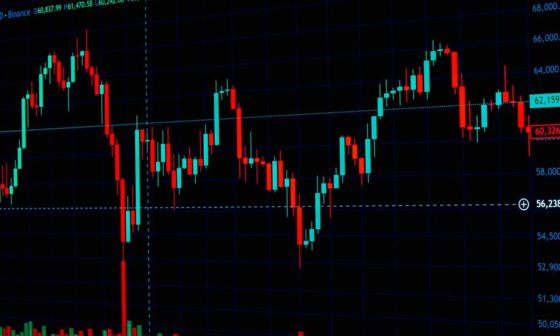
| Cryptocurrency (Bitcoin) | 55-day Donchian Breakout | As discussed in Applying Trend Following to Cryptocurrency Markets, breakouts often lead to exponential moves that compensate for multiple small losses. |
A third example can be found in A Deep Dive into Michael Covel’s ‘Trend Following’ Book, where he details how Diversified Systematic Trend Followers used breakout signals to navigate the 2008 financial crisis, profiting from the downward trend in equities while others waited for a mean reversion that didn’t come. You can explore these lessons further in A Deep Dive into Michael Covel’s ‘Trend Following’ Book: Key Lessons for Traders.
Advanced Implementation: Custom Indicators and Psychology
For those looking to move beyond off-the-shelf tools, Building a Custom Trend Following Indicator: From Theory to Code offers a path toward personalization. However, even the best code fails without the correct mindset. Covel frequently highlights The Role of Discipline: Trading Psychology in Michael Covel’s Trend Following, noting that the indicator only provides the signal; the trader must provide the courage to execute it.
Finally, diversification is the only “free lunch” in trading. By applying these indicators to various sectors, such as in Trend Following in Futures Markets: Diversification Strategies from Covel’s Playbook, you reduce the impact of a false signal in any single market.
Conclusion
Mastering the Essential Technical Indicators for Building a Trend Following Model – Michael Covel involves more than just picking a moving average; it requires a holistic understanding of price action, volatility-based risk management, and the discipline to follow the system. By integrating these tools with backtesting and a diversified approach, you create a resilient strategy capable of weathering any market storm. For a complete understanding of how these indicators fit into the broader Covel philosophy, revisit The Definitive Guide to Trend Following: Mastering Michael Covel’s Investment Philosophy.
Frequently Asked Questions
What is the most important technical indicator in Covel’s trend following?
Price itself is the primary indicator. However, among mathematical tools, the Donchian Channel is often considered the most “pure” as it directly measures breakouts to new highs or lows without lagging as much as some moving averages.
How do these indicators handle “choppy” or sideways markets?
Trend following indicators are known to produce “whipsaws” (small losses) during sideways markets. This is why risk management and ATR-based stops are crucial to preserve capital until a major trend emerges.
Is there a difference between using SMA and EMA for building a model?
The Exponential Moving Average (EMA) places more weight on recent prices, reacting faster to changes. Covel’s philosophy generally permits either, as the specific parameter (e.g., 50 vs 100 days) is less important than the consistency of following the signal.
Can these indicators be applied to Cryptocurrency?
Yes, as price-based tools, they are highly effective in volatile markets like Crypto. Trend following models often capture the massive parabolic moves characteristic of digital assets while exiting during major crashes.
How many indicators should a standard Covel-style model include?
Ideally, very few. A robust model usually consists of one entry signal (like a breakout), one exit signal, and a volatility indicator (like ATR) for position sizing to avoid over-complication.
Why does Michael Covel ignore fundamental indicators like P/E ratios?
Covel argues that all known fundamental information is already baked into the price. By the time a fundamental change is obvious, the trend has often already begun, making technical indicators more timely for execution.