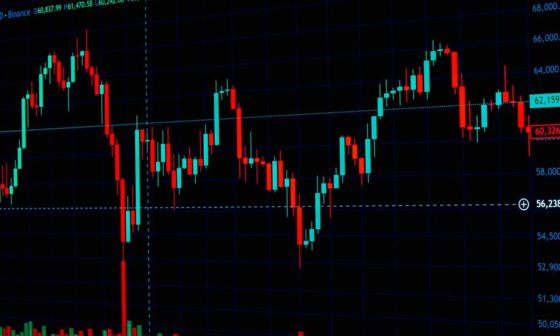
Implementing Trend Following in Futures Markets: Diversification Strategies from Covel’s Playbook requires a shift from traditional stock-picking to a global, multi-asset perspective. By applying systematic rules across dozens of liquid futures markets, traders can capture massive price swings in commodities, currencies, and fixed income that are often uncorrelated with equity markets. This methodology, which serves as a critical component of The Definitive Guide to Trend Following: Mastering Michael Covel’s Investment Philosophy, relies on the premise that markets are inherently unpredictable. Instead of predicting “winners,” Covel advocates for casting a wide net, ensuring that when a significant trend emerges anywhere in the global macro environment, the trend follower is already positioned to profit.
Master Relative Strength Index signals for profitable trading
Analyze Relative Strength IndexThe Architecture of a Diversified Futures Portfolio
The core of Covel’s playbook is the rejection of “home bias.” While most investors focus on their local stock market, trend followers look for price movement wherever it occurs. In a futures-based approach, diversification is achieved by trading across four primary sectors:
- Commodities: Energies (Crude Oil, Natural Gas), Metals (Gold, Copper), and Agriculturals (Corn, Soybeans, Coffee).
- Fixed Income: Short-term interest rates and long-term government bonds (e.g., 10-Year Treasuries, Euro Bunds).
- Currencies: Major pairs (EUR/USD, USD/JPY) and liquid crosses.
- Equities: Broad market indices (S&P 500, DAX, Nikkei 225).
By utilizing Risk Management and Position Sizing: The Core of Trend Following Success – Michael Covel, traders can normalize the risk across these diverse assets. This means a position in highly volatile Crude Oil will have a smaller contract size than a position in relatively stable Treasury Notes, ensuring that no single market can ruin the portfolio.
Practical Advice: Executing the Diversification Strategy
To succeed with Covel’s strategies, traders must move beyond the “why” and focus on the “how.” The following table illustrates a typical sector allocation for a diversified futures trend follower:
| Sector | Sample Markets | Strategic Benefit |
|---|---|---|
| Metals | Gold, Silver, Palladium | Inflation hedge and “safe haven” trends. |
| Energies | WTI Crude, Heating Oil | Captures geopolitical shocks and supply/demand cycles. |
| Grains/Softs | Corn, Wheat, Sugar, Cocoa | Uncorrelated with financial markets and weather-dependent. |
| Financials | Eurodollars, 30-Year Bonds | Profits from central bank interest rate cycles. |
Integrating Essential Technical Indicators for Building a Trend Following Model – Michael Covel allows traders to identify the breakout points across these varied sectors systematically.
Case Studies: Diversification in Action
Case Study 1: The 2008 Financial Crisis
During the 2008 equity crash, most traditional portfolios suffered heavy losses. However, trend followers using the Covel playbook thrived. While stocks were plummeting, massive trends emerged in the U.S. Dollar and Treasury Bonds. Because the strategy was diversified into futures, traders were able to short-sell equity indices and go long on “flight-to-safety” assets simultaneously. This period highlighted why Trend Following vs. Mean Reversion: Which Strategy Wins in Volatile Markets? – Michael Covel often favors the former during extreme volatility.
Case Study 2: The 1970s Commodity Super-Cycle
The 1970s provided a legendary environment for the The Legacy of the Turtle Traders: How Michael Covel Documented a Revolution. As inflation soared, stock markets remained stagnant. However, futures markets in sugar, gold, and oil experienced parabolic moves. A diversified trend follower during this era would have captured triple-digit returns by ignoring the “broken” stock market and following the price action in commodities.
Systematic Implementation and Backtesting
Before risking capital, it is vital to perform Quantitative Backtesting of Trend Following Systems: Validating Covel’s Principles. Backtesting over 20-30 years across 50+ futures markets demonstrates that the strategy’s power lies in the outliers—the 10% to 20% of trades that generate the bulk of the profits.
To refine these entries, many traders look toward Building a Custom Trend Following Indicator: From Theory to Code, ensuring their signals are robust across different market conditions. Even modern markets, such as digital assets, can be integrated using Applying Trend Following to Cryptocurrency Markets: A Modern Approach – Michael Covel.
Conclusion
Mastering Trend Following in Futures Markets: Diversification Strategies from Covel’s Playbook is about more than just finding a good trade; it is about building a robust “convoy” of uncorrelated positions. By embracing the principles found in A Deep Dive into Michael Covel’s ‘Trend Following’ Book: Key Lessons for Traders, investors can move away from the stress of market prediction and toward the discipline of systematic execution. Success requires a combination of broad market access and the emotional fortitude described in The Role of Discipline: Trading Psychology in Michael Covel’s Trend Following. For those seeking a comprehensive understanding of this edge, return to The Definitive Guide to Trend Following: Mastering Michael Covel’s Investment Philosophy to see how these futures strategies fit into the larger systematic framework.
Frequently Asked Questions
1. Why are futures preferred over stocks for trend following?
Futures offer superior liquidity, lower transaction costs, and the ability to easily go “short” as well as “long.” Additionally, they provide access to non-equity markets like commodities and currencies, which are essential for true diversification.
2. How many different futures markets should I trade?
According to Covel’s playbook, a robust trend following system should ideally trade at least 30 to 50 markets. This high level of diversification increases the probability of catching a “black swan” trend in at least one asset class.
3. Does diversification in futures eliminate the risk of loss?
No, diversification does not eliminate risk, but it manages it. It prevents a single market failure from destroying your account, though it does not prevent drawdowns during periods when no clear trends are present in any market.
4. How does “correlation” affect a trend following portfolio?
The goal is to trade markets with low correlation. If you trade 10 different types of crude oil, you aren’t diversified; if you trade Gold, the Japanese Yen, and Euro Bunds, you are trading assets driven by different fundamental forces.
5. Can a small retail trader apply these diversification strategies?
While some futures contracts have high margin requirements, the introduction of “Micro” futures contracts has made it significantly easier for smaller traders to build a diversified portfolio across multiple sectors.
6. Is it necessary to understand the fundamentals of every market traded?
No. Covel’s philosophy is purely price-based. The trend follower believes that all fundamental information is already reflected in the price, so they focus on technical signals rather than news or economic reports.
7. How does this strategy relate to the Michael Covel investment philosophy?
This strategy is the practical application of Covel’s philosophy. It embodies the “rules-based” and “agnostic” approach to markets, prioritizing risk management and the capture of large trends over market expertise or forecasting.