In the world of systematic trading, Risk Management and Position Sizing: The Core of Trend Following Success – Michael Covel represents the thin line between legendary gains and total ruin. While novices often obsess over entry signals, Covel argues that how much you bet is far more critical than when you buy. Mastering these concepts is essential for anyone following The Definitive Guide to Trend Following: Mastering Michael Covel’s Investment Philosophy. By mathematically determining trade size based on volatility, traders can survive the inevitable drawdowns that accompany big trends. This approach transforms trading from a guessing game into a rigorous process of capital preservation and exponential growth.
Validate your strategy with instant backtesting
Backtest LibraryThe Mathematical Foundation of Risk Management
According to Michael Covel, risk management is not about avoiding losses, but about managing them so they never result in a “catastrophic exit.” In trend following, you expect a low win rate (often below 40%), which makes position sizing the primary engine of your survival. The goal is to keep individual losses small enough that a long string of “false starts” does not deplete your capital before the next monster trend arrives.
A fundamental pillar here is the Risk of Ruin. If a trader risks 10% of their account per trade, a series of ten losses results in total wipeout. However, by limiting risk to 1% or 2% per trade, the same trader can endure dozens of losses while remaining in the game. This requires a deep understanding of The Role of Discipline: Trading Psychology in Michael Covel’s Trend Following, as sticking to small sizes during a drawdown is psychologically taxing.
| Risk Per Trade | Losses to 50% Drawdown | Recovery Needed |
|---|---|---|
| 1% | 69 consecutive losses | 100% gain |
| 2% | 34 consecutive losses | 100% gain |
| 5% | 13 consecutive losses | 100% gain |
Volatility-Based Position Sizing
Michael Covel emphasizes that a fixed dollar amount or a fixed number of shares is an inefficient way to manage risk. Instead, professional trend followers use volatility-based sizing. This usually involves the Average True Range (ATR). By looking at Essential Technical Indicators for Building a Trend Following Model, traders calculate the “N” value (volatility) of an asset.
The logic is simple: if an asset is highly volatile (like Bitcoin), your position size should be smaller. If an asset is stable (like a Treasury bond), your position size can be larger. This ensures that every trade has the same “risk contribution” to the overall portfolio, regardless of the asset class.
Practical Insights and Case Studies
Case Study 1: The Turtle Traders and “N” Sizing
As documented in The Legacy of the Turtle Traders: How Michael Covel Documented a Revolution, Richard Dennis and William Eckhardt taught their students to size positions based on units of volatility. They limited total exposure to any single market to 4 units and total correlated markets to 6 units. This prevented the traders from being wiped out by a single black swan event in a specific sector, a core lesson in Trend Following in Futures Markets: Diversification Strategies.
Case Study 2: Managing Crypto Volatility
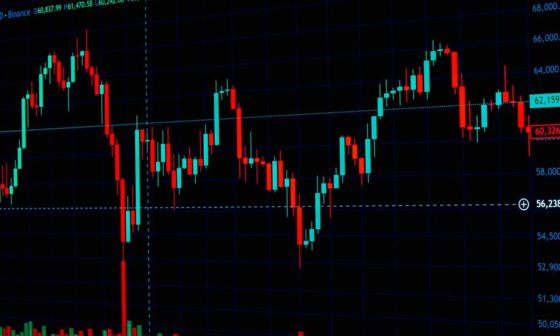
When Applying Trend Following to Cryptocurrency Markets, many retail traders fail because they apply the same position sizing to BTC as they do to blue-chip stocks. Covel’s principles suggest that because BTC’s ATR is significantly higher, the “unit” size must be drastically reduced. A trader risking 1% of their equity on a trend in the S&P 500 might hold hundreds of shares, while the same 1% risk on a crypto trend might only allow for a fraction of a coin. This prevents a 20% overnight drop in crypto from destroying the entire portfolio.
Actionable Steps for Implementation
- Determine your Heat: Decide on a total portfolio risk (e.g., 1-2% per trade).
- Calculate Volatility: Use ATR to define your stop-loss distance.
- Size the Trade: Position Size = (Account Equity * Risk %) / (ATR * Multiplier).
- Automate: Use Building a Custom Trend Following Indicator tools to automate these calculations.
- Backtest: Use Quantitative Backtesting of Trend Following Systems to ensure your sizing survives historical volatility.
Conclusion
Mastering Risk Management and Position Sizing: The Core of Trend Following Success – Michael Covel is what separates profitable practitioners from gamblers. By shifting focus from “what to buy” to “how much to risk,” you align yourself with the mathematical realities of the market. Whether you are choosing between Trend Following vs. Mean Reversion or managing a complex futures portfolio, your survival depends on your defensive play. For a deeper understanding of how these mechanics fit into a complete system, refer back to The Definitive Guide to Trend Following: Mastering Michael Covel’s Investment Philosophy.
FAQ
What is the most important part of Michael Covel’s trend following?
While entries and exits are necessary, Covel argues that position sizing and risk management are the most critical components because they determine whether you survive long enough to capture a major trend.
How does Michael Covel suggest we calculate position size?
He advocates for volatility-adjusted sizing, often using the Average True Range (ATR) to ensure that more volatile assets have smaller position sizes, keeping the dollar risk constant across the portfolio.
What is “The 2% Rule” in trend following?
It is a risk management guideline suggesting that a trader should never risk more than 2% of their total account equity on any single trade, protecting the portfolio from a series of consecutive losses.
Why is position sizing more important than the entry signal?
Because even a perfect entry signal can lead to ruin if the position is too large during a temporary price swing. Conversely, a mediocre entry can still be profitable if the size allows you to stay in the trade through the “noise.”
How do trend followers handle diversification and risk?
They trade a wide variety of uncorrelated markets. By using proper position sizing in each, they ensure that a loss in one market (like Gold) is offset by the potential for a massive gain in another (like Crude Oil).
How does position sizing change in volatile markets like Cryptocurrency?
In high-volatility markets, Covel’s principles dictate that position sizes must be significantly smaller to account for the wider price swings, ensuring the stop-loss doesn’t represent a catastrophic percentage of the account.
Can I use Michael Covel’s risk management for mean reversion?
While the core math of risk applies, A Deep Dive into Michael Covel’s ‘Trend Following’ Book highlights that trend following requires wider stops and smaller sizes compared to mean reversion to avoid being “whipsawed” out of a move.