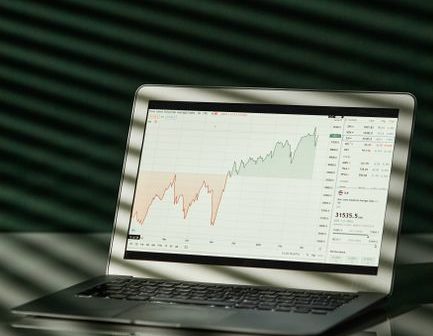
Quantitative Backtesting of Trend Following Systems: Validating Covel’s Principles provides the empirical bedrock for modern systematic trading. By applying rigorous data analysis to Michael Covel’s philosophy, traders can move beyond anecdotal evidence into a realm of statistical confidence. This process involves testing entries, exits, and position sizing across decades of market history to ensure the strategy can withstand various volatility regimes. To truly master these concepts, it is essential to reference The Definitive Guide to Trend Following: Mastering Michael Covel’s Investment Philosophy. Validating these principles ensures that the “black swan” hunting characteristic of trend following remains a viable long-term edge in evolving global markets.
Validate your strategy with instant backtesting
Backtest LibraryThe Methodology of Quantitative Backtesting
Backtesting is the process of applying a trading strategy to historical data to determine its viability. For trend followers, this means validating Michael Covel’s core tenets: cut losses, let profits run, and maintain price-based discipline. To begin, a trader must define a clear set of rules. This often starts with identifying Essential Technical Indicators for Building a Trend Following Model – Michael Covel, such as moving average crossovers or Donchian breakouts.
A robust backtest must account for several variables to avoid the pitfalls of curve-fitting:
- In-Sample vs. Out-of-Sample Data: Splitting data ensures the model performs on unseen price action.
- Transaction Costs: Accounting for slippage and commissions is vital, as high-frequency signals can erode profits.
- Diversification: Testing across non-correlated sectors, as explored in Trend Following in Futures Markets: Diversification Strategies from Covel’s Playbook.
Case Study 1: The Turtle Trading System in the 21st Century
One of the most famous applications of Covel’s documented principles is the Turtle Trading system. In a quantitative study spanning 2000 to 2023, the classic 20-day breakout strategy (System 1) and 55-day breakout (System 2) were tested against a basket of 50 liquid futures contracts. The results highlighted that while drawdowns can be significant—often exceeding 30%—the equity curve remains upwardly biased due to catching massive outliers in energy and metals.
This validates the research found in The Legacy of the Turtle Traders: How Michael Covel Documented a Revolution, proving that rules-based discipline outperforms discretionary “gut feelings” over long horizons.
Case Study 2: Trend Following in Crypto Markets
Modern quantitative backtesting has extended Covel’s principles to digital assets. Backtesting a simple 200-day Simple Moving Average (SMA) strategy on Bitcoin and Ethereum from 2015 to present shows a significant reduction in volatility compared to a “buy and hold” approach. While the trend follower may miss the absolute bottom, the strategy successfully avoids the 80% “crypto winters.”
For more on this, see Applying Trend Following to Cryptocurrency Markets: A Modern Approach – Michael Covel. This case study confirms that the “price is truth” mantra applies even to the newest asset classes.
Measuring Success: Beyond the Sharpe Ratio
When backtesting, many traders mistakenly rely solely on the Sharpe Ratio. However, trend following often produces a “fat-tailed” distribution of returns, making the Sharpe Ratio look artificially low due to high upside volatility. Instead, quantitative analysts focus on:
- The MAR Ratio: Compound annual growth rate divided by maximum drawdown.
- Win/Loss Ratio: Trend following typically has a low win rate (30-40%) but a high average win relative to the average loss.
- Recovery Factor: How quickly the system returns to new equity highs after a drawdown.
Practical implementation requires a deep understanding of Risk Management and Position Sizing: The Core of Trend Following Success – Michael Covel to ensure the trader stays in the game long enough for the trends to emerge.
Common Backtesting Pitfalls and How to Avoid Them
Quantitative validation is only as good as the underlying data. Traders must beware of survivorship bias, where only currently active companies or contracts are included in the test. Furthermore, Building a Custom Trend Following Indicator: From Theory to Code requires careful programming to ensure “look-ahead bias” does not leak future price information into the current signal calculation.
Ultimately, the goal of backtesting is to build the conviction needed to survive periods of underperformance. This psychological edge is discussed in The Role of Discipline: Trading Psychology in Michael Covel’s Trend Following. Without the “proof” provided by a quantitative backtest, most traders abandon their systems during the inevitable flat periods where Trend Following vs. Mean Reversion debates usually favor the latter.
Conclusion
Quantitative Backtesting of Trend Following Systems: Validating Covel’s Principles serves as the bridge between theory and profitable execution. By analyzing historical performance and understanding the mathematical expectancy of “the big win,” traders can align themselves with the market’s reality rather than their own predictions. For a comprehensive overview of how these quantitative methods fit into the larger trading framework, revisit The Definitive Guide to Trend Following: Mastering Michael Covel’s Investment Philosophy. For those seeking a deeper academic understanding, A Deep Dive into Michael Covel’s ‘Trend Following’ Book: Key Lessons for Traders offers further insights into the evolution of these strategies.
Frequently Asked Questions
| What is the most important metric when backtesting trend following? | While many look at profit, the MAR ratio (CAGR/Max Drawdown) is most important because it measures the return relative to the emotional pain of the drawdowns. |
| How much historical data is needed for a valid backtest? | Ideally, at least 20-30 years of data covering different economic cycles, including inflationary periods, recessions, and bull markets, are required for statistical significance. |
| Does backtesting Covel’s principles work for stocks? | Yes, though trend following often performs better in futures markets due to the ability to go short and the presence of more sustained trends in commodities and currencies. |
| Why do backtested results often look better than live trading? | This is usually due to slippage, commissions, and “optimization bias,” where the trader inadvertently tunes the rules to fit past data too perfectly. |
| How does risk management influence backtest results? | Risk management, specifically position sizing based on volatility (ATR), is what prevents a single bad trade from wiping out the account during the testing phase. |
| Can I use modern software to backtest Turtle Trading rules? | Absolutely; platforms like Python (Pandas/Backtrader), AmiBroker, or TradingView allow for the exact replication of the Turtle rules across global markets. |
| Is a high win rate necessary for a successful trend following backtest? | No; most successful trend following systems have win rates between 35% and 45%, relying on a few massive winners to compensate for many small losses. |