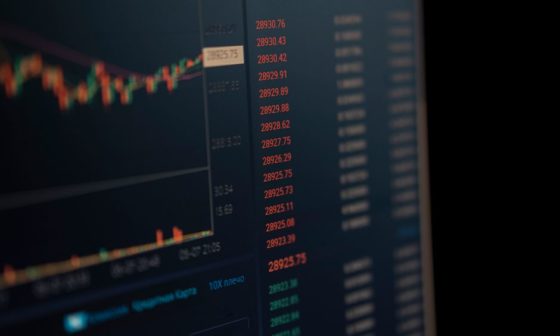
The journey to becoming a consistently profitable futures trader is complex, demanding mastery over three distinct yet interconnected pillars: sophisticated technical analysis, rigorous risk management, and unwavering psychological discipline. This comprehensive guide serves as your central resource, designed not just to introduce concepts, but to provide actionable strategies and deep dives into the specialized skills required to navigate the high-leverage, fast-paced world of futures markets. Whether you are seeking high-probability setups, looking to automate your edge, or striving to eliminate emotional bias from your decision-making, this hub links you directly to detailed resources that transform theoretical knowledge into practical, measurable success.
Validate your strategy with instant backtesting
Backtest LibraryFoundational Futures Trading Approaches: Choosing Your Style
Before diving into complex strategies, every successful futures trader must define their temporal approach to the market. Trading style—whether fast execution or longer-term positioning—dictates the tools, risk parameters, and psychological demands placed upon the trader. Day trading, characterized by opening and closing positions within the same session, requires rapid decision-making, intense focus, and mastery of intraday volatility. This approach leverages small movements but demands near-constant screen time.
Conversely, swing trading involves holding contracts for several days or weeks, targeting larger trends and market rotations. This style typically relies on higher time frame analysis and is less sensitive to intraday noise. The critical decision hinges on matching the strategy to your capital structure, personal lifestyle, and tolerance for overnight risk. Understanding these trade-offs is crucial for establishing long-term viability, and we provide a comprehensive comparison to help you make this foundational choice. Successful traders realize that alignment between strategy and personal temperament is a key component of sustainability. The essential differences between rapid execution and calculated position holding are thoroughly explored in the post detailing Day Trading vs. Swing Trading Futures: Which Strategy Fits Your Risk Profile and Lifestyle?
The Core of Market Analysis: Essential Technical Tools
Technical analysis forms the bedrock of futures trading, providing a systematic methodology for interpreting price action and predicting future movements. While charts may seem overwhelming, the goal is to filter out noise and identify reliable patterns driven by supply and demand dynamics. Basic tools like simple moving averages and the Relative Strength Index (RSI) are often introductory points, but true professional analysis demands greater depth.
Advanced futures analysis incorporates tools that contextualize price movement relative to volume, time, and market structure. This includes analyzing volume profile to identify key areas of institutional interest, utilizing sophisticated oscillation models to detect subtle momentum shifts, and applying advanced trend identification techniques like customized exponential moving averages (EMAs) or market profile structures. True technical mastery requires moving past standard indicator settings to leverage powerful, context-aware tools that provide genuine statistical edge. To gain this deeper understanding and identify true turning points in highly leveraged markets, traders must look beyond basic concepts to leverage powerful tools, as detailed in our guide on Essential Technical Analysis Tools for Futures Traders: Beyond Basic Moving Averages and RSI.
Deep Dive into High-Performance Indicators
In highly volatile futures markets, relying on lagging indicators can prove disastrous. Effective futures trading necessitates indicators that offer predictive capabilities or at least confirm momentum with minimal delay. High-performance indicators are often customized or combined in unique ways to filter false signals generated by market noise and high-frequency trading activity.
These superior tools frequently incorporate elements of volatility adjustment, ensuring that their signals remain reliable regardless of whether the market is consolidating or experiencing a severe price swing. Indicators that dynamically adjust to volume and implied volatility often provide the clearest and most actionable signals for futures traders. When volatility is high, traditional indicators often become unreliable, but we have distilled the crucial knowledge required to maintain a statistical advantage, which is summarized in the guide detailing the Top 5 Technical Indicators Proven to Work in High-Volatility Futures Markets. Implementing these specialized tools can significantly enhance entry timing and trade conviction.
Mastering Chart Interpretation: Decoding Candlesticks
Candlestick patterns are the language of price action, offering a rapid visual summary of the sentiment and momentum shifts occurring over a specific time frame. For futures traders, decoding these patterns is essential for determining high-probability entry and exit zones, particularly near crucial support and resistance levels. A single candlestick, such as a Pin Bar or an Engulfing Pattern, can signal immediate rejection or continuation.
However, recognizing a pattern in isolation is insufficient. The power of candlestick analysis lies in its context—where the pattern forms relative to the overall trend, volume profile, and liquidity zones. Focusing on high-accuracy signals requires blending candlestick analysis with broader market structure analysis. Understanding price action at this granular level is paramount for defining precise entries and exits, which is precisely what is covered when Decoding Candlestick Patterns for Futures: Identifying High-Accuracy Entry and Exit Signals and maximizing profitable opportunities.
Strategic Trading: Mastering Swing Trading Techniques
Swing trading offers a robust middle ground for futures traders who seek substantial gains without the intense pressure of daily scrutiny. The core of a successful swing trading strategy rests on identifying the early stages of medium-term trends and utilizing well-defined, higher-timeframe setups (e.g., 4-hour or daily charts). This approach relies heavily on macroeconomic fundamentals aligning with clear technical confirmation.
Key swing trading techniques involve waiting for deep pullbacks into value areas, utilizing defined channels or pivot points for reversals, and crucially, applying position sizing that can withstand minor market retracements without triggering premature stops. Consistency in swing trading is achieved by patiently waiting for Grade-A setups rather than forcing trades. For those preferring less screen time and maximizing opportunity, the detailed methodology for Mastering Swing Trading Futures: High-Probability Setups and Entry Techniques for Consistent Gains provides the necessary blueprints for achieving sustainable results.
The Algorithmic Edge: Custom Indicators and Automation
In modern futures markets, where milliseconds matter, reliance solely on manual charting can put traders at a disadvantage. Building custom indicators and automated strategies provides a significant algorithmic edge by transforming subjective market analysis into objective, executable code. Custom indicators, often written in Pine Script (for platforms like TradingView) or Python (for advanced systems), allow traders to isolate unique data relationships and proprietary signal criteria that standard software does not offer.
This level of customization enables the creation of strategies that are rigorously backtested and consistently executed without human emotional interference. Whether optimizing a specific oscillator or creating a full market scanner, programming skills are becoming indispensable for competitive futures trading. To truly isolate unique market opportunities and automate analysis, many advanced traders are focused on Building Custom Indicators (Pine Script/Python) to Gain an Algorithmic Edge in Futures Trading, allowing them to capitalize on rapid market shifts more effectively.
Leveraging Modern Tech: Machine Learning in Futures
The complex, non-linear dynamics of futures markets make them an ideal proving ground for machine learning (ML) and artificial intelligence (AI). ML models excel at recognizing subtle patterns and correlations that human analysis often misses, particularly when dealing with high-dimensional data, such as integrating price action, volatility metrics, volume flows, and inter-market relationships.
Advanced traders are now utilizing ML to predict key variables like short-term market direction, sudden volatility spikes, and optimal exit points. While ML does not replace traditional analysis, it significantly enhances predictive accuracy and helps refine execution timing. Successfully integrating these advanced models requires clean data, robust model validation, and a clear understanding of the model’s limitations. The next frontier in predictive analysis involves harnessing massive datasets and complex relationships, a process thoroughly detailed in our exploration of Leveraging Machine Learning Models to Predict Futures Market Direction and Volatility.
Backtesting and Validation: Proving Your Edge
A trading strategy is merely a theory until it has been rigorously validated against historical data. Effective backtesting is the process of simulating trades using past market conditions to determine the statistical edge, profitability, and drawdown profile of a strategy. However, simple backtesting often leads to ‘curve fitting,’ where a strategy performs perfectly on historical data but fails entirely in live trading.
Professional validation requires using high-quality tick data, implementing realistic commission and slippage costs, and employing out-of-sample testing methodologies. Utilizing dedicated simulation software and understanding key performance metrics—such as the Profit Factor, Maximum Drawdown, and Expectancy—are critical for proving that a strategy’s edge is genuine and robust across varied market cycles. A strategy is merely a hypothesis until it is rigorously tested and validated. We provide a full guide on How to Effectively Backtest Futures Trading Strategies Using Historical Data and Simulation Software to ensure your edge is real and enduring.
The Discipline Factor: Conquering Trading Psychology
Even the most technically sound strategy will fail if not executed with consistent discipline. Trading psychology addresses the emotional pitfalls that plague traders: fear (leading to missed entries or premature exits) and greed (leading to overleveraging and violating risk rules). In the high-leverage environment of futures, emotional lapses can result in rapid and catastrophic capital erosion.
Mastering psychology involves developing specific techniques for emotional regulation, particularly during periods of unavoidable loss or drawdown. This includes adhering strictly to pre-defined trading plans, separating ego from results, and employing mindfulness techniques to maintain objectivity. Recognizing that drawdowns are a statistical certainty, not a personal failure, is crucial for maintaining the mental resilience necessary for long-term survival. The journey to peak performance inevitably involves facing psychological hurdles, and the techniques for Conquering Trading Psychology in Futures: Handling Drawdowns and Emotional Discipline for Peak Performance are non-negotiable for sustained success.
Protecting Capital: Advanced Risk Management
Risk management is the ultimate safeguard of a trading account; without it, all technical strategies are moot. Advanced risk management in futures extends far beyond simply placing a stop-loss order. It involves dynamic position sizing based on account equity and market volatility, ensuring that capital risk per trade remains a small, fixed percentage.
Sophisticated techniques include using Average True Range (ATR) to set volatility-adjusted stops, managing risk exposure across multiple open contracts, and employing scaling strategies (both entering and exiting) to optimize profit capture while minimizing potential loss. The primary focus is capital preservation, ensuring that even a string of losing trades does not compromise the ability to continue trading the system. Capital preservation is the trader’s primary objective, necessitating a robust framework of Advanced Risk Management Techniques for Futures: Position Sizing and Stop Loss Optimization that evolves dynamically with market conditions.
Continuous Improvement: The Trading Journal Advantage
A high-performance trading journal is the essential tool for iterative strategy refinement. It is not merely a record of profit and loss; it is a statistical tool used to analyze trade execution quality, identify recurring psychological errors, and measure strategy adherence. A comprehensive journal documents not only the technical rationale for the trade but also the trader’s emotional state, the specific market context, and the outcome review.
Effective journaling includes mandatory post-trade analysis, comparing hypothetical optimal exits versus actual execution, and using this data to calculate the true expectancy of the system. This structured review process transforms raw trading data into actionable insights, helping to eliminate low-probability setups and maximize the returns from high-edge opportunities. Successful traders turn execution data into profound insights. The structure and mandatory review process outlined in The Anatomy of a High-Performance Futures Trading Journal: Templates and Review Process for Strategy Improvement ensures continuous statistical improvement.
Learning from Giants: Wisdom from Legendary Traders
While modern electronic markets move faster than ever, the core principles that drove success for market wizards of the past remain profoundly relevant. Studying legendary futures traders like Jesse Livermore, Paul Tudor Jones, or George Soros provides invaluable context regarding market timing, psychological fortitude, and the aggressive yet disciplined use of position sizing.
The strategies of these titans emphasize deep technical analysis combined with an acute awareness of macroeconomic themes and market sentiment. Applying their lessons involves adapting their macro-level view of market trends and their rigorous approach to risk management to the modern electronic environment. Understanding their ability to scale into winning positions and quickly cut losing ones is a timeless lesson for any futures trader seeking mastery. While the technology has changed dramatically, the core principles of market mastery remain constant. We analyze key insights and methods by exploring the Lessons from Legendary Futures Traders: Applying Their Strategies to Modern Electronic Markets.
Conclusion
Mastering futures trading is a journey that requires continuous education and dedicated execution across technical analysis, capital preservation, and psychological mastery. By leveraging the detailed, targeted resources linked within this guide, you are equipped to build a robust trading framework, validate your statistical edge, and cultivate the mental resilience required to thrive in one of the world’s most challenging financial arenas. Commit to the process, prioritize discipline over temporary gains, and focus on consistent improvement using your trading journal as your primary feedback mechanism.
Frequently Asked Questions (FAQ)
What is the most common mistake new futures traders make?
The single most common mistake is inadequate risk management, usually manifesting as overleveraging or failing to use hard stop-losses. This leads to a single bad trade wiping out weeks or months of gains. Professional traders risk only a tiny fraction (typically 0.5% to 2%) of their capital per trade.
How much capital do I need to start futures trading effectively?
While margin requirements are low, it is generally recommended to have a buffer to absorb drawdowns and allow for proper position sizing. For meaningful trading in standard index futures, minimum recommended starting capital often ranges from $10,000 to $25,000, although micro futures offer lower entry points.
Is technical analysis sufficient, or do I need to understand fundamentals?
For short-term trading (day trading or scalping), technical analysis focused on price action and order flow is often sufficient. However, for swing trading or position trading, understanding macroeconomic fundamentals—like Federal Reserve announcements, commodity reports, or major global events—is crucial for defining the broader trend context and avoiding high-risk events.
How do I know if my strategy is curve-fitted during backtesting?
A strategy is likely curve-fitted if its performance drops significantly when tested on a period of data it has never ‘seen’ before (out-of-sample data). To avoid this, traders should test their systems across multiple distinct market environments (trending, range-bound, high volatility, low volatility) and ensure parameter settings are rounded or generic, rather than optimized to specific historical peaks.
What is the role of machine learning in retail futures trading today?
While complex ML systems are primarily used by institutional funds, retail traders can leverage simplified ML tools for tasks like advanced market scanning, identifying optimal technical parameters, or creating volatility prediction models. The primary benefit is automating complex pattern recognition to free the human trader for higher-level decision-making.