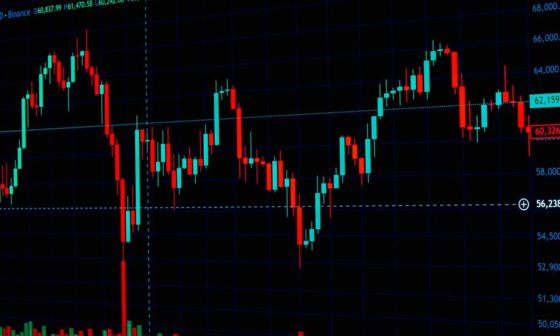
The concept of The Illusion of Understanding: Why We Overestimate Our Ability to Predict Market Moves – Daniel Kahneman highlights a fundamental flaw in human cognition: our tendency to construct simplified, coherent narratives to explain a complex and often random world. Within the framework of Thinking, Fast and Slow for Traders: Mastering Behavioral Finance and Decision Making – Daniel Kahneman, this illusion occurs because our minds crave order. We look at past price movements and convince ourselves that the outcome was inevitable and predictable. By overestimating our comprehension of the past, we develop a dangerous overconfidence in our ability to forecast future market trends, often neglecting the role of variance and luck.
Master Exponential Moving Average signals for profitable trading
Analyze Exponential Moving AverageThe Narrative Fallacy in Financial Markets
At the heart of the illusion of understanding is the narrative fallacy. Traders are naturally inclined to weave together disjointed events—such as a Fed announcement, a technical breakout, and a geopolitical shift—into a seamless story. This process is driven by System 1 vs. System 2: Navigating Intuition and Logic in High-Stakes Trading – Daniel Kahneman, where the intuitive System 1 seeks the path of least resistance by creating a story that makes sense, even if it is factually incomplete.
When a trade succeeds, we credit our “superior analysis” rather than acknowledging the statistical noise. This reinforces Hindsight Bias in Trading: Why Every Market Move Seems Obvious After the Fact – Daniel Kahneman, leading us to believe that we “knew it all along.” Consequently, traders often double down on flawed strategies because they believe they have “solved” the market’s logic.
Case Studies: The Cost of Predictive Overconfidence
Understanding how this illusion manifests in real-world scenarios is vital for risk management. Here are two specific examples of how the illusion of understanding clouds judgment:
- The “Certainty” of the 2008 Financial Crisis: While very few investors predicted the timing and depth of the 2008 crash, the post-market narrative made it seem like the signs were everywhere. Traders who studied this period afterward often felt they could easily spot the next “black swan,” leading them to over-index on tail-risk hedges that bled capital during the subsequent bull market.
- Earnings Announcement Patterns: A trader might observe a stock rising three times in a row after “beating” earnings. They form a narrative that “this stock always rallies on beats,” ignoring the dozens of external factors like sector rotation or macro liquidity. When the stock drops on the fourth beat, they are caught off guard because they relied on a story rather than a statistical distribution.
Why Quantifying Uncertainty is the Only Antidote
To combat the illusion of understanding, traders must move away from storytelling and toward probabilistic modeling. This involves recognizing The Law of Small Numbers: Avoiding the Trap of Over-Optimizing Short-Term Data – Daniel Kahneman. Just because a pattern appeared in the last five trades does not mean it represents a fundamental law of the market.
Practical steps to reduce the impact of this bias include:
- Keep a Decision Journal: Record your rationale before the trade happens. This prevents you from rewriting history once the outcome is known.
- Focus on Process, Not Outcome: A profitable trade can be the result of a bad process (luck), and a losing trade can be the result of a good process. Don’t let a winning streak lead to Regression to the Mean: Understanding Why Winning Streaks Eventually Cool Down – Daniel Kahneman.
- Utilize Pre-Mortems: Before placing a trade, imagine it has already failed. Ask yourself: “What went wrong?” This forces System 2 to look for flaws in your narrative.
The Role of Heuristics in Predictive Errors
Our overestimation of predictive ability is often compounded by other cognitive shortcuts. For instance, Overcoming the Availability Heuristic: Why Recent Market Trends Cloud Your Judgment – Daniel Kahneman ensures that we weigh the most recent and vivid market news more heavily than long-term data. Similarly, The Anchoring Effect: How Initial Price Points Influence Your Trading Bias – Daniel Kahneman can make us cling to a specific price target long after the market narrative has changed.
| Bias Type | The Illusion Created | The Trading Reality |
|---|---|---|
| Narrative Fallacy | The market is following a logical script. | Prices are driven by millions of independent variables. |
| Hindsight Bias | “I saw that trend coming a mile away.” | The outcome was only one of many possibilities. |
| Overconfidence | “My model is 90% accurate.” | Most models suffer from The Planning Fallacy. |
Conclusion: Embracing Market Complexity
The The Illusion of Understanding: Why We Overestimate Our Ability to Predict Market Moves – Daniel Kahneman is perhaps the most persistent challenge for discretionary and systematic traders alike. By admitting that we understand less than we think, we can better protect ourselves against Prospect Theory Explained: The Psychology of Risk and Loss Aversion in Markets – Daniel Kahneman and the emotional swings of Framing Effects: How the Way You View Profits and Losses Changes Your Strategy – Daniel Kahneman.
True mastery in the markets comes not from “knowing” what will happen next, but from building a robust system that accounts for the fact that you cannot know. For a deeper dive into managing these cognitive traps, explore the full framework in Thinking, Fast and Slow for Traders: Mastering Behavioral Finance and Decision Making – Daniel Kahneman.
Frequently Asked Questions
What is the “Illusion of Understanding” in trading?
It is the cognitive bias where traders believe they have a clear understanding of past market events, which leads them to falsely believe they can accurately predict future price movements based on those past “lessons.”
How does the narrative fallacy impact my P&L?
The narrative fallacy causes you to ignore data that doesn’t fit your “story” of the market. This leads to holding losing positions too long or ignoring warning signs that contradict your current bias.
Why does Daniel Kahneman suggest that “experts” are often less accurate than random chance?
Kahneman argues that experts are more prone to the illusion of understanding because they have more “data” to build complex, but often incorrect, narratives. This is a core theme in Thinking, Fast and Slow for Traders.
How can I stop overestimating my market predictions?
Shift your focus from “predicting” to “positioning.” Instead of trying to be right about the future, focus on managing risk and understanding the statistical probability of different outcomes.
Does this bias affect algorithmic trading?
Yes. It often manifests as “over-fitting” or “over-optimization.” Developers create a strategy that explains past data perfectly (the narrative) but fails in live markets because it captured noise rather than signal.
Is the illusion of understanding related to hindsight bias?
Absolutely. Hindsight bias is the mechanism that creates the illusion; by believing the past was predictable, we trick ourselves into thinking the future is equally visible.
How does “System 1” contribute to this illusion?
System 1 is responsible for the fast, automatic generation of stories. It hates ambiguity and will bridge gaps in information with assumptions to create a coherent (but often false) picture of market logic.