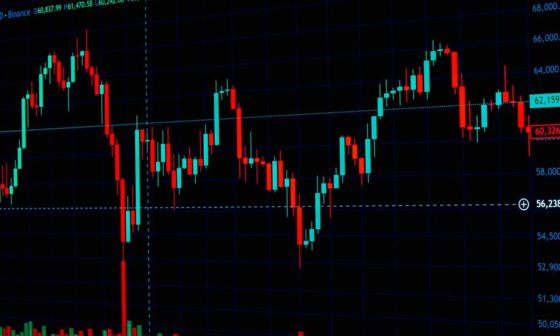
The Anchoring Effect: How Initial Price Points Influence Your Trading Bias – Daniel Kahneman refers to the cognitive tendency where traders over-rely on the first piece of information they encounter—usually a specific price level—when making subsequent financial decisions. This psychological trap is a critical component of Thinking, Fast and Slow for Traders: Mastering Behavioral Finance and Decision Making – Daniel Kahneman. When you fixate on an entry price or a historical peak, your brain uses that “anchor” as a benchmark for value, often ignoring new, contradictory market data. Mastering this bias is essential for objective risk management and avoiding the common pitfalls of emotional trading.
Master Exponential Moving Average signals for profitable trading
Analyze Exponential Moving AverageThe Mechanism of Anchoring in Financial Markets
In his research, Kahneman explains that anchoring occurs because our brains seek a starting point for estimation. In trading, this often involves System 1 thinking—our fast, intuitive, but often irrational processing mode. You can learn more about this in our guide on System 1 vs. System 2: Navigating Intuition and Logic in High-Stakes Trading – Daniel Kahneman.
When a trader anchors to a specific price, they stop evaluating the asset based on current fundamentals and instead judge it relative to that arbitrary number. This often leads to holding losing positions too long or exiting winners prematurely because the “anchor” has skewed the perception of what a “fair” price should be. This bias is frequently reinforced by Framing Effects, where the way a price move is presented (as a discount from a high) dictates the trade rather than the statistical probability of future movement.
Practical Examples of the Anchoring Effect
To understand how anchoring disrupts logic, consider these two common market scenarios:
- The Purchase Price Anchor: A trader buys a stock at $150. The price drops to $120 due to a permanent change in the company’s sector. Instead of selling, the trader anchors to the $150 entry price, viewing the current price as “cheap” and waiting for it to “return to normal.” This failure to adapt is a classic example of how anchors trigger Prospect Theory and loss aversion.
- The Round Number Anchor: Many traders anchor their stop-loss or take-profit orders at psychologically significant round numbers like $100 or $1,000. Institutional “whales” often exploit these anchors by driving prices just past these levels to trigger liquidity, a concept often missed when traders suffer from The Illusion of Understanding.
Actionable Insights: How to Mitigate Anchoring Bias
Overcoming the anchoring effect requires conscious effort to move from intuitive System 1 responses to analytical System 2 processing. Here are three strategies to keep your decision-making objective:
- Use Zero-Based Thinking: Periodically ask yourself, “If I didn’t already own this position, would I buy it at the current price today?” If the answer is no, your anchor is likely the only thing keeping you in the trade.
- Focus on Statistical Probabilities: Shift your focus from “where the price was” to “where the data suggests it is going.” Understanding Regression to the Mean can help you realize that extreme price anchors are often temporary anomalies rather than permanent benchmarks.
- Check for Data Over-Optimization: Avoid anchoring your entire strategy on a short-term winning streak. This is a trap known as The Law of Small Numbers, where traders anchor their expectations to a limited set of successful data points.
The Danger of Historical Anchors
Traders often fall victim to Hindsight Bias, looking back at historical charts and anchoring to the “obvious” bottom or top. This creates a false sense of security in future predictions. Furthermore, The Availability Heuristic can cause you to anchor to the most recent market crash or rally, leading you to overestimate the likelihood of it happening again immediately.
When building or testing a new strategy, remember The Planning Fallacy. Traders often anchor their profit expectations to “best-case scenario” backtests, failing to account for the time and psychological toll required to master a system.
Conclusion
The Anchoring Effect is one of the most persistent hurdles in behavioral finance. By fixating on initial price points, traders blind themselves to the dynamic reality of the markets. Recognizing these mental anchors is the first step toward achieving a disciplined, data-driven approach. To truly master your trading psychology, it is vital to integrate these lessons into the broader framework of Thinking, Fast and Slow for Traders: Mastering Behavioral Finance and Decision Making – Daniel Kahneman, ensuring that your decisions are driven by logic rather than arbitrary numbers.
FAQ: The Anchoring Effect in Trading
1. What is the anchoring effect in trading?
It is a cognitive bias where a trader fixates on a specific price (like their entry price or a 52-week high) and uses it as a benchmark for all future decisions, regardless of new market information.
2. How does Daniel Kahneman explain anchoring?
Kahneman describes it as a suggestion-based process where the mind starts with a given number and “adjusts” from it, but usually fails to adjust far enough, leaving the final decision biased toward the initial value.
3. Why is the entry price a dangerous anchor?
The market does not know or care what price you entered at. Anchoring to your entry price causes you to view profits and losses emotionally rather than evaluating the trade’s current technical or fundamental merit.
4. Can professional traders avoid anchoring bias?
While no one is immune, professionals use algorithmic rules, pre-set exit strategies, and “blind” analysis (evaluating charts without seeing the price scale) to minimize the influence of anchors.
5. How does anchoring relate to System 1 and System 2 thinking?
Anchoring is a System 1 shortcut—it’s fast and effortless. Resisting an anchor requires System 2 thinking, which involves slow, deliberate calculation and questioning the validity of the initial number.
6. Is a 52-week high considered an anchor?
Yes. Many traders anchor to yearly highs or lows, believing the price “must” revert or is “too expensive” simply because it is higher than the anchor, which can lead to missing out on strong trend continuations.
7. How can I break an anchor once I’ve set it?
The most effective way is to use “Zero-Based Thinking” or to consult an objective third party or automated system that evaluates the trade based solely on current data points and volatility.