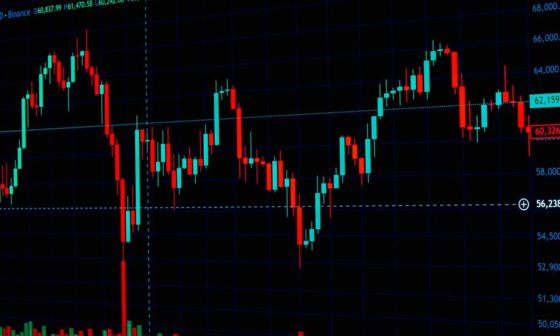
Overcoming the Availability Heuristic: Why Recent Market Trends Cloud Your Judgment – Daniel Kahneman is a fundamental challenge for investors who mistakenly prioritize recent, vivid events over long-term statistical realities. As explored in the comprehensive guide Thinking, Fast and Slow for Traders: Mastering Behavioral Finance and Decision Making – Daniel Kahneman, this mental shortcut leads us to judge the probability of an event based on how easily examples come to mind. In trading, this often results in chasing “hot” sectors or panicking during temporary pullbacks because the most recent price action dominates our mental landscape, obscuring the broader historical context required for sound decision-making.
Master Exponential Moving Average signals for profitable trading
Analyze Exponential Moving AverageThe Mechanics of the Availability Heuristic in Trading
The availability heuristic operates primarily through our System 1 thinking, which favors ease of recall and emotional intensity. When a specific market event—such as a sudden crypto surge or a tech sell-off—is splashed across every news outlet, it becomes “available” in our memory. Consequently, we overestimate the likelihood of it continuing or recurring. To combat this, traders must engage their System 2 analytical mind, as discussed in System 1 vs. System 2: Navigating Intuition and Logic in High-Stakes Trading – Daniel Kahneman.
When recent gains are vivid, traders often fall victim to The Law of Small Numbers: Avoiding the Trap of Over-Optimizing Short-Term Data – Daniel Kahneman, believing that a short streak of success represents a permanent market shift. This is often followed by a painful realization of Regression to the Mean: Understanding Why Winning Streaks Eventually Cool Down – Daniel Kahneman.
Practical Examples of Availability Bias
- The “Recency Effect” in Bull Markets: After three months of consistent growth in AI stocks, a trader assumes the risk of a downturn is near zero because they cannot “recall” a recent loss. This leads to over-leveraging right before a correction.
- Media-Induced Panic: Following a highly publicized bank failure, traders may liquidate entire portfolios of healthy financial stocks. The vividness of the news makes a systemic collapse feel more probable than it statistically is, illustrating Prospect Theory Explained: The Psychology of Risk and Loss Aversion in Markets – Daniel Kahneman.
Strategies for Overcoming the Bias
To mitigate the impact of recent trends on your judgment, implement the following actionable insights:
- Consult Historical Base Rates: Before entering a trade based on a “new trend,” look at how similar setups performed over the last 10–20 years, not just the last 10 days.
- Check Your “Vividness” Bias: Ask yourself: “Am I buying this because the data supports it, or because I just read three articles about it this morning?”
- Utilize Pre-Defined Checklists: Use objective criteria to enter trades, which helps bypass the The Anchoring Effect: How Initial Price Points Influence Your Trading Bias – Daniel Kahneman and ensures you aren’t swayed by the latest headline.
| Feature | Availability-Driven Decision | Statistical/System 2 Decision |
|---|---|---|
| Data Source | Recent headlines and social media noise. | Long-term historical backtests. |
| Risk Perception | Skewed by recent “vivid” wins or losses. | Based on standard deviation and variance. |
| Outcome | Chasing peaks and selling troughs. | Consistent execution of a proven edge. |
The Danger of Narrative and Misinterpretation
Traders often suffer from The Illusion of Understanding: Why We Overestimate Our Ability to Predict Market Moves – Daniel Kahneman. We create stories to explain recent price movements, making them feel more predictable than they are. This is compounded by Hindsight Bias in Trading: Why Every Market Move Seems Obvious After the Fact – Daniel Kahneman, where we convince ourselves we “knew” a trend was coming, further reinforcing the availability heuristic for future decisions.
Furthermore, Framing Effects: How the Way You View Profits and Losses Changes Your Strategy – Daniel Kahneman can alter how we perceive available information. If the media frames a market dip as a “crash” versus a “buying opportunity,” our availability-biased brain will respond very differently to the same numerical data. Finally, always account for the time it takes to truly understand a new strategy, avoiding The Planning Fallacy: Why Most Trading Systems Take Longer to Master Than Expected – Daniel Kahneman.
Conclusion
Mastering the market requires Overcoming the Availability Heuristic: Why Recent Market Trends Cloud Your Judgment – Daniel Kahneman by intentionally slowing down your decision-making process. By recognizing that the most memorable information is rarely the most important, you can transition from reactive, emotion-led trading to a disciplined, statistical approach. Integrating these lessons into the broader framework of Thinking, Fast and Slow for Traders: Mastering Behavioral Finance and Decision Making – Daniel Kahneman will provide the psychological fortitude necessary to navigate volatile markets without being led astray by the “tyranny of the now.”
FAQ
What is the availability heuristic in the context of trading?
It is a mental shortcut where traders judge the probability of a market event based on how easily recent examples come to mind, often leading to an overestimation of recent trends.
How does recent market news trigger this bias?
Vivid, sensationalized news stories are easier for the brain to recall. This makes the events described in the news feel more likely to happen again, causing traders to ignore long-term data.
Why is the availability heuristic dangerous for risk management?
It causes traders to under-prepare for rare but impactful “Black Swan” events if they haven’t happened recently, or to over-hedge against risks that are no longer statistically probable.
How can I use Daniel Kahneman’s System 2 to combat this?
By forcing yourself to look at quantitative data and historical charts spanning several years, you engage the logical System 2, which helps override the emotional, availability-biased System 1.
Does the availability heuristic link to other biases?
Yes, it is closely related to the Law of Small Numbers and Hindsight Bias, as both involve over-relying on limited or recent information to form a broader market narrative.
Can a trading journal help overcome this bias?
Absolutely. Recording why you made a trade allows you to look back and see if you were influenced by recent headlines or if you were following a statistically sound plan from the broader behavioral finance framework.