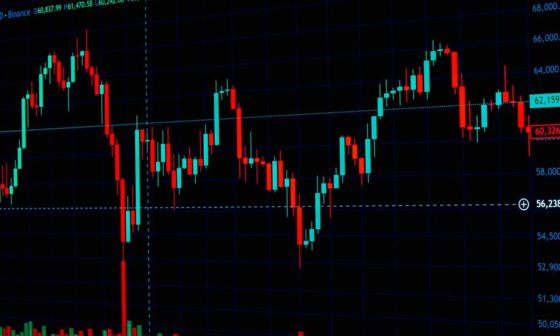
Developing a Probabilistic Mindset for Consistent Trading Success – Mark Douglas is the defining factor that separates professional traders from the masses of struggling amateurs. In A Summary to Trading in the Zone by Mark Douglas, the core thesis is that the market is a series of independent events. To achieve consistency, you must accept that while your “edge” provides a higher probability of one thing happening over another, the outcome of any single trade is essentially random. By detaching your ego from individual trade outcomes and focusing on a sample size of trades, you accept risk in every trade without the fear that typically leads to hesitation or costly errors.
Validate your strategy with instant backtesting
Backtest LibraryThe Core Components of a Probabilistic Mindset
To master the markets, you must internalize The 5 Fundamental Truths of Trading Psychology from Mark Douglas. These truths act as the foundation for a probabilistic mindset. Most traders fail because they believe they need to know what will happen next to make money. Douglas argues the opposite: you don’t need to know what the market will do next to achieve consistent profits.
- Individual Randomness: Every trade is unique and independent of the previous one.
- Distribution of Wins and Losses: Any given edge has a random distribution of outcomes over a series of trades.
- No Prediction Required: Knowing the edge is enough; knowing the future is unnecessary.
By understanding these truths, you can begin transitioning from a gambler to a professional trader. The professional focuses on execution and the long-term expectancy of their system, rather than the emotional highs and lows of the current position.
Actionable Insights: Thinking in Samples
One of the most practical ways to develop this mindset is to stop evaluating your performance trade-by-trade. Instead, view your performance in blocks of 20, 50, or 100 trades. This shift is vital for backtesting your psychology and ensuring that you are following your strategy without interference.
When you focus on a sample size, the “sting” of a loss disappears. You begin to see a loss as simply a “cost of doing business,” much like a casino owner views a player winning a jackpot. This perspective is why many technical traders struggle; they find that technical analysis fails without the right trading psychology to back it up.
Case Studies in Probabilistic Thinking
Example 1: The Casino Analogy
Consider a casino at a blackjack table. The house has a small percentage edge. On any single hand, the player might win $10,000. The house does not panic, change the rules, or feel “wrong.” They know that over 10,000 hands, the mathematical edge will manifest as profit. This is the ultimate example of Developing a Probabilistic Mindset for Consistent Trading Success – Mark Douglas. A professional trader acts as the house, not the gambler.
Example 2: The Three-Loss Streak Dilemma
Two traders use the same 60% win-rate strategy. After three consecutive losses, Trader A becomes fearful and skips the fourth trade. Trader B, having mastered the role of self-discipline in Mark Douglas’s trading philosophy, takes the fourth trade without hesitation. The fourth trade is a massive winner. Trader A missed it because they viewed the three losses as a trend, whereas Trader B viewed them as a random distribution within a winning sample.
Example 3: Overcoming Analysis Paralysis
A trader spends hours analyzing 15 different indicators to “be sure” about a trade. Despite this, the trade hits their stop loss. This creates a crisis of belief. By building a winning trading plan based on simple probabilistic edges rather than “certainty,” a trader can eliminate this paralysis and execute with “carefree” confidence.
Managing Emotions through Probability
Emotions like fear and greed arise when we have expectations that the market doesn’t meet. To find out how to eliminate fear and greed, you must eliminate expectations of specific outcomes. When you expect nothing from a specific trade, the market cannot disappoint you. This psychological neutrality is essential because the impact of belief systems on your trading performance dictates whether you will seize opportunities or retreat in fear.
Conclusion
Developing a probabilistic mindset is not about learning a new technical indicator; it is about a total shift in how you perceive the market. By embracing the uncertainty of the individual trade, you gain the certainty of the collective outcome. Consistent success comes from the discipline to execute your edge over a significant sample size, regardless of short-term results. For a deeper dive into these concepts and to see how they fit into the broader framework of mental mastery, return to our comprehensive A Summary to Trading in the Zone by Mark Douglas.
FAQ: Developing a Probabilistic Mindset
| What does it mean to think in probabilities in trading? | It means believing that any trade has an uncertain outcome while knowing that a series of trades will produce a predictable result based on your edge. |
| Why do most traders struggle with a probabilistic mindset? | Human nature is wired to avoid uncertainty and seek patterns. Most traders feel a psychological need to be “right” about every trade, which contradicts the random nature of the market. |
| How can I practice thinking in probabilities? | Commit to executing a block of 20 trades without changing your rules. Do not judge your success until all 20 trades are completed and analyzed as a single unit. |
| Does a probabilistic mindset eliminate the need for a stop loss? | No. A stop loss is an essential tool for defining the risk of the “random event.” It ensures that a single loss remains a small part of your overall sample size. |
| How does Mark Douglas define a “trading edge”? | An edge is simply a higher probability of one thing happening over another. It does not guarantee the outcome of the very next trade. |
| What is the “Zone” mentioned in Douglas’s work? | The “Zone” is a state of mind where you are in flow with the market, executing trades without fear or hesitation because you have fully accepted the probabilistic nature of the environment. |
| Can I use a probabilistic mindset with any trading strategy? | Yes. Whether you use technical analysis, fundamentals, or quant models, the mindset remains the same: the strategy provides the edge, and the mindset ensures the execution. |