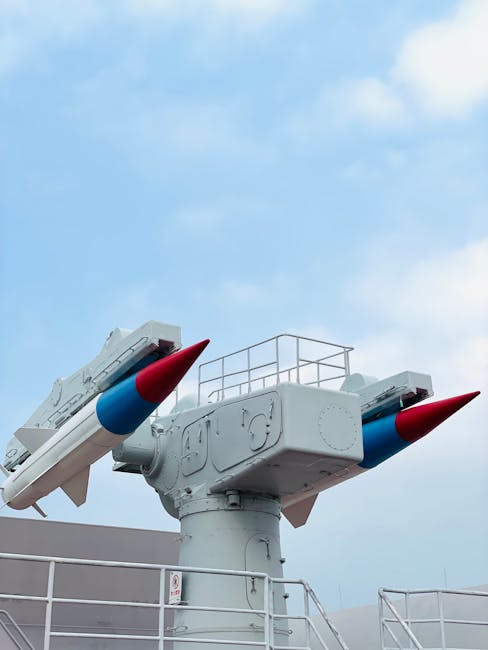
As we look toward the fiscal year 2026, Analyzing the Space Force Budget 2026: Key Opportunities for Defense Contractors becomes a critical exercise for investors and industry stakeholders seeking to capitalize on the next wave of military innovation. The United States Space Force (USSF) has rapidly transitioned from its foundational phase to a robust operational entity, with its budget increasingly reflecting a shift from legacy “exquisite” systems to resilient, proliferated architectures. For those following The Ultimate Guide to Investing in Space Technology and Satellite Communication Stocks, understanding the nuances of the 2026 budget cycle is essential for identifying which defense contractors are positioned for long-term growth and which might face headwinds as priorities shift toward rapid replenishment and defensive capabilities.
Master Percentage Price Oscillator signals for profitable trading
Analyze Percentage Price OscillatorResilience and Proliferation: The New Budgetary Standard
The primary theme dominating the Space Force’s 2026 fiscal planning is “resilience through proliferation.” For decades, the Department of Defense (DoD) relied on a small number of massive, expensive satellites in Geostationary Orbit (GEO). The 2026 budget marks a decisive pivot toward Low Earth Orbit (LEO) constellations that are harder to target and easier to replace.
This shift creates a massive opening for companies specialized in LEO Satellite Constellation Manufacturing: Leading Companies and Market Trends. Contractors that can demonstrate high-rate production capabilities for small-form satellites—often referred to as “bus” manufacturing—are likely to see the lion’s share of procurement dollars. Unlike previous decades where a single contract could span fifteen years, the 2026 budget emphasizes “spiral development,” where new technology is launched every two to three years in “tranches.”
Priority Investment Area: Space Situational Awareness (SSA)
As the orbital environment becomes more congested and contested, the 2026 budget allocates significant funding toward Space Situational Awareness (SSA). The USSF is no longer just tracking debris; it is focused on “tactical dominance,” which requires real-time data on adversary movements. This creates a niche for Top Space Situational Awareness (SSA) Stocks to Watch in the New Space Race.
Investors should look for contractors providing:
- Ground-based radar systems: Upgrading the “Space Fence” and distributed sensor networks.
- On-orbit sensing: Small satellites designed specifically to monitor other satellites.
- Data Fusion: Software platforms that can integrate disparate data sources into a single “battle management” view.
Furthermore, The Role of AI and ML Models in Space Situational Awareness Data Analysis is becoming a mandatory requirement for 2026 contracts, as the sheer volume of data generated by proliferated constellations exceeds human processing capabilities.
The Commercial Space Strategy and Integration
A hallmark of the 2026 budget is the “Commercial Space Strategy.” The Space Force is increasingly looking to buy “services” rather than “systems.” This means defense contractors who operate their own constellations and sell data or bandwidth to the government—known as the “Commercial Augmentation Space Reserve”—are in a prime position.
This trend is particularly visible in the satellite communications (SATCOM) sector. The USSF is moving away from owning every radio and antenna, opting instead to integrate with commercial providers like Starlink Competitors and LEO Stocks. For defense contractors, the opportunity lies in building the “hybrid terminals” and “cross-link” technologies that allow military users to switch seamlessly between military and commercial networks.
Strategic Case Studies in Space Force Contracting
To understand how these budgetary shifts translate into real-world revenue, we can look at two specific examples that highlight the opportunities within the 2026 framework.
Case Study 1: The Space Development Agency (SDA) Tranche 2
The SDA, now a part of the Space Force, represents the most aggressive procurement model in the DoD. In preparation for 2026, companies like Northrop Grumman and Lockheed Martin have secured contracts for hundreds of satellites for the “Proffered Warfighter Space Architecture” (PWSA). These contracts are structured around fixed-price, rapid-delivery milestones. Contractors who successfully delivered on Tranche 0 and Tranche 1 are now seeing a “moat” around their business models, as the USSF values the proven ability to manufacture at scale.
Case Study 2: SpaceX’s Starshield and Commercial Integration
While SpaceX is often viewed as a launch provider, its Starshield program—a government-specific version of Starlink—demonstrates the “Commercial-First” ethos of the 2026 budget. By providing a secure, hardened version of a commercial product, SpaceX has captured a segment of the budget that previously went to bespoke military satellites. This serves as a template for other contractors: adapt commercial success for military ruggedness to win in 2026.
Tactical Advice for Navigating Space Force Investments
For investors and traders, the Space Force budget is not just a policy document; it is a roadmap for market volatility. When the budget is released, specific sub-sectors often react violently to changes in funding levels. Using How to Trade Satellite Communication Stocks Using Technical Indicators can help investors time their entries around these government-driven catalysts.
Given the high-stakes nature of these contracts, it is also wise to consider Futures Trading in Aerospace and Defense: Hedging Space Force Budget Shifts. Hedging can protect a portfolio against “program of record” cancellations or delays, which are common in the early phases of a new budget cycle. Furthermore, one must be aware of Trading Psychology in the High-Stakes Space Industry, as the emotional swings during a budget hearing can lead to irrational selling of fundamentally sound stocks.
Budget Allocation Table: Estimated Focus Areas for 2026
| Budget Category | Primary Objective | Target Contractor Type |
|---|---|---|
| Resilient Missile Tracking | Low-latency detection of hypersonic threats | Infrared sensor specialists, LEO bus manufacturers |
| Commercial SATCOM | High-bandwidth global connectivity | LEO constellation operators, ground terminal builders |
| Space Domain Awareness | Real-time threat monitoring and debris tracking | AI/ML software firms, ground-based radar contractors |
| Tactical Responsive Launch | Ability to replace satellites in 24 hours | Small-launch providers, rapid-payload integrators |
Conclusion: The Long-Term Horizon
The 2026 Space Force budget represents a turning point where space is officially treated as a “warfighting domain” rather than a “support domain.” For defense contractors, this means more frequent contract awards, shorter development cycles, and a higher premium on software and AI integration. By focusing on the shift toward proliferated LEO architectures and commercial service models, investors can align their portfolios with the strategic direction of the Pentagon.
To stay ahead of these trends, it is essential to continually re-evaluate your strategy using tools like Backtesting a Space Sector Rotation Strategy. The space sector is inherently volatile, but for those who master the nuances of the USSF budget, the opportunities for alpha are significant. For a broader perspective on how these military shifts fit into the global commercial landscape, refer back to The Ultimate Guide to Investing in Space Technology and Satellite Communication Stocks.
Frequently Asked Questions
1. How does the 2026 Space Force budget differ from previous years?
The 2026 budget moves away from long-term, multi-billion dollar “single-point failure” satellites in favor of large constellations of smaller, cheaper satellites (proliferation) and emphasizes buying commercial services rather than building proprietary systems.
2. Which companies are best positioned for the 2026 budget cycle?
Companies capable of high-volume LEO satellite manufacturing (like Northrop Grumman or Lockheed Martin) and those offering commercial-military hybrid services (like SpaceX or specialized SSA providers) are prime candidates.
3. What role does AI play in the Space Force budget for 2026?
AI and Machine Learning are prioritized for processing the massive amounts of data generated by new sensor constellations, specifically for automated threat detection and Space Situational Awareness (SSA).
4. Is the Space Force budget a stable indicator for stock performance?
While it provides a roadmap, budget shifts and congressional “continuing resolutions” can cause delays; therefore, investors should use technical indicators and hedging strategies to manage the inherent volatility.
5. How can I hedge against a sudden cut in Space Force spending?
Investors often use aerospace and defense futures or options on high-volatility space stocks to protect their positions against political shifts that might impact specific programs of record.
6. Why is Space Situational Awareness (SSA) such a large part of the budget?
With the rise of “killer satellites” and orbital debris, the Space Force needs constant, high-fidelity data to protect US assets, making SSA a foundational requirement for all other space operations.
7. How does this fit into a broader space technology investment strategy?
The USSF budget acts as a catalyst for technological maturation; military-funded innovations often find their way into the commercial sector, as detailed in our pillar guide on space technology investing.