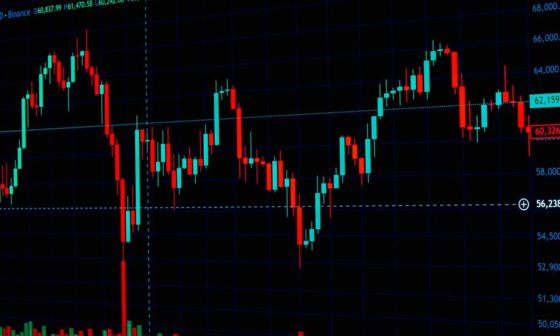
In his seminal work, Identifying Reversal Patterns: Head and Shoulders and Beyond – John Murphy highlights the critical transition phases where a market trend exhausts its momentum. This study is a cornerstone of The Ultimate Guide to Technical Analysis of the Financial Markets by John Murphy. Murphy argues that major reversals do not happen overnight; they are the result of a psychological shift among participants. By mastering the Head and Shoulders pattern and its counterparts like double tops or rounding bottoms, traders can pinpoint the exact moment a bullish trend turns bearish, ensuring more precise entries in volatile markets. Understanding these structural changes is essential for any technician aiming to navigate complex price cycles.
Validate your strategy with instant backtesting
Backtest LibraryThe Anatomy of the Head and Shoulders Pattern
According to Murphy, the Head and Shoulders (H&S) is perhaps the most reliable of all major reversal patterns. It consists of three successive peaks: a higher peak (the head) flanked by two lower peaks (the shoulders). The critical “line in the sand” is the neckline, drawn by connecting the two intervening troughs.
- The Left Shoulder: Formed during a strong uptrend with high volume.
- The Head: Prices reach a new high but often on diminishing volume, signaling a loss of momentum.
- The Right Shoulder: A failed attempt to reach the previous high, showing that bulls are losing control.
- The Neckline Break: The pattern is only completed when the price closes below the neckline. Murphy emphasizes waiting for a closing price penetration rather than just an intraday dip.
To deepen your understanding of the price levels involved, explore Mastering Support and Resistance: Lessons from John Murphy, which explains why the neckline acts as such a powerful pivot point.
Beyond the Basics: Double Tops, Triple Tops, and Saucers
While the H&S is the “gold standard,” Murphy identifies several other key structures that signal a trend’s end. Double and Triple Tops represent a market’s inability to break through a significant resistance zone after multiple attempts. This often aligns with The Psychology of Charting: Insights from Murphy’s Technical Analysis, where investor exhaustion becomes visible on the chart.
For more gradual transitions, Murphy discusses Rounding Bottoms (Saucers) and V-Reversals. Unlike the sharp peaks of a Head and Shoulders, a saucer represents a slow, agonizing shift in sentiment that often yields long-term bullish moves. In modern markets, Backtesting Murphy’s Strategies reveals that these classic formations still hold significant predictive value when combined with modern filters.
Actionable Insights: The Role of Volume and Momentum
A reversal pattern is rarely valid without confirmation. Murphy insists that volume must confirm the price action. In a Head and Shoulders top, volume should ideally be heaviest on the left shoulder, lighter on the head, and lightest on the right shoulder. To master this aspect, see Volume and Open Interest: The Murphy Approach to Market Strength.
Furthermore, using technical indicators can prevent “false breakouts.” Traders often look for bearish divergences in Oscillators and Momentum: Mastering the RSI and Stochastics – John Murphy. If the price reaches the “head” of the pattern but the RSI makes a lower high, the probability of a reversal increases exponentially.
Case Studies: Reversal Patterns in Practice
To see these principles in action, consider the following real-world applications:
- Bitcoin’s 2021 Double Top: In late 2021, Bitcoin formed a classic double top near $65,000-$69,000. Applying John Murphy’s Technical Analysis to Crypto Markets would have highlighted the decreasing volume on the second peak, signaling an imminent crash.
- S&P 500 Inverse Head and Shoulders (2020): During the recovery from the pandemic crash, a sharp inverse H&S formed on the daily charts. The breakout above the neckline, confirmed by Intermarket Analysis showing rising bond yields, signaled the start of a multi-year bull run.
Conclusion
Mastering Identifying Reversal Patterns: Head and Shoulders and Beyond – John Murphy is about more than just drawing lines; it is about reading the shifting tides of supply and demand. By combining the structural integrity of H&S formations with volume confirmation and momentum oscillators, traders can transition from being reactive to being predictive. For a complete understanding of how these patterns fit into a holistic trading system, refer back to The Ultimate Guide to Technical Analysis of the Financial Markets by John Murphy.
FAQ: Identifying Reversal Patterns with John Murphy
| Question | Answer |
| What is the most important rule when identifying a Head and Shoulders pattern? | The most important rule is waiting for a decisive break of the neckline on a closing basis before considering the pattern complete and actionable. |
| How does volume behave in a valid Head and Shoulders top? | Volume should generally decline at each successive peak (Left Shoulder > Head > Right Shoulder), indicating a loss of buying pressure. |
| Can these reversal patterns be applied to cryptocurrencies? | Yes, classic patterns like H&S and Double Tops are highly effective in crypto, though they often move faster and with higher volatility than traditional markets. |
| What is an “Inverse” Head and Shoulders? | It is the bullish version of the pattern found at market bottoms, signaling a reversal from a downtrend to an uptrend. |
| How do I calculate a price target from an H&S pattern? | Murphy suggests measuring the vertical distance from the head to the neckline and projecting that same distance downward from the breakout point. |
| Why does John Murphy emphasize the “Right Shoulder”? | The Right Shoulder is the first lower high in an uptrend, providing the primary signal that the previous trend’s dominance is ending. |