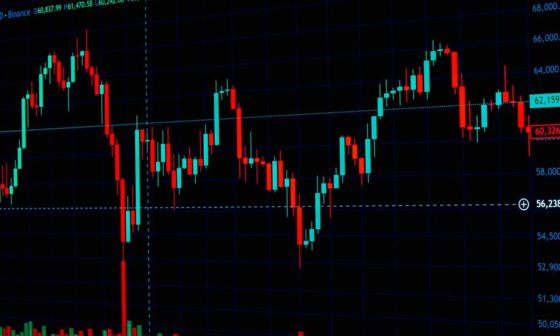
Applying John Murphy’s Technical Analysis to Crypto Markets provides a robust framework for navigating the extreme volatility of digital assets. While his methodologies were pioneered in traditional equity and commodity sectors, the core tenets of trend following, price action, and volume confirmation remain highly effective for Bitcoin and Altcoins. By synthesizing the principles found in The Ultimate Guide to Technical Analysis of the Financial Markets by John Murphy, crypto traders can move beyond speculative hype. Leveraging these classic techniques allows for the identification of structural shifts and momentum cycles that often repeat across 24/7 decentralized exchanges.
Validate your strategy with instant backtesting
Backtest LibraryAdapting Murphy’s Core Principles for Cryptocurrency
The transition from traditional markets to crypto requires a specific application of Murphy’s laws. Because crypto markets never close, the “closing price” is typically measured at 00:00 UTC, which remains a critical data point for identifying daily trends.
- Trend Identification: Utilizing Murphy’s moving average crossovers (e.g., the 50-day and 200-day) helps traders distinguish between “crypto winters” and bull cycles.
- Momentum Confirmation: Using Oscillators and Momentum: Mastering the RSI and Stochastics – John Murphy is vital to identify overbought conditions in parabolic crypto rallies.
- Structural Levels: Mastering Support and Resistance: Lessons from John Murphy is essential because crypto assets often respect “psychological” round numbers like $20,000 or $50,000 BTC.
Practical Case Studies in Crypto Analysis
To understand the efficacy of these methods, consider the following real-world applications within the crypto ecosystem:
| Scenario | Murphy Principle Applied | Outcome/Insight |
|---|---|---|
| Bitcoin 2021 Peak | Identifying Reversal Patterns: Head and Shoulders and Beyond – John Murphy | A classic Head and Shoulders pattern signaled a major trend reversal before the deep correction. |
| Ethereum 2022 Bottom | Volume and Open Interest: The Murphy Approach to Market Strength | Surging volume at support levels indicated “capitulation,” marking a high-probability entry point. |
Another notable example involves Intermarket Analysis: Understanding Global Market Relationships – John Murphy. Traders often monitor the US Dollar Index (DXY) alongside Bitcoin; Murphy’s observation of the inverse correlation between the dollar and commodities is frequently mirrored in the BTC/USD pair.
Actionable Insights for Crypto Traders
To successfully apply these techniques, traders should prioritize confluence. Never rely on a single indicator. For instance, before entering a long position, ensure the price is above a key support level, the RSI is not yet overbought, and volume is increasing on up-days.
Additionally, Backtesting Murphy’s Strategies: Do Classic Patterns Still Work? reveals that while patterns like “Cup and Handle” appear frequently in crypto, they require higher volume confirmation than in blue-chip stocks due to lower liquidity in many altcoins. Finally, remember The Psychology of Charting: Insights from Murphy’s Technical Analysis; crypto is driven by extreme fear and greed, making sentiment indicators a necessary companion to technical charts.
Conclusion
Applying John Murphy’s Technical Analysis to Crypto Markets bridges the gap between traditional financial wisdom and the frontier of digital finance. By mastering trend lines, volume analysis, and momentum oscillators, you can trade with a disciplined edge that survives market cycles. For a complete understanding of these foundational techniques, refer back to The Ultimate Guide to Technical Analysis of the Financial Markets by John Murphy to refine your overarching strategy.
Frequently Asked Questions
Do John Murphy’s classic chart patterns work on 15-minute crypto charts?
While Murphy’s patterns are fractal and appear on all timeframes, crypto’s high volatility and “noise” often make patterns more reliable on 4-hour and Daily charts. Lower timeframes are prone to “fakeouts” that can be filtered using Murphy’s volume confirmation rules.
How does Murphy’s volume analysis apply to decentralized exchanges (DEXs)?
Volume analysis remains critical, but traders must aggregate data across multiple exchanges to get an accurate picture. Murphy’s principle that “volume should go in the direction of the trend” is a primary way to spot institutional accumulation in Bitcoin.
Can intermarket analysis predict crypto price movements?
Yes, as highlighted in The Ultimate Guide to Technical Analysis of the Financial Markets by John Murphy, assets do not trade in a vacuum. Correlations between Bitcoin, tech stocks (NASDAQ), and the US Dollar have become increasingly significant.
Is the Relative Strength Index (RSI) different for crypto?
The calculation is the same, but crypto often stays “overbought” (above 70) for much longer periods during bull runs. Murphy suggests using oscillators to find divergences rather than just looking at absolute overbought/oversold levels.
Does the 24/7 nature of crypto change Murphy’s “Gap” analysis?
Traditional price gaps occur when markets are closed; since crypto never closes, “gaps” are rare on spot exchanges. However, traders often apply Murphy’s gap theory to the CME Bitcoin Futures charts, which do have weekend closures.
How does market psychology differ in crypto technical analysis?
The psychological aspect is amplified in crypto due to the retail-heavy nature of the market. Murphy’s insights into “support and resistance” as psychological barriers are even more pronounced in crypto, where “FOMO” often drives prices beyond logical technical targets.