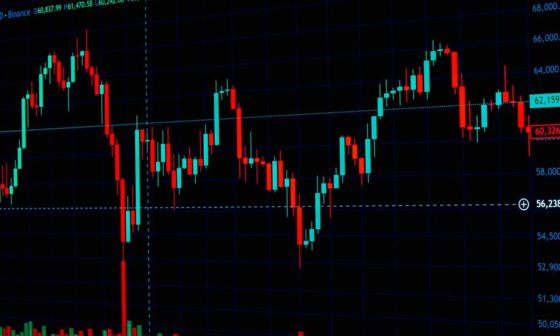
Understanding How to Use Moving Averages According to John Murphy is a foundational skill for anyone studying The Ultimate Guide to Technical Analysis of the Financial Markets by John Murphy. Murphy describes moving averages as trend-following tools that smooth out price “noise” to reveal the underlying market direction. By calculating the average price over a specific period, these indicators lag behind the market price but offer clear signals when trends shift. Murphy emphasizes using them as dynamic filters, where the relationship between the current price and the average—or between two different averages—determines the strength and sustainability of a market move.
Validate your strategy with instant backtesting
Backtest LibraryCore Principles of Murphy’s Moving Average Strategy
John Murphy’s approach focuses on the Simple Moving Average (SMA) for long-term analysis and the Exponential Moving Average (EMA) for more sensitive, short-term signals. According to John Murphy’s Core Principles of Trend Following, the moving average is not a predictive tool but a reactive one. It confirms when a trend has begun or reversed.
Murphy often highlights three primary uses:
- Trend Identification: If the price is above the moving average, the trend is up; below it, the trend is down.
- Support and Resistance: Averages often act as floor or ceiling levels. For more on this, see Mastering Support and Resistance: Lessons from John Murphy.
- Crossovers: Using two averages (a short-term and a long-term) to generate buy and sell signals.
The Double Crossover Method and Practical Examples
One of the most actionable insights from Murphy is the “Double Crossover Method.” This involves plotting two moving averages on a chart—typically a shorter 50-day average and a longer 200-day average.
Example 1: The Golden Cross
In Murphy’s framework, a “Golden Cross” occurs when the 50-day SMA crosses above the 200-day SMA. This was famously observed in the S&P 500 during major recovery phases, signaling a long-term bull market. Murphy suggests that this crossover is one of the most reliable indicators of a structural shift in sentiment.
Example 2: The 20-Day EMA Pullback
For shorter-term traders, Murphy suggests using the 20-day EMA. In a strong uptrend, the price will often pull back to touch the 20-day EMA before bouncing higher. This provides a high-probability entry point without chasing the peak. This technique is often paired with Oscillators and Momentum to ensure the market isn’t overbought.
Comparison of Moving Average Types
| Feature | Simple Moving Average (SMA) | Exponential Moving Average (EMA) |
|---|---|---|
| Weighting | Equal weight to all days. | More weight to recent price data. |
| Responsiveness | Slower; better for major trends. | Faster; better for short-term entries. |
| Murphy’s Preference | Long-term daily and weekly charts. | Short-term tactical trading. |
Advanced Applications and Market Relationships
Murphy also integrates moving averages into Intermarket Analysis. For instance, he might compare the 200-day averages of Gold versus the US Dollar to identify global capital flows. When applying these concepts to modern volatility, traders often ask if these “old school” methods still hold up. By Backtesting Murphy’s Strategies, researchers have found that while the lag can be frustrating in sideways markets, they remain unparalleled for capturing “the meat” of a major trend.
For those trading new asset classes, Applying John Murphy’s Technical Analysis to Crypto Markets shows that the 200-day SMA is a critical “line in the sand” for Bitcoin and Ethereum, often separating bull cycles from bear winters.
Conclusion
Mastering How to Use Moving Averages According to John Murphy requires balancing the smoothing effect of the indicator with the need for timely entries. Whether using them as dynamic support or as part of a crossover system, these tools provide the objective framework necessary to follow trends without emotional bias. To see how moving averages fit into the broader scope of chart patterns and market volume, refer back to The Ultimate Guide to Technical Analysis of the Financial Markets by John Murphy.
FAQ: How to Use Moving Averages According to John Murphy
1. Why does John Murphy prefer the 200-day moving average?
Murphy considers the 200-day SMA the “ultimate” indicator for long-term trend health. It is widely watched by institutional investors, making it a self-fulfilling prophecy for support and resistance levels.
2. What is the difference between a “Golden Cross” and a “Death Cross”?
A Golden Cross occurs when a short-term average (like the 50-day) crosses above a long-term average (200-day), signaling a bull trend. A Death Cross is the opposite, occurring when the short-term average falls below the long-term average.
3. Can moving averages be used in conjunction with volume?
Yes, Murphy strongly advises confirming moving average breaks with volume. As detailed in Volume and Open Interest, a price crossover on high volume is much more significant than one on low volume.
4. Do moving averages work well in range-bound markets?
No, Murphy warns that moving averages perform poorly in sideways or “choppy” markets. They produce frequent “whipsaws” (false signals), which is why they are best used when a clear trend is present or developing.
5. How does Murphy suggest using moving averages for stop-losses?
Murphy often suggests using a moving average as a trailing stop. As the price trends upward, a trader can set their stop-loss just below a key average (like the 50-day), allowing the position to stay open as long as the trend remains intact.
6. Is it better to use the SMA or the EMA for day trading?
According to Murphy’s logic, the EMA is generally preferred for shorter timeframes because it reacts more quickly to price changes, helping traders exit or enter before a significant move is over.
7. How do moving averages relate to chart patterns like Head and Shoulders?
Moving averages often coincide with the “neckline” of patterns. For instance, in Identifying Reversal Patterns, Murphy notes that a break below the 50-day SMA can often be the first warning sign of a pattern completion.