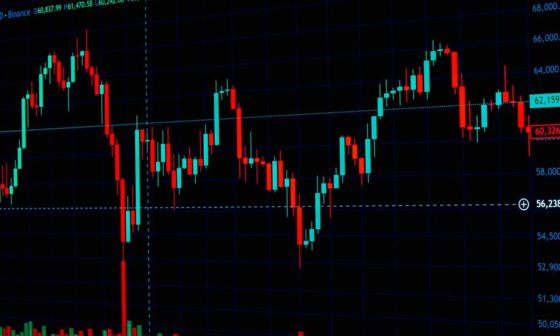
Understanding John Murphy’s Core Principles of Trend Following is essential for any trader seeking to navigate the complexities of modern trading. As outlined in The Ultimate Guide to Technical Analysis of the Financial Markets by John Murphy, trend following is built on the premise that markets move in persistent directions rather than random walks. Murphy emphasizes that identifying the direction of the market early allows traders to align their positions with the prevailing momentum. By focusing on price action and confirmation, these principles help mitigate emotional decision-making, ensuring that traders remain disciplined during volatile periods by adhering to proven mathematical and visual signals.
Validate your strategy with instant backtesting
Backtest LibraryThe Foundation of John Murphy’s Trend Following
John Murphy’s philosophy is rooted in the belief that “the trend is your friend.” To successfully follow a trend, a trader must first define what constitutes a trend. Murphy identifies three classifications: the major (primary) trend, the intermediate trend, and the near-term trend. The core objective is to trade in the direction of the major trend while using the shorter-term cycles to time entries and exits.
A fundamental aspect of this approach is Mastering Support and Resistance: Lessons from John Murphy. In a bullish trend, previous resistance levels should become new support levels upon a breakout. If price fails to hold above these levels, it serves as an early warning sign that the trend may be weakening.
Actionable Insights: Moving Averages and Volume
Murphy utilizes specific technical tools to confirm trend validity. One of the most practical applications is the use of moving averages. According to the principles in How to Use Moving Averages According to John Murphy, a moving average crossover—such as the 50-day crossing above the 200-day—provides a mechanical signal to enter a long position.
However, price action alone is often insufficient. To avoid “whipsaws,” Murphy insists on volume confirmation. You can learn more about this in Volume and Open Interest: The Murphy Approach to Market Strength. In a healthy uptrend, volume should expand on rallies and contract during pullbacks. If volume begins to decline while prices rise, it indicates a lack of conviction among buyers.
Case Studies: Applying Trend Following Principles
To understand how these principles work in real-world scenarios, let’s look at two specific examples:
- Case Study 1: The S&P 500 Golden Cross (2023): Following a period of consolidation, the 50-day moving average crossed above the 200-day average. Traders applying Murphy’s principles would have identified this as a major trend shift. By staying positioned in the direction of the crossover and ignoring short-term volatility, trend followers captured the subsequent multi-month rally.
- Case Study 2: Bitcoin’s Multi-Year Cycles: When Applying John Murphy’s Technical Analysis to Crypto Markets, the principles of trendlines remain remarkably consistent. During the 2020-2021 bull run, Bitcoin consistently found support at its 20-week exponential moving average. Traders who used this as a trailing stop were able to ride the trend from $10,000 to over $60,000, exiting only when the trendline was decisively broken.
Integrating Intermarket Analysis and Momentum
Murphy’s approach is not limited to a single asset class. He pioneered the concept of Intermarket Analysis: Understanding Global Market Relationships, which suggests that the trend in one market (like bonds) can predict the trend in another (like stocks). For example, rising commodity prices often precede inflationary trends that impact equity valuations.
Furthermore, to gauge the speed of a trend, traders should use Oscillators and Momentum: Mastering the RSI and Stochastics – John Murphy. These tools help identify “overbought” or “oversold” conditions within a larger trend, allowing for better-timed entries during corrective dips.
| Indicator Type | Primary Purpose | Murphy’s Practical Insight |
|---|---|---|
| Moving Averages | Trend Identification | Use crossovers for entry and exit signals. |
| Volume | Trend Confirmation | High volume must accompany price breakouts. |
| RSI/Oscillators | Momentum Gauge | Look for divergences to spot potential reversals. |
| Trendlines | Visual Boundary | Connect successive lows in an uptrend for support. |
Identifying Trend Exhaustion
No trend lasts forever. Murphy teaches traders to look for specific structural changes in price. This involves Identifying Reversal Patterns: Head and Shoulders and Beyond – John Murphy. A trend follower remains bullish until a “lower high” and a “lower low” are established, signaling that the supply-demand balance has shifted. This objective approach is vital for The Psychology of Charting: Insights from Murphy’s Technical Analysis, as it prevents traders from exiting too early or holding onto a losing position for too long.
Conclusion
Mastering John Murphy’s Core Principles of Trend Following requires a combination of technical proficiency and psychological discipline. By utilizing tools like moving averages, volume confirmation, and reversal patterns, traders can develop a systematic approach to the markets that removes guesswork. Whether you are trading stocks or exploring how Backtesting Murphy’s Strategies can improve your hit rate, the core philosophy remains the same: identify the trend, confirm it with secondary indicators, and follow it until the evidence proves it has reversed. For a deeper dive into these concepts, refer back to The Ultimate Guide to Technical Analysis of the Financial Markets by John Murphy.
Frequently Asked Questions
What is the most important rule in John Murphy’s trend following?
The most important rule is that a trend is more likely to continue than to reverse. Murphy emphasizes that traders should always trade in the direction of the prevailing trend until there is clear technical evidence of a reversal.
How does Murphy suggest using moving averages for trend following?
Murphy suggests using the interaction between price and moving averages, or crossovers of two different moving averages (like the 50-day and 200-day), to identify entry and exit points. These averages act as dynamic support and resistance levels.
Does John Murphy’s approach work in volatile markets?
Yes, but Murphy advises using wider stops and looking for confirmation from volume and intermarket relationships. In The Ultimate Guide to Technical Analysis of the Financial Markets by John Murphy, he explains that volatility is often a precursor to trend changes.
What is the role of volume in trend following?
Volume serves as a confirmation tool; it should increase in the direction of the existing trend. If prices are rising but volume is falling, Murphy warns that the trend is likely losing momentum and may be nearing a reversal.
How do I know when a trend has officially ended according to Murphy?
A trend has ended when the price breaks a significant trendline and establishes a new pattern of lower highs and lower lows. Murphy often points to reversal patterns like the Head and Shoulders as definitive proof of a trend conclusion.
Can trend following principles be applied to day trading?
While Murphy’s principles are often applied to daily or weekly charts, the logic of support, resistance, and momentum is fractal. This means the same trend-following concepts can be applied to shorter timeframes, though with higher sensitivity to noise.
How does Intermarket Analysis impact trend following?
Intermarket Analysis allows a trend follower to see the “big picture” by observing how different asset classes influence one another. For example, a downward trend in bond prices (rising yields) can often signal a future trend change in the stock market.