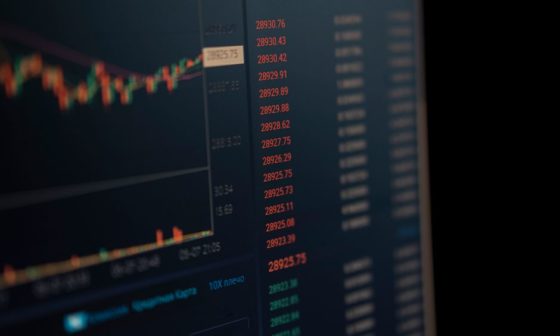
The pursuit of edge in high-frequency trading requires tools that cut through market noise and reveal the true intentions of institutional participants. For scalpers and momentum traders, no tool is more fundamental than the Depth of Market (DOM), often referred to as the Order Book. Mastering Order Flow: Advanced Scalping and Momentum Strategies Using the Depth of Market (DOM) begins with a deep, practical understanding of how this tool functions. This article serves as The Depth of Market (DOM) Explained: A Beginner’s Guide to Reading Bid/Ask Walls, providing the foundational knowledge necessary to translate static liquidity data into dynamic trading opportunities.
Validate your strategy with instant backtesting
Backtest LibraryWhat is the Depth of Market (DOM)?
The Depth of Market (DOM) is a graphical representation of the live limit order book for a specific asset at a given time. Unlike standard charting software which shows executed trades, the DOM displays the queue of pending limit orders waiting to be filled at various price levels, providing a glimpse into current supply and demand dynamics. It is organized as a vertical price ladder, typically centered around the current Best Bid and Best Offer (BBO).
Understanding the DOM is crucial because it shows where liquidity—the potential fuel for price movement—is resting. By visualizing the DOM, a trader can gauge the immediate pressure building on either side of the market, helping determine whether the next immediate move is likely up, down, or consolidating. This real-time visibility is what separates advanced order flow strategies from traditional technical analysis.
Deconstructing the Bid and Ask Sides
The DOM is functionally split into two halves: the Bid side and the Ask side. These represent two fundamentally different pools of liquidity:
- The Bid Side (Buyers): This side lists all pending limit orders to buy the asset at prices below the current market price. Large accumulations here are often referred to as “Bid Walls” and represent immediate support or buying pressure.
- The Ask Side (Sellers): This side lists all pending limit orders to sell the asset at prices above the current market price. Large accumulations here are known as “Ask Walls” and represent immediate resistance or selling pressure.
The critical insight for beginners is the difference between these resting limit orders and market orders. Market orders are the aggressors—they consume the liquidity displayed on the DOM. If a trader places a market order to buy, they consume the lowest available Ask limits; if they sell, they consume the highest available Bid limits. For a deeper dive into optimizing execution, review our guide on Limit Order vs. Market Order: Optimizing Execution and Minimizing Spread in High-Frequency Trading.
Reading the Walls: Identifying Liquidity and Imbalance
The term “Bid/Ask Wall” refers to a price level where a significantly larger quantity of limit orders is clustered compared to adjacent levels. These walls are not just arbitrary numbers; they are strategic points chosen by large entities to defend a price, accumulate a position, or trigger a breakout.
Practical Case Study 1: The Absorption Trade
Imagine a scenario where the price of a future contract is trading at 1500. A massive Bid Wall, consisting of 5,000 contracts, suddenly appears at 1499. The market begins to fall, and aggressive selling (market sell orders) starts hitting the 1499 level. Instead of immediately collapsing through the wall, the level holds. The 5,000 contracts are slowly chipped away, but a large portion remains. This is known as absorption.
Actionable Insight: When a strong wall absorbs sustained market aggression without cracking, it signals that large, determined buyers are defending that price. This absorption often precedes a swift reversal upward, as the sellers who exhausted their firepower realize they failed to push the price lower. Traders analyzing this should look for high-probability setups leveraging Order Book Imbalances for High-Probability Scalping Entries based on this confirmation.
Understanding Order Flow Dynamics: Faked Orders and Spoofing
While the DOM shows potential liquidity, not all orders are genuine. Institutional traders often employ sophisticated techniques, such as spoofing, which involves placing large limit orders (walls) with the intent to cancel them before they are filled. This is a crucial, advanced concept that beginners must grasp to avoid costly traps.
Spoofing creates temporary, artificial liquidity walls to manipulate the psychology of other participants, often leading to a “liquidity trap.”
Practical Case Study 2: The Liquidity Trap
The price is approaching a major resistance level at 105. A huge Ask Wall of 10,000 contracts appears immediately at 105. Retail traders, seeing this massive resistance, either place sell orders immediately beneath it or position stop-loss orders just above 105, expecting a rejection.
The Trap: Just as the market approaches 104.98, the 10,000-contract wall is instantly pulled (canceled) by the spoofer. The price blasts through the now-thinly-defended 105 level, triggering all the stop-loss orders above it. The spoofer, having successfully lured liquidity to the wrong side of the market, may now enter a long position at a better price or trigger a reversal just above the false resistance. Understanding these manipulative maneuvers is essential for preventing slippage, as discussed in Understanding Liquidity Traps: How Large Orders Manipulate the Order Book and Cause Slippage.
To differentiate between a real wall and a spoofing attempt, experienced traders watch the wall’s behavior: Does it adjust price as the market approaches? Does it flash or move? Genuine institutional liquidity tends to be static until aggressively consumed, while manipulative orders are characterized by speed and sudden cancellation.
Integrating DOM Analysis with Broader Strategy
While the DOM provides immediate, high-resolution data, it is rarely used in isolation. For robust strategic development, DOM confirmation should be paired with lower-frequency tools. For example, using the DOM to execute entries confirmed by Volume Profile or VWAP ensures that short-term order flow aligns with larger structural liquidity zones. Reviewing how to utilize these broader tools can be found here: Using Volume Profile and VWAP as Filters for Order Book Confirmation and Strategy Validation.
Ultimately, proficiency in reading bid/ask walls requires constant practice and the development of a psychological edge to manage the speed and volatility of the data, a topic explored further in The Psychological Edge in Order Flow Trading: Managing Fear and Speed in High-Paced Scalping.
Conclusion
The Depth of Market (DOM) is the cockpit of the order flow trader, offering unparalleled insight into where capital is positioned and where immediate liquidity lies. Learning to read bid/ask walls—identifying genuine absorption versus manipulative spoofing—is the gateway to advanced scalping strategies. By utilizing the practical insights regarding walls, absorption, and liquidity traps, traders can move beyond basic charting and execute trades with extreme precision.
To continue building your mastery of this critical trading skill and explore comprehensive strategies for integrating this data, refer to the full guide: Mastering Order Flow: Advanced Scalping and Momentum Strategies Using the Depth of Market (DOM).
Frequently Asked Questions (FAQ) About Depth of Market (DOM) and Bid/Ask Walls
What is the difference between an active order and a resting order on the DOM?
A resting order is a limit order displayed on the DOM (a Bid or Ask wall) waiting for a counterparty to fill it. An active order (or aggressive order) is a market order that instantly consumes the resting orders, causing the price to move toward the opposite side of the book. Resting orders represent potential liquidity, while active orders represent current market conviction.
How can a beginner distinguish between a genuine liquidity wall and a spoofing attempt?
Genuine liquidity (a real wall) tends to stay static or grows when the market approaches it, indicating commitment. Spoofing orders, which are illegal in regulated markets but common in crypto, usually appear and disappear rapidly (flash orders) or are immediately canceled just before the market touches that price level. Experience tracking the behavior and persistence of the wall is key.
What is an “Iceberg Order” and how does it relate to Bid/Ask walls?
An Iceberg Order is a large limit order hidden from full display on the DOM. Only a small, visible fraction (the “tip of the iceberg”) is shown, while the bulk remains hidden. When the visible portion is filled, the exchange automatically refreshes the display with the next hidden chunk. These orders can make a Bid/Ask wall appear smaller than it truly is, leading to unexpected absorption or resistance.
If the Bid side shows much higher volume than the Ask side, what does this imbalance suggest?
A significant imbalance where the Bid side (buying interest below the market) is much larger than the Ask side (selling interest above the market) suggests underlying support and potentially bullish intent. However, a major imbalance can also indicate a Liquidity Void above the market, meaning if the Bid wall is consumed, the price could accelerate rapidly upward due to the lack of immediate resistance.
Why is DOM analysis more critical for scalping than for swing trading?
DOM analysis focuses exclusively on Level 2 data and immediate short-term liquidity, which dictates minute-to-minute price fluctuations. Scalping strategies rely on capturing small, quick moves driven by order flow imbalances and wall consumption, making the real-time visibility of the DOM indispensable. Swing traders, conversely, rely more on structural data like Volume Profile and macroeconomic factors.