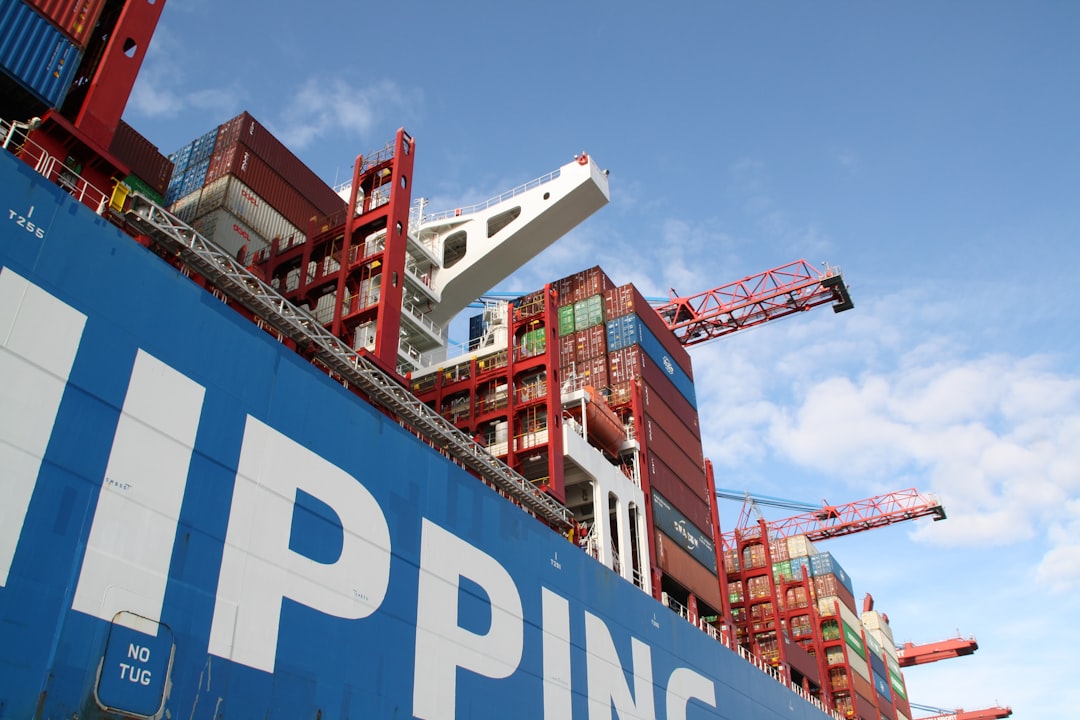
While many legendary traders are famous for high-frequency short-term currency speculation—like George Soros’s Strategy or Paul Tudor Jones’s market timing—Jim Rogers distinguishes himself through a profound commitment to long-term cyclical investing. His approach, central to the understanding of successful trading highlighted in The Legends of FX: Analyzing the Strategies and Psychology of the Best Forex Traders in the World, is defined by Jim Rogers and Global Macro: Applying a Long-Term Commodities and Currency Investment View. Rogers looks beyond quarterly earnings, focusing instead on decades-long imbalances, geopolitical shifts, and the inevitable return to value in forgotten sectors, a methodology that treats currency markets as consequences of, rather than drivers for, underlying resource flows.
Analyze financial data and fundamentals for better investment decisions
View Financial DataThe Core Philosophy: Long-Term Cycles and Contrarianism
Jim Rogers, co-founder of the Quantum Fund alongside George Soros, built his reputation not through rapid-fire trading, but through rigorous fundamental analysis focused on identifying major, decades-long economic dislocations. His core strategy revolves around two powerful concepts:
- The Cycles of Neglect: Rogers firmly believes that every asset class experiences long cycles (often 15 to 20 years) of boom and bust. When an asset class is universally despised, undervalued, and underinvested (e.g., commodities in the late 1990s), it presents the optimal time for a long-term position.
- Geographic and Sector Contrarianism: True value requires going where others fear to tread. Rogers famously invested in China and emerging Asian markets decades before they became mainstream darlings. His trading method demands patience, often holding positions for 5 to 10 years, which requires exceptional psychological discipline.
Unlike traditional FX traders who might use a combination of technical indicators or short-term momentum shifts, Rogers prioritizes structural demographic and supply data. His investment strategy often precedes currency movements, anticipating which currencies will strengthen as global capital flows into the nations supplying those essential, undervalued resources.
Commodities and Currencies: The Interlocking Macro View
For Rogers, the relationship between commodities and currencies is symbiotic and structural. Since most global commodities (oil, gold, corn) are priced in US Dollars (USD), the health and flow of the commodity market directly impact USD strength and the relative value of commodity-producing nations’ currencies.
The Currency Impact of Commodity Supercycles
A commodity supercycle—a prolonged period of rising commodity prices driven by structural demand and supply scarcity—has predictable effects on the FX market:
- USD Weakness: When commodity prices are rising dramatically (indicating inflation and high global demand), the purchasing power of the US Dollar often declines relative to those hard assets. Rogers often maintains a structural short position or hedged view against the USD during these periods.
- Strength in Commodity Currencies: Currencies of countries with large, stable resource exports—such as the Australian Dollar (AUD), Canadian Dollar (CAD), Brazilian Real (BRL), and currencies of various African and Central Asian nations—tend to appreciate significantly as export revenues swell and foreign direct investment pours in to secure future supply.
- Inflation Hedging: Rogers views physical commodities as the ultimate inflation hedge. Therefore, being long commodities is intrinsically being short the continued printing of fiat money, which is a structural bet against monetary policy easing.
This perspective requires a truly global macro lens, similar to the scope used by Stanley Druckenmiller’s macro approach, though Rogers applies it on a much longer timeline.
Practical Application of the Rogers Strategy
Applying the Jim Rogers method means shifting focus from typical short-term FX pairs (like EUR/USD volatility) to structural long trades in commodity-linked currencies and assets.
- Identify Structural Scarcity: Look for sectors where years of underinvestment have created a critical supply shortage. For instance, Rogers has long championed agriculture, noting the aging farmer population and shrinking arable land relative to global population growth.
- Track Relative Valuation: Identify currencies that are cheap relative to their historical purchasing power parity (PPP) and whose underlying nation is rich in the needed commodities. This often involves looking at political stability and debt levels.
- Embrace Illiquidity: Rogers often invests in frontier or emerging markets (e.g., Vietnam, Kazakhstan, Botswana) where liquidity is low but the long-term value proposition is high. In FX trading, this translates to holding less liquid, higher-yielding commodity crosses.
- Master Risk Management Through Non-Correlation: Because Rogers’ positions are based on decades-long fundamentals, temporary market noise can be intense. Success depends on extreme position sizing discipline and capital allocation. This long-term horizon inherently provides a form of risk management because short-term volatility is irrelevant to the eventual structural payoff, provided capital preservation (or risk management secrets) is maintained.
Actionable Insight: For a modern trader, this translates into examining the long-term charts of currencies like the CAD/JPY or AUD/NZD, looking for multi-year breakouts that correlate directly with global industrial metal or energy pricing indexes.
Case Studies in Long-Term Global Macro Trading
Case Study 1: The 2000s Commodity Supercycle
By the late 1990s, the world had focused almost entirely on technology and finance. Commodities were deeply unpopular and cheap. Rogers recognized the historical pattern: underinvestment leads to scarcity. He became aggressively long across a diversified basket of raw materials, arguing that China’s impending economic acceleration would unleash unprecedented demand. His investment vehicle, the Rogers International Commodity Index (RICI), provided investors with exposure to this thesis.
- Currency Play: As demand surged from 2001 to 2008, countries like Australia and Canada benefited massively. The AUD strengthened significantly against the USD and JPY, supported by massive mining projects and coal/iron ore exports to Asia. Rogers’ long commodity stance was effectively a structural long on the AUD and a short on the inherent value of the US Dollar, which was being aggressively printed.
Case Study 2: Agricultural Opportunities and Sugar
Rogers has consistently advocated for agriculture, noting its critical role and the historical lack of investment. In the early 2010s, he highlighted sugar. Regulatory changes, climate issues, and burgeoning demand for biofuels were creating a perfect storm for price rises.
- Currency Play: The Brazilian Real (BRL) is deeply tied to agricultural exports (soybeans, coffee, sugar, beef). A long-term bullish outlook on sugar and soft commodities naturally requires a long-term bullish outlook on the BRL, despite Brazil’s often turbulent domestic politics. This required ignoring the short-term political noise and focusing solely on the fundamental export capacity and global need, a true test of long-term contrarian conviction.
Case Study 3: The Forgotten Frontier Markets (Post-Soviet Economies)
Rogers undertook several world tours, documenting his search for overlooked assets. He famously invested in various frontier markets, including those in Central Asia. The rationale was simple: these nations possessed vast untapped natural resources (oil, minerals, strategic metals) but were suffering from temporary political or infrastructural hurdles.
- Currency Play: Investing directly in the stocks and bonds of these markets often implicitly involves taking a long position in their local currencies (e.g., the Kazakh Tenge or the Mongolian Tugrik). This is a highly specialized macro trade where success depends entirely on the long-term structural development of the nation’s resource infrastructure and geopolitical integration. It mirrors the aggressive fundamental conviction seen in legendary traders who master high-stakes macro events.
Psychological Discipline and the Value Investor’s Mindset
For a trader whose holding period is measured in years, psychological endurance is paramount. Rogers’ methodology requires:
- Patience Over Precision: He focuses on getting the major trend right, not the exact entry point. If the structural thesis—such as rising demand for copper due to electrification—is correct, short-term drawdowns are merely noise.
- Intellectual Independence: Rogers constantly reads history, demographic reports, and government balance sheets, specifically seeking information that contradicts prevailing public opinion. This willingness to stand alone, sometimes for years, is the hallmark of a successful contrarian macro trader.
- Avoidance of Leverage: While some legendary FX traders employ aggressive leverage (e.g., Bill Lipschutz), Rogers often advocates for conservative positioning, given the long holding periods and the unpredictable nature of global events. Leverage risk over a decade can be catastrophic.
Conclusion
Jim Rogers offers a unique perspective in the world of high-stakes FX trading. His strategy is not about chasing momentum or perfecting chart patterns; it is about rigorous historical analysis and the conviction to hold long-term structural trades based on global imbalances, scarcity, and cyclical change. For those looking to implement Jim Rogers and Global Macro: Applying a Long-Term Commodities and Currency Investment View, the key takeaway is simple: currency values are derived consequences of real-world flows of resources. By identifying structural shortages in commodities, traders can position themselves long the correlated resource currencies for years of appreciating value. To understand how this long-term approach fits into the broader spectrum of successful trading methodologies, explore the complete analysis in The Legends of FX: Analyzing the Strategies and Psychology of the Best Forex Traders in the World.
Frequently Asked Questions (FAQ) about Jim Rogers and Global Macro
- What is the fundamental difference between Jim Rogers’ approach and traditional short-term FX macro trading?
- Rogers focuses on structural, decade-long macro themes (like commodity supercycles and national debt imbalances) to identify undervalued asset classes, treating currency movements as a consequence. Traditional FX macro trading, exemplified by figures like George Soros, often targets shorter-term discrepancies caused by policy changes, interest rate differentials, or immediate geopolitical events.
- How does Rogers use commodities to inform his currency investments?
- Since commodities are crucial inputs for global economies, Rogers identifies countries that are major, stable exporters of required resources. As global demand for those resources increases (driving up commodity prices), capital flows into these nations, strengthening their currency (e.g., the Australian Dollar due to iron ore exports).
- What is the Rogers International Commodity Index (RICI) and why is it important for his strategy?
- The RICI is an index designed by Jim Rogers to track the price movements of a diversified basket of physical commodities. Unlike many financial indexes, the RICI places greater weight on agricultural products and metals, reflecting Rogers’ core belief that these essential, often neglected sectors offer the greatest long-term structural value.
- Does Jim Rogers advocate for aggressive leverage in his global macro trades?
- No. Given the multi-year holding periods inherent in his strategy, Rogers typically advocates for low leverage. High leverage is incompatible with the volatility and potential multi-year drawdowns that accompany deeply contrarian, long-term investments, making conservative risk management crucial for survival.
- How does Jim Rogers determine when a commodity cycle is nearing its end?
- A cycle ends when the asset class becomes universally popular, oversupplied, and highly valued. Specifically for commodities, this often occurs when massive capital expenditure has successfully addressed scarcity, new technologies emerge to replace the commodity, or public confidence reaches euphoric levels—the exact opposite of the conditions that sparked his initial investment.
- Which specific currencies are most influenced by the Rogers long-term commodity view?
- The currencies most often identified are the primary commodity currencies: the Canadian Dollar (CAD, linked to oil/metals), the Australian Dollar (AUD, linked to iron ore/coal), the New Zealand Dollar (NZD, linked to agriculture), and, in emerging markets, the Brazilian Real (BRL, linked to soft commodities and resources).