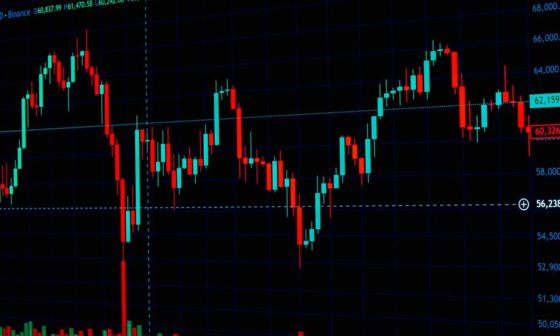
Many traders spend years perfecting chart patterns, only to find their accounts stagnating. Understanding Why Technical Analysis Fails Without the Right Trading Psychology – Mark Douglas explains this common paradox: technical analysis identifies an “edge,” but psychology dictates whether you can actually execute it. As explored in A Summary to Trading in the Zone by Mark Douglas, analysis only provides a probabilistic advantage. Without a disciplined mind, fear and greed override the data, leading to hesitation or impulsive entries that invalidate even the most accurate technical setup. Success requires moving beyond “market analysis” to “self-analysis.”
Validate your strategy with instant backtesting
Backtest LibraryThe Gap Between Knowing and Doing
Mark Douglas famously argued that technical analysis is a tool for identifying patterns, but it cannot predict what individual market participants will do next. Traders often fall into the trap of using analysis to eliminate risk rather than accept it. When a trader uses technical tools to seek certainty, they become emotionally vulnerable to every tick of the market. To bridge this gap, one must understand The 5 Fundamental Truths of Trading Psychology from Mark Douglas, which emphasize that every moment in the market is unique.
Without the right mindset, technical analysis fails because the trader:
- Internalizes losses as personal failures, leading to “analysis paralysis.”
- Ignores stop-losses because they hope the technical pattern will “eventually” work.
- Abandons the plan after a short string of losses, failing to see the statistical edge over a large sample size.
Actionable Insights: Aligning Mindset with Strategy
To ensure your technical analysis actually produces results, you must cultivate a probabilistic mindset. This means shifting your focus from “being right” to “managing expectations.” Practical steps include:
- Pre-define your risk: Before entering, know exactly where you are wrong. This is essential for Mark Douglas’s Guide to Accepting Risk in Every Trade.
- Execute without hesitation: When your technical criteria are met, enter the trade. Hesitation is a sign that you are still trying to predict the outcome.
- Think in sets of trades: Evaluate your technical strategy over 20 or 50 trades, not just one. This helps in Developing a Probabilistic Mindset for Consistent Trading Success – Mark Douglas.
Case Studies: Why Analysis Fails in Practice
Case Study 1: The Hesitant Perfectionist
A trader identifies a perfect “Head and Shoulders” pattern. However, because they lost their last three trades, they wait for “just one more” confirming candle. By the time they feel safe, the move is halfway over, and their risk/reward ratio is ruined. Here, the technical analysis was correct, but the psychology of fear made it unprofitable.
Case Study 2: The Stop-Loss Mover
A trader enters a long position based on a support bounce. As price approaches their stop-loss, they move it lower, convinced the “technical support” will eventually hold. They are no longer trading the market; they are trading their need to be right. This highlights the The Impact of Belief Systems on Your Trading Performance – Mark Douglas.
Building a Disciplined Execution Framework
To overcome these failures, traders must transition from being market analysts to being professional risk managers. This involves The Role of Self-Discipline in Mark Douglas’s Trading Philosophy. You must treat your technical entry as a business trigger, devoid of emotional weight. If you struggle with this, consider How to Eliminate Fear and Greed: Lessons from Trading in the Zone – Mark Douglas to recalibrate your emotional response to market volatility.
Practical advice for the modern trader:
| Technical Component | Psychological Requirement | Resulting Action |
|---|---|---|
| Chart Pattern | Acceptance of Uniqueness | Enter without expecting a specific result |
| Stop-Loss | Risk Acceptance | Leave the stop where it was placed |
| Profit Target | Lack of Greed | Exit when the plan dictates, not when you “feel” it will go further |
Conclusion
Ultimately, technical analysis is merely the “what” of trading, while psychology is the “how.” You can have the most advanced algorithmic system or chart-reading skills, but if your mind perceives the market as a threat, you will inevitably sabotage your own success. By integrating How to Build a Winning Trading Plan Based on Trading in the Zone – Mark Douglas into your daily routine, you learn to execute your edge flawlessly. For a deeper understanding of these concepts, refer back to the core principles found in A Summary to Trading in the Zone by Mark Douglas.
Frequently Asked Questions
1. Why does Mark Douglas say technical analysis creates a “trap”?
Douglas suggests TA creates a trap because it gives traders the illusion of control. When the market doesn’t follow a “perfect” pattern, traders feel betrayed or angry, leading to emotional decisions that violate their strategy.
2. Can I be successful with just technical analysis?
No, because technical analysis only identifies probabilities. Success requires the psychological discipline to execute those probabilities consistently, as explained in Transitioning from a Gambler to a Professional Trader: The Zone Method – Mark Douglas.
3. How do I stop second-guessing my technical signals?
The key is to accept that any individual trade has a random outcome. By Backtesting Your Psychology alongside your strategy, you build trust in your edge rather than the individual trade.
4. Does better analysis reduce the need for trading psychology?
Actually, it can be the opposite. More complex analysis often leads to a higher expectation of being right, which increases the emotional pain when the trade fails, making psychology even more critical.
5. What is the most important psychological shift for a technical trader?
The most important shift is moving from “trying to predict what will happen” to “defining an edge and managing risk.” This is a central theme in A Summary to Trading in the Zone by Mark Douglas.
6. Why do I fail to take trades that meet all my technical criteria?
This usually stems from a fear of losing or a lack of true risk acceptance. You are perceiving the market as a source of pain rather than a neutral provider of information.
7. How can I measure my psychological progress?
You measure it by your “execution score.” If you follow your technical plan perfectly—regardless of whether the trades win or lose—your psychology is improving.