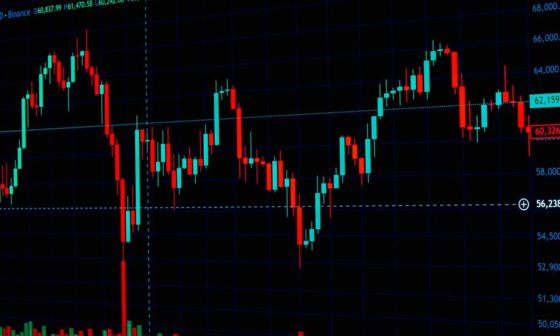
Investing in infrastructure assets often involves navigating stocks with high capital expenditures and long-term project lifecycles. While fundamental analysis helps identify companies with strong moats, Using Technical Indicators to Time Entry Points in Infrastructure Stocks is essential for maximizing returns and minimizing “dead money” periods. Because these stocks are frequently sensitive to interest rate fluctuations and government spending cycles, technical analysis provides a roadmap for identifying when market sentiment is shifting from bearish to bullish. This specialized approach is a vital subset of the strategies discussed in The Ultimate Guide to Investing in Infrastructure: Stocks, ETFs, and Global Market Trends, allowing investors to enter positions with a favorable risk-to-reward ratio.
Validate your strategy with instant backtesting
Backtest LibraryThe Importance of Moving Averages in Infrastructure Trends
Infrastructure stocks, particularly those in the utility and telecommunications sectors, tend to exhibit strong, persistent trends. The most effective way to capitalize on these trends is through the use of Simple Moving Averages (SMA). The 50-day and 200-day SMAs are the gold standard for institutional investors.
When a stock like a major rail operator or a power utility crosses above its 200-day SMA, it often signals a long-term transition from a downtrend to an uptrend. Conversely, a “Golden Cross”—where the 50-day SMA crosses above the 200-day SMA—can confirm a breakout in Top Infrastructure ETFs for Long-Term Portfolio Growth. For investors, entering a position during these crossovers ensures they are aligned with the prevailing market momentum rather than fighting a losing battle against a declining sector.
Relative Strength Index (RSI) for Identifying Overextended Entries
Because infrastructure stocks are often viewed as “bond proxies” due to their dividends, they can become crowded trades. Using the Relative Strength Index (RSI) helps investors avoid buying at local peaks. An RSI reading above 70 typically indicates that a stock is overbought and may be due for a mean-reversion or consolidation period.
For those Analyzing the Best Infrastructure Stocks in the Energy Sector, the RSI is particularly useful during periods of energy price volatility. An ideal entry point often occurs when the RSI dips below 30 (oversold) and begins to curl upward, or when it holds a “hidden bullish divergence,” where price makes a higher low but the RSI makes a lower low. This suggests that while the price looks weak, internal momentum is actually building for a rebound.
Volume Analysis: Confirming the Validity of a Breakout
Technical indicators are most powerful when confirmed by volume. In the infrastructure space, major moves are often driven by legislative news or large-scale contract wins. When a stock breaks above a key resistance level—such as a multi-month price ceiling—it must be accompanied by a significant spike in trading volume to be considered a valid entry point.
Low-volume breakouts are often “bull traps” that quickly reverse. By monitoring volume, investors can distinguish between a genuine shift in institutional sentiment and temporary retail excitement. This is especially relevant when Investing in Smart Cities: The Future of Urban Infrastructure Stocks, where speculative fervor can sometimes outpace actual technological implementation.
Case Study 1: Timing an Entry in Renewable Energy Infrastructure
Consider a hypothetical scenario involving a leading renewable energy provider. After a year-long decline due to rising interest rates, the stock begins to stabilize. An investor using technical indicators would look for a “Double Bottom” chart pattern.
By waiting for the price to break the “neckline” of the double bottom on high volume, and ensuring the MACD (Moving Average Convergence Divergence) has signaled a bullish crossover, the investor avoids the risk of catching a falling knife. This disciplined approach ensures that the capital is deployed only when the market has confirmed a floor is in place. This strategy is frequently used when Backtesting Infrastructure Investment Strategies: Historical Performance vs. Market Benchmarks to see how technical entries would have improved historical returns.
Case Study 2: Mean Reversion in Digital Infrastructure (Data Centers)
Digital infrastructure, such as data center REITs, often experiences high volatility compared to traditional water or road utilities. These stocks frequently trade in well-defined channels. A savvy investor might use Bollinger Bands to time entry points.
When the price touches the lower Bollinger Band while the overall Global Infrastructure Market Trends: The Rise of Digital and Green Assets remain positive, it presents a high-probability “buy the dip” opportunity. If the lower band touch coincides with a major support level established over several years, the entry point becomes even more compelling.
Integrating Technicals with Risk Management
No technical indicator is foolproof. Therefore, timing entry points must be paired with strict risk management. Infrastructure stocks can be sensitive to “black swan” events like regulatory changes or environmental disasters. Utilizing stop-loss orders based on technical levels—such as placing a stop slightly below a recent swing low or a major moving average—protects capital.
For investors dealing with higher volatility, Options Trading Strategies for Infrastructure Sector Volatility can provide additional layers of protection or even allow for “synthetic” entries at lower prices through cash-secured puts. Furthermore, understanding Infrastructure Futures: Hedging Risks in Large-Scale Construction Projects can help investors understand the broader macro-hedging occurring in the background of the stocks they trade.
The Role of Market Breadth in Entry Timing
Before entering a specific stock, it is wise to look at the “breadth” of the infrastructure sector. Are most stocks in the sector trading above their 50-day moving averages? If only one or two stocks are rising while the rest of the sector is falling, the breakout may lack the necessary support to be sustainable.
Monitoring the The Role of Infrastructure in a Balanced ETF Portfolio allows you to see if capital is flowing into the sector as a whole. A “rising tide lifts all boats” scenario provides a much safer environment for technical entries than trying to pick a single winner in a declining industry. This broader view is also essential for understanding How Infrastructure Portfolio Diversification Protects Against Inflation, as technical strength often precedes periods where these stocks outperform during inflationary cycles.
Conclusion
Mastering the art of Using Technical Indicators to Time Entry Points in Infrastructure Stocks transforms investing from a game of guesswork into a strategic discipline. By combining moving averages for trend identification, RSI for momentum cooling, and volume for confirmation, investors can significantly improve their timing. While infrastructure is fundamentally a long-term play, the entry price dictates the ultimate yield and total return of the position. For a comprehensive understanding of how these technical tactics fit into a broader wealth-building plan, refer back to The Ultimate Guide to Investing in Infrastructure: Stocks, ETFs, and Global Market Trends.
Frequently Asked Questions
1. Which technical indicator is best for slow-moving utility stocks?
The 200-day Moving Average is generally the most reliable for utilities. Since these stocks are less volatile, a break above or support at the 200-day SMA often signals a reliable long-term trend shift that institutions respect.
2. Can RSI be used to time dividend reinvestments in infrastructure?
Yes. Investors can wait for a stock’s RSI to drop below 40 or 50 before manually reinvesting dividends. This ensures you are adding shares when the stock is at a relative value point rather than at a short-term peak.
3. How does interest rate volatility affect technical patterns in this sector?
Infrastructure stocks are highly sensitive to rates. When interest rates spike, technical support levels (like previous lows) are often tested. If a stock holds its support level despite rising rates, it is a sign of extreme technical strength.
4. Is volume analysis different for infrastructure ETFs compared to individual stocks?
Yes, for ETFs, volume often reflects macro hedging or institutional rebalancing. High volume in an infrastructure ETF usually confirms a sector-wide move, whereas high volume in a single stock might just be related to a specific company news event.
5. Should I use technical indicators on weekly or daily charts?
For timing entry points in a long-term infrastructure portfolio, daily charts are best for the “trigger.” However, weekly charts are superior for identifying the primary trend and major historical support zones.
6. What is a “fakeout” in technical analysis, and how do I avoid it?
A fakeout occurs when a stock briefly breaks above a resistance level but quickly falls back. You can avoid this by waiting for a daily close above the level and ensuring that the move is backed by volume and a positive MACD crossover.
7. How does technical analysis complement the pillar guide on infrastructure investing?
While the pillar guide focuses on the “why” and “what” of infrastructure (ETFs, sectors, and global trends), technical indicators provide the “when,” ensuring that your execution matches your strategic goals.