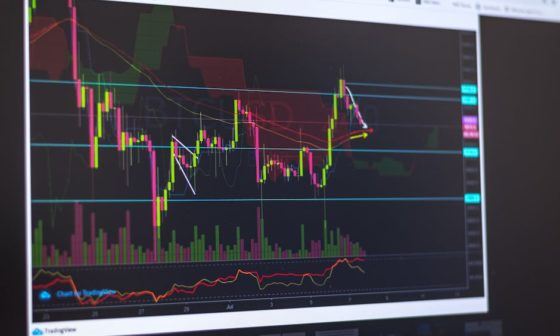
Tone Vays stands as one of the crypto market’s most vocal and polarizing figures, known primarily for his unwavering commitment to Bitcoin and his strict adherence to pure technical analysis (TA). His approach, often termed Tone Vays’ BTC Maximalist Playbook: Analyzing Pure Technical Analysis in Volatile Markets, offers a powerful counterpoint to fundamental analysis and high-leverage strategies. This deep dive dissects the strategy that focuses solely on chart structure, price action, and market momentum, proving that traditional charting methodologies can still yield consistent results, even in the highly chaotic crypto environment. For a broader overview of market-defining strategies, refer to The Definitive Guide to Famous Crypto Traders: Strategies, Success Stories, and Lessons Learned.
The Philosophy of BTC Maximalism in Trading
Tone Vays’ methodology is fundamentally rooted in the belief that Bitcoin (BTC) is the only decentralized, sound monetary asset in the crypto space. This maximalist stance profoundly impacts his trading playbook by eliminating the need to track hundreds of altcoins, ICO narratives, or inflationary tokenomics—factors that often distract traders relying on fundamental analysis.
By exclusively focusing on BTC/USD charts, Vays simplifies the analytical environment. He asserts that the price action of Bitcoin is the purest reflection of market sentiment and liquidity, making its charts the most reliable for technical indicators. While other traders, like those tracking institutional flow described by Meltem Demirors’ Strategy for Navigating Crypto Asset Management, must filter massive amounts of data, Vays’ singular focus allows for a deeper mastery of one asset’s price behavior.
Key Tenets of the Maximalist Trading Mindset:
- Reduced Noise: Ignoring the hype cycles and speculative pumps associated with lower-cap assets.
- Focus on Capital: Recognizing that major institutional capital flows primarily into BTC, ensuring high-quality market signals.
- Rejection of Fundamentals: While he respects Bitcoin’s foundational principles (decentralization, hash rate), his trading decisions strictly exclude news, regulatory changes, or macroeconomic shifts—unlike macro fund approaches, such as those detailed in Soros’ Crypto Entry.
Core Components of Tone Vays’ Pure TA System
Vays is famously critical of overly complex or proprietary indicators. His playbook relies heavily on time-tested, basic charting tools used by traders for decades. The effectiveness of his analysis stems not from finding secret indicators, but from mastering the interpretation of basic tools on high timeframes.
The Essential TA Toolkit:
- Moving Averages (MAs): Specifically the 50-week and 200-week MAs. These are not used for short-term entry/exit but as critical macro support and resistance zones that define the primary market trend.
- Candlestick Patterns: Emphasis on high-volume weekly and monthly candles to identify accumulation or distribution zones, ignoring less reliable daily or hourly signals.
- Trend Lines and Channels: Drawing clear, validated trend lines on the weekly chart to establish market structure.
- Fibonacci Retracements/Extensions: Used to define potential targets and reversal points, particularly after significant market moves.
- Momentum Indicators (RSI, MACD): Utilized primarily on the weekly timeframe to identify major bullish or bearish divergences and confirm overbought/oversold conditions at the macro level.
Applying High-Timeframe Analysis: The Weekly Chart Dictate
One of the defining features of Tone Vays’ BTC Maximalist Playbook is the overwhelming priority given to the weekly chart. In a market notorious for high-frequency trading and rapid price swings, focusing on the weekly chart is a method of filtering out “whipsaws” and maintaining discipline.
Vays argues that daily and four-hour charts are vulnerable to manipulation and are largely “noise.” By requiring confirmation of price action on a weekly close, traders minimize the risk of being shaken out of positions based on intraday volatility. This highly conservative approach stands in stark contrast to the high-leverage, short-term strategies that led to events like The Billion-Dollar Collapse: Lessons on Leverage and Risk from the Three Arrows Capital Crash.
Practical Steps for Weekly Analysis:
- Identify Macro Trend: Determine if the market is above or below the 50 WMA. This establishes the bias (long or short).
- Define Support/Resistance: Plot historical swing high/lows that have held up across multiple weeks.
- Wait for Weekly Close Confirmation: A potential trade signal (e.g., a bullish engulfing candle) must be confirmed by the end of the trading week before execution.
Case Study 1: The 50-Week Moving Average as the Ultimate Support/Resistance
The 50-Week Moving Average (50 WMA) is arguably the single most important indicator in Vays’ playbook. Historically, the 50 WMA on the Bitcoin chart has acted as the definitive dividing line between major bull and bear cycles.
The Strategy: When BTC price is firmly above the 50 WMA and using it as support, the macro trend is bullish, and buying dips is the prevailing strategy. When the price decisively breaks below the 50 WMA and flips it into resistance, the market is usually entering a protracted bear phase, requiring caution or short positions (though Vays himself often prefers to simply hold cash during severe bears).
Example (2018-2019 Bear Market): Throughout the 2018 bear market, failed attempts to recapture the 50 WMA confirmed the downtrend. Crucially, when BTC finally broke back above the 50 WMA in early 2019, it served as a clear, macro-level signal that the bottom was likely in, preceding the multi-month rally toward $14,000. This highly visible signal minimizes complexity, contrasting sharply with the deep institutional intelligence required by firms featured in reports like Messari’s Alpha.
Case Study 2: Identifying Market Bottoms via the RSI and Volume
While Vays emphasizes price action, he uses secondary indicators to confirm extreme opportunities, particularly market bottoms.
The Strategy: During deep bear markets, Vays looks for the Relative Strength Index (RSI) on the weekly chart to reach extremely low levels (often below 30) while volume spikes dramatically. The combination of oversold conditions and capitulation volume suggests that panic selling has exhausted itself.
Example (2020 COVID Crash): During the sudden, severe drop in March 2020, BTC plummeted. While the daily chart was chaotic, the weekly RSI plunged to levels rarely seen outside of cyclical lows, confirmed by massive selling volume. For Vays’ playbook, this event, coupled with holding the 200 WMA, provided a strong, high-probability signal of a temporary—and eventually long-term—bottom. Entering a trade based on this confluence of indicators means positioning early for the next macro move.
Actionable Insights for Modern Traders
Adopting elements of Tone Vays’ BTC Maximalist Playbook requires discipline and patience, but offers significant advantages in filtering crypto market volatility.
1. Master One Timeframe
Do not switch between daily, 4-hour, and weekly charts to justify a position. Pick the weekly chart as the primary guide for directional bias. Use lower timeframes only for precise entry and exit timing once the macro direction has been confirmed.
2. Treat the 50 WMA as the Law
If you are planning a long-term position, only open long positions when BTC is holding above the 50 WMA. If the price is consistently failing to break above this line, bias should shift to caution or shorting (if comfortable). This rule applies even if sentiment or “news” suggests otherwise.
3. Use Basic Indicators for Confirmation, Not Prediction
Avoid fitting complex curves or relying on esoteric indicators. Vays’ success lies in using standard technical analysis tools (MAs, RSI, Volume) and interpreting their long-term signals accurately. Complexity often adds confusion, especially when dealing with the highly emotional crypto market.
4. Adopt the Maximalist Filter
Even if you trade altcoins, applying the maximalist filter means using the BTC chart as the ultimate leading indicator. If BTC’s weekly chart structure is breaking down, most other crypto assets are likely to follow, regardless of their individual news or partnerships (like those surrounding The Ethereum Investment Strategy).
Conclusion
Tone Vays’ BTC Maximalist Playbook serves as a powerful reminder that simplicity and patience can overcome the chaos of highly volatile markets. By strictly adhering to pure technical analysis, focusing only on Bitcoin, and prioritizing high-timeframe chart structure (especially the 50 WMA), traders can develop a highly disciplined approach to capital preservation and long-term positioning. His methodology proves that macro trends, visible through classic TA, dictate the success of strategies, minimizing the risk inherent in chasing daily noise. To explore other defining strategies, including those that leverage institutional adoption and macroeconomic factors, return to The Definitive Guide to Famous Crypto Traders: Strategies, Success Stories, and Lessons Learned.
Frequently Asked Questions About Tone Vays’ BTC Maximalist Playbook
- Q: Why does Tone Vays strictly adhere to the BTC Maximalist philosophy in his trading?
- A: Vays believes Bitcoin charts offer the purest and least manipulated reflection of liquidity and market sentiment. By ignoring altcoins, he eliminates analytical noise, allowing him to focus entirely on applying classical technical analysis principles to the asset with the deepest market history.
- Q: What specific timeframe is most critical in Tone Vays’ analysis?
- A: The weekly chart is paramount. Vays uses high timeframes (weekly and monthly) to filter out short-term volatility and manipulation, ensuring that his trading decisions are based on confirmed macro trends rather than daily price swings.
- Q: What is the significance of the 50-Week Moving Average (50 WMA) in his playbook?
- A: The 50 WMA serves as the most reliable indicator of the overall market regime. Sustained price action above the 50 WMA signals a bull market and encourages buying dips, while failing to hold it suggests a protracted bear market and necessitates extreme caution or selling.
- Q: Does Tone Vays use fundamental analysis (FA) like hash rate or network usage in his trading decisions?
- A: No. While Vays respects Bitcoin’s fundamentals, his trading playbook is based purely on technical analysis (TA). He believes all relevant market information, including underlying fundamentals, is ultimately reflected in the price action on the chart.
- Q: How does Vays’ strategy differ from quantitative or institutional trading strategies?
- A: Vays relies on visual, classical TA interpretation and patience, requiring high discipline but minimal computational power. This contrasts sharply with strategies employed by groups like the Winklevoss Twins or quantitative funds that utilize complex algorithms, high-frequency trading, and deep institutional market intelligence.