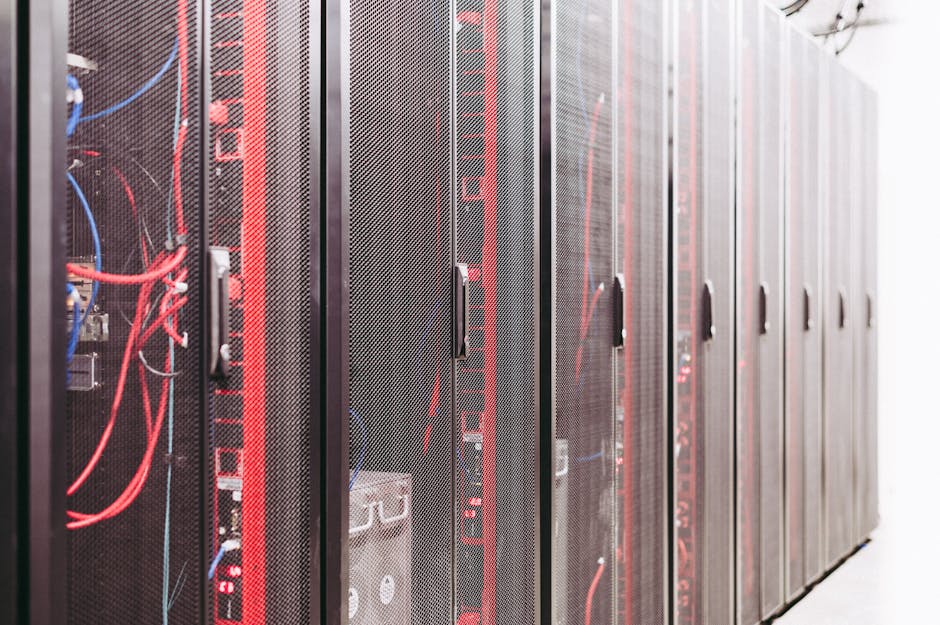
The landscape of commercial real estate has undergone a seismic shift, moving from the gleaming glass towers of city centers to the unassuming, high-security bunkers housing the world’s computing power. As we enter the era of autonomous intelligence, Profiting from the Power Grid: Why Investing in AI Data Centers is the New Real Estate Play has become a central theme for institutional and retail investors alike. Unlike traditional office space, which relies on foot traffic and corporate leases, AI data centers are valued by their access to high-voltage electricity and fiber-optic connectivity. This transition represents a fundamental component of The Ultimate Guide to Agentic AI and Infrastructure Investment: Navigating the Next Wave of AI Sector Opportunities, where the physical “bricks and mortar” of the digital age become the most critical bottleneck for technological progress.
The Shift from Square Footage to Kilowatt Hours
In traditional real estate, the mantra has always been “location, location, location.” For AI data centers, that mantra has evolved into “power, power, power.” The massive computational requirements of Large Language Models (LLMs) and the emerging field of Investing in Agentic AI: How Autonomous Agents are Transforming Enterprise Workflows require specialized facilities capable of handling unprecedented heat loads and energy density. While a standard office building might use 5 to 10 watts per square foot, an AI-optimized data center can require 100 watts or more for the same footprint.
Investors are increasingly viewing these facilities not as warehouses, but as high-yield utilities. The value of the land is secondary to the “interconnection agreement”—the legal right to draw a specific amount of power from the grid. As the grid reaches capacity in major hubs like Northern Virginia or Santa Clara, existing data centers with secured power allocations are seeing their valuations skyrocket. This scarcity creates a protective moat for early investors, as seen in The Backbone of Intelligence: A Deep Dive into AI Infrastructure Investment Strategies.
Strategic Drivers of AI Data Center Valuation
To understand why this is the “new real estate play,” one must look at the structural changes in how AI Enterprise Workflows: Identifying the Software Winners in the Agentic Era are deployed. The demand for low-latency inference and massive training clusters has led to several key value drivers:
- Energy Proximity: Facilities located near nuclear plants or large-scale renewable farms command a premium due to the stability and “green” credentials of their energy supply.
- Cooling Infrastructure: Liquid cooling is replacing traditional air conditioning. Facilities designed for rear-door heat exchangers or immersion cooling are future-proofed against the next generation of GPUs.
- Fiber Connectivity: The proximity to “carrier hotels” ensures that the data generated by agentic systems can be processed and returned to the user with minimal delay.
When Backtesting AI Sector Investment Opportunities: Data-Driven Approaches to Tech Portfolios, researchers have found that data center REITs (Real Estate Investment Trusts) often outperform traditional commercial REITs during periods of high interest rates, largely due to the essential nature of their service and the inflation-linked escalators in their long-term contracts.
Case Studies: Winning the Power Race
Analyzing real-world examples helps illustrate the potential for profit in this sector. Two specific instances highlight how power and infrastructure translate into market value:
1. The Northern Virginia Power Constraint: In 2022, when power constraints were announced in “Data Center Alley,” existing operators like Digital Realty and Equinix saw a surge in the value of their “shelled” space. Because they had already secured power permits that would take newcomers years to acquire, they were able to raise rents by over 20% in a single year. This demonstrates how power scarcity creates an artificial monopoly, a core concept in From LLMs to Agentic Systems: How ML and AI Models Drive Market Valuation.
2. The Microsoft-BlackRock Global AI Infrastructure Investment Partnership: This initiative aims to mobilize up to $100 billion to build the next generation of data centers. By combining BlackRock’s real estate expertise with Microsoft’s technological demand, they are effectively “land banking” power-ready sites. This type of institutional move confirms that the most sophisticated players in the world view power-connected real estate as the premier asset class of the 2020s.
Investment Comparison: Traditional vs. AI Real Estate
The following table outlines the fundamental differences that make AI data centers a unique investment vehicle compared to traditional commercial property:
| Feature | Traditional Commercial Real Estate | AI Data Center Real Estate |
|---|---|---|
| Primary Value Driver | Location and foot traffic | Power capacity and connectivity |
| Tenant Stability | Subject to economic cycles/remote work | Long-term (10-15 year) “Triple Net” leases |
| Capital Intensity | Moderate (Fit-out/Maintenance) | High (Power subs/Cooling/Security) |
| Obsolescence Risk | High (Aesthetic/Workplace trends) | Medium (Requires power/cooling upgrades) |
Risk Mitigation and Market Psychology
While the opportunity is vast, investors must remain wary of the “hype cycle.” Implementing Custom Strategies for AI Infrastructure: Balancing Hardware and Software Exposure is essential for a balanced portfolio. Overpaying for land that lacks a guaranteed power connection is a common pitfall. Furthermore, understanding Trading Psychology in the AI Hype Cycle: Managing Risk in Volatile Tech Sectors helps investors avoid the “fear of missing out” (FOMO) that often leads to entering the market at a peak.
There is also an emerging niche in The Role of Crypto Currencies in Decentralized AI Infrastructure and Data Centers. Some investors are looking toward decentralized physical infrastructure networks (DePIN) to solve the localized power crunch, allowing smaller, distributed centers to contribute to the global compute pool.
Practical Advice for New Investors
For those looking to gain exposure to this “new real estate play,” consider the following actionable steps:
- Focus on Specialized REITs: Look for companies that specialize in “wholesale” data centers rather than “retail” colocation, as the former is better suited for the massive clusters required by AI.
- Verify Power Utility Relationships: The most successful data center developers have deep, decades-long relationships with local utility providers.
- Monitor Secondary Markets: As primary hubs like Northern Virginia become saturated, regions like Columbus, Ohio, and parts of the Nordic countries are becoming the next frontiers for power-rich development.
By utilizing Alpha Lab Insights: Using AI to Predict the Next Big Move in AI Infrastructure, investors can identify which geographical regions are seeing increased permit activity before it is reflected in the stock price of major developers.
Conclusion: The Infrastructure Foundation of the AI Era
In summary, Profiting from the Power Grid: Why Investing in AI Data Centers is the New Real Estate Play is not just a temporary trend but a fundamental re-alignment of capital toward the physical needs of artificial intelligence. By securing the power and space required for the next generation of agentic systems, investors are positioning themselves at the very beginning of a multi-decade growth cycle. While risks exist, the transition from square footage to kilowatt hours offers a more resilient, utility-like investment profile than traditional commercial real estate ever could. For a comprehensive understanding of how this fits into the wider technological shift, revisit our core resource, The Ultimate Guide to Agentic AI and Infrastructure Investment: Navigating the Next Wave of AI Sector Opportunities.
Frequently Asked Questions
What is the most important factor in valuing an AI data center?
The most critical factor is the capacity of the power grid connection, measured in Megawatts (MW). Without a secured, high-voltage power agreement, the physical building is essentially just a warehouse with limited value in the AI sector.
How do AI data centers differ from traditional cloud data centers?
AI data centers require significantly higher power density and advanced cooling systems (like liquid-to-chip cooling) to handle the intense heat generated by GPUs. Traditional cloud centers are often designed for lower-density rack configurations used in general web hosting.
Can I invest in AI data centers through traditional stock markets?
Yes, the most common way is through Real Estate Investment Trusts (REITs) like Equinix (EQIX) or Digital Realty (DLR), which own and manage these facilities. There are also ETFs that focus specifically on data center and digital infrastructure companies.
What are the environmental risks associated with this investment?
Data centers consume massive amounts of electricity and water for cooling. Investors should look for facilities that utilize “green” power sources and closed-loop cooling systems to mitigate regulatory and ESG (Environmental, Social, and Governance) risks.
Why is this considered a “real estate” play rather than a “tech” play?
It is considered real estate because the profit is derived from leasing physical space and infrastructure. While the tenants are tech companies, the investor’s asset is the land, the building, and the utility connection, which provide steady, rent-based income.
How does “Agentic AI” impact the demand for these centers?
Agentic AI systems operate continuously and autonomously, requiring 24/7 high-performance computing. This creates a much higher and more consistent baseline demand for power and cooling compared to traditional AI, which might only “spike” during specific user queries.
Are there opportunities for decentralized data centers?
Yes, emerging technologies are allowing for decentralized infrastructure where smaller clusters can be “bridged” together. This is a key part of the broader discussion in the guide regarding decentralized AI and infrastructure diversification.