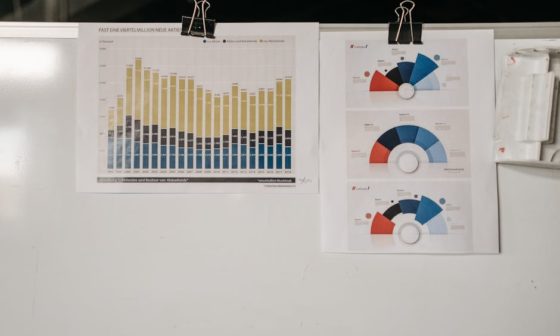
Backtesting Options Strategies: Evaluating Performance Under High and Low IV Regimes
Effective options trading is fundamentally about timing volatility cycles. Many novice traders make the critical mistake of backtesting a single strategy—such as selling premium—across an entire historical dataset without segmenting periods of high and low implied volatility (IV). This failure to account for regime shifts leads to an inaccurate assessment of risk and expected returns, often resulting in strategies that perform well historically but collapse when market conditions change. The key to building robust, adaptive systems lies in detailed Backtesting Options Strategies: Evaluating Performance Under High and Low IV Regimes, ensuring that the chosen entry criteria align with the probabilistic advantages offered by the current volatility environment. This detailed evaluation is a core component of mastering advanced risk management, as outlined in The Options Trader’s Blueprint: Mastering Implied Volatility, Greeks (Delta & Gamma), and Advanced Risk Management.
The Necessity of IV Regime Segmentation
Options prices are governed by the assumptions of future volatility embedded in the contracts—the Implied Volatility. Strategies built around the expectation of IV contraction (e.g., selling premium) thrive when options are expensive (high IV), benefiting from positive Vega risk management and significant Theta decay. Conversely, strategies relying on directional movement or IV expansion (e.g., buying options or debit spreads) are most efficient when options are cheap (low IV).
Backtesting without segmenting IV regimes often results in “curve fitting,” where the strategy appears profitable across all timeframes simply because it capitalized on high IV periods while surviving the low IV periods. A truly robust strategy must demonstrate superior performance in its intended regime and acceptable, manageable risk in the opposing regime.
Defining High and Low IV Environments
To segment data effectively, traders must rely on relative measures of IV, not absolute numbers. The VIX might be at 25, which seems high historically, but if the average VIX for the underlying asset (say, a technology stock) typically peaks at 40, then 25 might actually represent a neutral or even low IV environment for that specific asset.
The most common and effective tools for defining regimes are:
- IV Rank: Measures current IV relative to its historical high and low over a specific lookback period (e.g., the last year).
- IV Percentile: Indicates the percentage of days in the lookback period where IV was lower than the current level.
For practical backtesting purposes, standard regime thresholds might be set as:
- High IV Regime: IV Rank or Percentile > 70% (Options are historically expensive, favoring premium selling).
- Low IV Regime: IV Rank or Percentile < 30% (Options are historically cheap, favoring long options or defined risk debit strategies).
- Neutral IV Regime: IV between 30% and 70%.
Understanding these relative measures is crucial for accurately timing strategy entry and is explored further in Decoding Implied Volatility: How IV Rank and IV Percentile Predict Market Moves.
Backtesting Methodology: Segmenting the Data
The technical process of IV regime backtesting requires a multi-layered simulation.
- Data Acquisition: Gather historical end-of-day or minute-level data for the underlying asset, including IV data (either historical volatility or IV derived from options prices).
- Regime Tagging: Calculate the IV Rank/Percentile for every trading day in the dataset and tag each day as High, Low, or Neutral IV.
- Strategy Application: Run the strategy simulation, ensuring that trades are only initiated if the specific IV regime criteria are met. For example, a Short Strangle strategy will only check entry conditions on days tagged “High IV.”
- Separate Evaluation: Generate performance metrics (Sharpe Ratio, Max Drawdown, Profit Factor, Win Rate) separately for trades initiated in the High IV regime versus trades initiated in the Low IV regime.
This segmentation allows traders to identify if their strategies are truly adaptive. For instance, testing a long-term position sizing rule—detailed in How to Trade Options Safely: Essential Position Sizing and Capital Preservation Rules—should be scaled down during High IV regimes to manage the higher capital requirements and greater directional risk.
Case Study 1: Premium Selling in High IV Regimes
Strategy: Selling Iron Condors or Short Strangles.
Entry Trigger: IV Percentile > 80%.
Thesis: Options are overpriced and IV is likely to revert lower (IV contraction), generating profit primarily through high Theta decay and negative Vega.
Backtesting this setup typically reveals high overall profit factors and a high percentage of winning trades (often 70%+). However, the crucial metric here is the Maximum Drawdown (MDD) relative to high-IV entry points.
If a Short Strangle is initiated at IV 90% and the market experiences a sharp, sustained move (i.e., the expected IV reversion fails), the loss incurred can be severe due to accelerating Gamma risk as the price nears the short strikes. A successful backtest in this regime must demonstrate that risk mitigation rules (e.g., rolling adjustments, defined stops) effectively contained losses during the worst high-volatility spikes, ensuring the strategy meets its profit objectives without experiencing unacceptable portfolio drawdowns.
Case Study 2: Directional Spreads in Low IV Regimes
Strategy: Buying Debit Spreads (e.g., Bull Call Spreads).
Entry Trigger: IV Rank < 20%.
Thesis: Options are cheap, reducing the cost basis for a directional bet (positive Delta exposure), and providing potential upside if volatility expands (positive Vega exposure).
When backtesting Debit Spreads in a low IV regime, the win rate is often lower than premium selling strategies. The key performance indicator is the Return on Risk (ROR) and the average profit margin on winning trades.
If the strategy performs poorly, it might indicate that the low IV periods in the asset being tested often correspond to consolidating or range-bound markets, where the needed directional move does not materialize. This necessitates optimizing the timing of entries, perhaps by combining IV metrics with technical indicators like RSI and MACD, as discussed in Combining IV with RSI and MACD: A Guide to Timing Options Entries and Exits. The backtest should show that the positive Vega benefit offsets the time decay, providing acceptable edge when IV is prone to expansion.
Conclusion
Robust backtesting is the cornerstone of quantitative options trading. By strictly segmenting historical data into High and Low IV regimes, traders move beyond generalized performance metrics and gain a precise understanding of when and why their strategies succeed or fail. This method highlights the inherent trade-offs: selling premium (negative Vega) optimizes for time decay during expensive options periods, while buying structure (positive Vega) maximizes potential upside when options are cheap. Successfully navigating these volatility cycles requires multiple, well-tested strategies, a mastery of the Greeks, and disciplined risk management—all essential elements covered in The Options Trader’s Blueprint: Mastering Implied Volatility, Greeks (Delta & Gamma), and Advanced Risk Management.
FAQ: Backtesting Options Strategies and IV Regimes
- Why is backtesting a single strategy across all IV regimes misleading?
It creates performance metrics that average out success and failure. For example, a premium selling strategy might show a high historical win rate, but the backtest fails to highlight that 90% of the losses occurred during low IV periods where the strategy was fundamentally mismatched to the market environment.
- How do IV Rank and IV Percentile differ, and which is better for defining regimes?
IV Rank measures the current IV against its range (high minus low) over a lookback period, whereas IV Percentile measures the percentage of days IV was lower than the current level. IV Percentile is often preferred as it gives a clearer probability context—if IV Percentile is 80%, 80% of past trading days had lower IV, suggesting a strong likelihood of contraction.
- Should I include the Neutral IV regime (30% to 70%) in my backtesting?
Yes. The Neutral IV regime is often the most challenging. You should test whether existing strategies (like Short Iron Condors or Calendar Spreads) can adapt to this environment, or if you need to reserve capital until a defined High or Low IV edge appears, maximizing capital efficiency.
- What non-IV metrics are essential when evaluating strategies in High IV regimes?
In high IV regimes, maximum drawdown (MDD), maximum consecutive losses, and exposure to Vega risk are paramount. The strategy must prove its ability to withstand severe volatility spikes and associated Gamma acceleration without catastrophic failure, validating your position sizing and hedge rules.
- Can a positive Vega strategy (like a Long Call) ever be profitable in a High IV regime?
It can, but it requires a significantly larger directional move than anticipated, often due to an extreme catalyst. Since the options are highly expensive (due to high IV), the underlying asset must move substantially just to break even, making the probabilistic edge much lower compared to initiating the trade in a low IV environment.