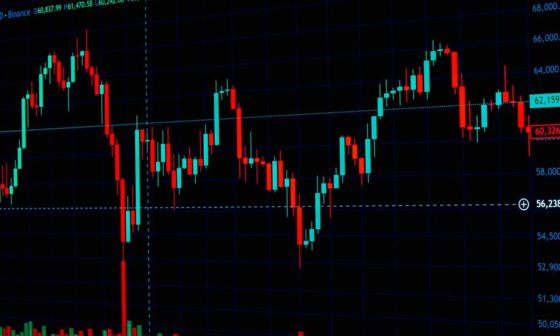
Understanding The Importance of Backtesting in High Probability Trading: Lessons from Marcel Link is the defining factor between amateur hobbyists and disciplined professionals. Marcel Link argues that without a historical roadmap, a trader is essentially flying blind. By rigorously verifying strategy performance through past market data, you cultivate the psychological fortitude needed to stick to a plan during inevitable drawdowns. This systematic approach is a core pillar of High Probability Trading: Mastering Marcel Link’s Blueprint for Consistent Success. It transforms subjective chart reading into an objective, data-driven business model where every trade is a calculated risk based on proven historical edges, ensuring you only execute setups with a statistical advantage.
Validate your strategy with instant backtesting
Backtest LibraryWhy Marcel Link Views Backtesting as the Trader’s Shield
In his teachings, Marcel Link emphasizes that the primary reason most traders fail is a lack of confidence in their own system. Backtesting acts as a shield against the two biggest enemies of trading: fear and greed. When you know that a specific setup has a 65% success rate over the last 500 trades, a single loss or even a string of three losses becomes a statistical irrelevance rather than a reason to panic.
Following Marcel Link’s Core Principles, backtesting is not just about finding “what works,” but identifying “what doesn’t.” It allows you to eliminate low-probability entries that drain your account through “death by a thousand cuts.” By analyzing historical data, you can refine your approach using How to Use Technical Indicators to Filter Low-Probability trades, ensuring you only step into the market when the odds are heavily in your favor.
Case Study 1: Validating Trend-Following Setups in Futures
A classic lesson from Link involves the “Pullback to the 20-period EMA” in trending markets. A trader might see this work twice and assume it is a golden ticket. However, rigorous backtesting—as detailed in Marcel Link’s High Probability Trading in Futures Markets—often reveals that this setup’s win rate drops significantly during high-volatility news events or when the ADX indicator is below 20.
The Insight: Through backtesting 100 historical instances of this setup, the trader learns that the high-probability version of this trade only occurs when the higher timeframe trend aligns. This level of detail is what separates a generic strategy from a Custom Strategy Based on Marcel Link’s Methodology.
Case Study 2: Candlestick Patterns and Support/Resistance
Consider the “Pin Bar” or “Hammer” candle. Many traders take every Hammer they see. By applying Identifying Candlestick Patterns for High-Win-Rate Setups, a trader can backtest the performance of Hammers specifically at major daily support levels versus mid-range price action.
The Insight: Backtesting usually proves that Hammers in the middle of a range have a win rate near 40% (unprofitable after commissions), while Hammers at “Value Areas” have a win rate closer to 60%. This data allows the trader to exercise The Psychology of Discipline by ignoring the low-probability setups and waiting for the high-conviction ones.
Actionable Steps for Effective Backtesting
To master backtesting like Marcel Link, you must move beyond simple “look-back” analysis and incorporate these steps:
- Define Exact Entry/Exit Rules: Use Mastering Chart Patterns for High Probability Entry Points to set rigid criteria. If the rule isn’t binary, it can’t be tested accurately.
- Account for Slippage and Commissions: Marcel Link warns that a strategy that looks good on paper often fails in reality because the trader ignored the cost of doing business.
- Integrate Risk Parameters: Your testing must include Marcel Link’s Guide to Risk Management. Testing a strategy without a stop-loss is not backtesting; it’s a fantasy.
- Vary Asset Classes: See how your strategy performs by Applying Marcel Link’s Strategies to Crypto Currencies to determine if the edge is universal or market-specific.
Conclusion: The Path to Consistent Success
The importance of backtesting in high probability trading cannot be overstated. As Marcel Link demonstrates, it is the bridge between a theoretical strategy and a profitable trading business. Backtesting provides the empirical proof required to maintain discipline during market turbulence and ensures that every dollar risked is placed on a setup with a historical edge. By committing to this process, you align yourself with the professional minority who treat trading as a game of probabilities rather than a series of guesses. To see how this fits into the complete trading framework, revisit the comprehensive guide on High Probability Trading: Mastering Marcel Link’s Blueprint for Consistent Success.
Frequently Asked Questions
| Why does Marcel Link place so much emphasis on backtesting? | He believes backtesting is the only way to build true confidence in a strategy. Without it, a trader is likely to abandon a good system during a normal drawdown because they lack the data to know it will eventually recover. |
| Can I backtest manually or do I need software? | While software is faster, Link often suggests manual backtesting for beginners because it helps you “feel” the market rhythm. It involves scrolling back through charts and recording every trade setup in a spreadsheet according to your rules. |
| What is the most common mistake in backtesting? | Curve-fitting, or making rules too specific to fit past data perfectly. Link advises keeping strategies simple so they remain robust and applicable to future, unseen market conditions. |
| How many trades are needed for a valid backtest? | Generally, Link’s methodology suggests a minimum of 100 to 200 trades across different market cycles (bull, bear, and sideways) to ensure the strategy’s edge is statistically significant. |
| Does backtesting work for volatile markets like Crypto? | Yes, but the parameters might change. Backtesting allows you to adjust your volatility filters and position sizes to suit the specific characteristics of the crypto market while maintaining Link’s core principles. |
| How does backtesting improve trading discipline? | It provides “proof of concept.” When you have a spreadsheet showing 70% winners, you are less likely to hesitate on an entry or exit early out of fear, as you trust the long-term probabilities. |
| Is backtesting enough to guarantee trading success? | No; backtesting proves a strategy can work, but “forward testing” (demo trading) and psychological discipline are required to ensure the trader can actually execute that strategy in real-time. |