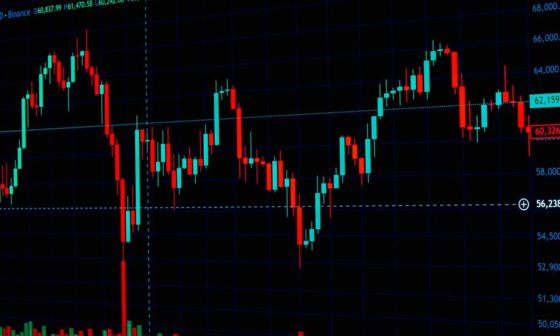

John J. Murphy’s seminal work, “Technical Analysis of the Financial Markets,” has remained the gold standard for traders and analysts for decades. Often referred to as the “Bible” of technical analysis, this book provides a comprehensive foundation for understanding how price action, volume, and market psychology interact to create tradable opportunities. This pillar page serves as a centralized hub, designed to guide you through the core tenets of Murphy’s methodology, from the basic building blocks of price charts to the complex relationships between global asset classes. Whether you are a novice investor trying to make sense of a candlestick chart or a professional looking to refine your quantitative strategies, this guide synthesizes Murphy’s timeless wisdom for the modern era.
Our comprehensive exploration breaks down Murphy’s teachings into ten critical focus areas. We examine the fundamental principles of trend following, the mechanics of oscillators, and the often-overlooked nuances of volume and open interest. Furthermore, we bring these classic techniques into the 21st century by discussing their application in the volatile cryptocurrency markets and subjecting them to rigorous modern backtesting. By navigating through the detailed subtopics below, you will gain a holistic understanding of how to interpret market data and develop a disciplined, rules-based approach to trading that has stood the test of time across multiple market cycles.
Validate your strategy with instant backtesting
Backtest LibraryThe Foundations of Support and Resistance
At the heart of every price chart lies the fundamental battle between supply and demand. John Murphy emphasizes that price levels where a trend pauses or reverses are not accidental; they represent the collective memory of market participants. Support is a price level where buying interest is strong enough to overcome selling pressure, while resistance is the ceiling where selling pressure halts an advance. Identifying these zones is the first step in constructing any technical setup, as they provide natural locations for setting stop-loss orders and profit targets.
Traders who spend time mastering support and resistance: lessons from John Murphy often find that these levels gain significance the more they are tested. When a resistance level is finally broken, it frequently flips to become a support level, a phenomenon known as “role reversal.” This concept is vital for understanding market structure and ensuring that you are not buying at a peak or selling at a trough. By focusing on these zones, you can align your trades with the path of least resistance.
Core Principles of Trend Following
One of the most famous adages in trading is “the trend is your friend,” and John Murphy is one of its strongest proponents. Trend following is not about predicting the future, but rather identifying the current direction of the market and staying aligned with it as long as possible. Murphy outlines that a trend is simply a series of higher highs and higher lows in an uptrend, or lower highs and lower lows in a downtrend. The goal is to enter early in the trend’s development and exit only when the price action signals a definitive reversal.
Implementing John Murphy’s core principles of trend following requires a high degree of discipline and a willingness to ignore the “noise” of daily market fluctuations. Murphy suggests using trendlines to visually connect the peaks and troughs, providing a clear boundary for the prevailing move. When these lines are breached, it serves as a primary warning that the market’s momentum is shifting. Successful trend followers use these objective rules to remove emotion from their decision-making process.
The Mechanics of Moving Averages
Moving averages are among the most versatile tools in a technician’s toolkit, serving as both trend-following indicators and dynamic support or resistance levels. By averaging price data over a specific period, these indicators “smooth out” volatility, making it easier to see the underlying direction of the market. Murphy discusses various types, including the Simple Moving Average (SMA) and the Exponential Moving Average (EMA), the latter of which places more weight on recent price action to provide faster signals.
Learning how to use moving averages according to John Murphy involves more than just looking at a single line; it often involves the use of “crossovers.” For example, when a short-term average crosses above a long-term average, it can signal a bullish shift in momentum. Murphy highlights that these tools are most effective in trending markets but can produce “whipsaws” or false signals in sideways or choppy markets. Understanding when to rely on these averages is key to avoiding unnecessary losses during consolidation phases.
Intermarket Analysis and Global Relationships
In today’s interconnected financial world, no market exists in a vacuum. John Murphy was a pioneer in Intermarket Analysis, the study of how different asset classes like stocks, bonds, commodities, and currencies influence one another. For instance, a rise in bond yields often precedes a decline in stock prices, and a strong US Dollar can exert downward pressure on gold and other commodities. By looking beyond a single asset, a trader can gain a panoramic view of the global economy and anticipate major rotational shifts.
By focusing on intermarket analysis: understanding global market relationships – John Murphy, investors can identify which sectors are likely to outperform based on the broader economic environment. If commodities are rising, it may signal an inflationary environment that favors certain equities over others. This holistic approach helps traders confirm their technical setups in one market by looking for corroborating evidence in related markets, significantly increasing the probability of a successful trade.
The Psychology of Charting
While technical analysis often looks like a study of math and geometry, it is truly a study of human psychology. Charts are a visual representation of the fear, greed, and hope of everyone trading that asset. Murphy argues that price patterns repeat themselves because human nature remains constant over time. The “herd mentality” that leads to speculative bubbles and panic sells is etched into the historical price data, allowing astute technicians to recognize these emotional extremes before they reach a breaking point.
Gaining the psychology of charting: insights from Murphy’s technical analysis allows a trader to remain objective when the rest of the market is losing its head. Understanding that a “double top” pattern is actually a visual sign of exhaustion and failed optimism helps a trader exit a position before the majority of the selling begins. By treating the chart as a psychological map, you can better manage your own emotions and capitalize on the predictable mistakes of others.
Identifying Reversal Patterns
Recognizing when a trend is about to change is one of the most profitable skills a trader can develop. Reversal patterns, such as the Head and Shoulders, Double Tops, and Triple Bottoms, indicate that the prevailing trend is losing momentum and a new trend in the opposite direction is likely to begin. Murphy provides detailed criteria for these patterns, emphasizing that they must be preceded by an established trend and usually require a significant amount of time to form on the chart.
When identifying reversal patterns: head and shoulders and beyond – John Murphy, it is crucial to wait for a “breakout” or a confirmation signal, such as a close below the neckline. Acting too early on a perceived pattern can be dangerous, as the market may simply be consolidating before resuming its original trend. Murphy’s structured approach to these formations ensures that traders have a clear set of rules for entry and exit, minimizing the guesswork involved in spotting market turns.
Volume and Open Interest
While price is the most important factor in technical analysis, volume and open interest provide the necessary “fuel” that confirms a price move. Volume represents the total amount of trading activity, while open interest (primarily used in futures and options) measures the total number of outstanding contracts. According to Murphy, volume should go in the direction of the trend. In an uptrend, volume should increase on price rallies and decrease on price pullbacks, indicating that the buyers are in control.
Applying the volume and open interest: the Murphy approach to market strength helps traders distinguish between a healthy trend and a weak one. If price is reaching new highs but volume is declining, it suggests a “divergence,” warning that the trend may be nearing exhaustion. This secondary confirmation is a vital layer of risk management that separates sophisticated technicians from those who only look at price candles.
Technical Analysis in the Crypto Era
Many skeptics wondered if the principles established in the 1980s for commodities and stocks would apply to the digital asset revolution. However, the decentralized and often speculative nature of Bitcoin and Altcoins makes them highly susceptible to the psychological patterns Murphy described decades ago. Since crypto markets operate 24/7 and are driven heavily by retail sentiment, technical patterns often manifest with even greater frequency and volatility than in traditional markets.
When applying John Murphy’s technical analysis to crypto markets, traders must account for the high volatility and the influence of “whales” or large holders. Despite these differences, the core concepts of support, resistance, and trendlines remain remarkably effective. By using Murphy’s time-tested frameworks, crypto traders can navigate the “wild west” of digital finance with a level of discipline that many participants lack, protecting their capital during sudden market drawdowns.
Backtesting and Strategy Validation
In the modern age of algorithmic trading, it is no longer enough to simply “see” a pattern on a chart; traders want statistical proof that a strategy works. Backtesting involves applying technical rules to historical data to see how they would have performed in the past. This process allows traders to optimize their parameters, such as the length of a moving average or the sensitivity of an oscillator, to find the best fit for a specific market or timeframe.
Many quants ask: backtesting Murphy’s strategies: do classic patterns still work? The answer is often a resounding yes, though the “edge” may vary depending on the asset class and market regime. By subjecting Murphy’s classic patterns to rigorous data analysis, traders can gain the confidence needed to pull the trigger on a trade when real money is on the line. Backtesting bridges the gap between subjective charting and objective, quantitative execution.
Mastering Oscillators and Momentum
When markets are not clearly trending, oscillators become the primary tool for identifying overbought and oversold conditions. Indicators like the Relative Strength Index (RSI) and the Stochastic Oscillator measure the velocity and magnitude of price movements. Murphy teaches that these tools are most effective when used to identify “divergences”—situations where the price makes a new high, but the oscillator fails to do so, suggesting a loss of momentum.
Successfully oscillators and momentum: mastering the RSI and Stochastics – John Murphy requires understanding that an “overbought” reading does not necessarily mean an immediate reversal. In a strong uptrend, an oscillator can remain in the overbought zone for a long time. Murphy’s approach involves using these indicators in conjunction with other tools, such as trendlines and moving averages, to ensure that you are not trading against a powerful prevailing move based solely on a single momentum reading.
Conclusion
The teachings of John Murphy provide a robust and versatile framework for navigating any financial market. By integrating price action, volume, and intermarket relationships, a trader can move beyond simple guesswork and develop a professional, disciplined approach to the markets. While the tools of the trade have evolved from hand-drawn paper charts to sophisticated algorithmic scanners, the underlying principles of human psychology and market structure remain unchanged. This guide serves as your roadmap to mastering those principles and achieving long-term trading success.
Frequently Asked Questions
Is John Murphy’s technical analysis still relevant for today’s high-frequency trading environment?
Yes, while the speed of the markets has increased, the core psychological drivers of price action—fear and greed—remain the same. Murphy’s principles provide the macro context that high-frequency algorithms often operate within.
Which indicator did John Murphy consider the most important?
Murphy consistently emphasized that price is the most important indicator. All other tools, such as moving averages and oscillators, are secondary and should be used to confirm what the price action is already telling you.
Can I use these strategies for day trading as well as long-term investing?
Absolutely. The principles of technical analysis are fractal, meaning they apply to 1-minute charts just as effectively as they do to weekly or monthly charts. However, Murphy often suggested that longer-term trends are more reliable and less prone to market noise.
What is the benefit of Intermarket Analysis?
Intermarket analysis allows you to see the “big picture.” It helps you understand why a market might be moving (e.g., gold rising because the dollar is weakening) and helps you avoid taking trades that are contradicted by the behavior of related asset classes.