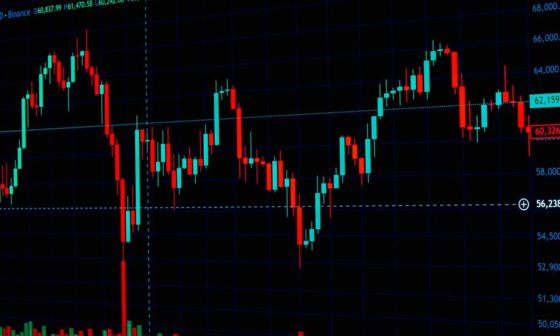
In the world of professional trading, the ability to identify a trend is only half the battle; the real skill lies in determining if that trend has enough residual strength to support additional capital. Using Candlestick Patterns to Confirm Trend Strength for Pyramiding is a sophisticated approach that allows traders to read the real-time psychology of the market before committing to larger position sizes. While many beginners mistakenly add to losing positions, successful professionals focus on Pyramiding vs. Averaging Down: Why Adding to Winners is the Professional Choice. By interpreting the story told by Japanese candlesticks, you can distinguish between a healthy trend that is ready for a “scale-in” and a tired trend that is nearing exhaustion. This technique forms a critical component of The Ultimate Guide to Pyramiding in Trading: How to Scale Positions Safely and Profitably, providing the visual evidence needed to execute high-conviction trades.
Validate your strategy with instant backtesting
Backtest LibraryThe Psychology of Candlesticks in a Pyramiding Strategy
Candlestick patterns are more than just price markers; they represent the collective sentiment of market participants. When you are looking for Using Candlestick Patterns to Confirm Trend Strength for Pyramiding, you are essentially looking for proof of continued dominance by one side of the market. Unlike lagging indicators like moving averages, price action offers immediate feedback. If you are following a Step-by-Step Guide: Building Your First Trading Pyramid in Forex, you know that the first scale-in is often the most nerve-wracking. Candlesticks reduce this anxiety by confirming that the momentum which started the move is still present.
For instance, a series of large-bodied candles with minimal wicks suggests a “runaway” trend. This is the ideal environment for pyramiding. Conversely, if candles start showing long upper wicks in an uptrend, it indicates that sellers are entering the market, suggesting that scaling in now would be high-risk. This qualitative analysis is often what determines if Backtesting Pyramiding Strategies: Does Scaling In Actually Increase ROI? yields positive results in live market conditions.
High-Probability Patterns for Trend Confirmation
When scaling into a position, not all candlestick patterns are created equal. You want to look for “continuation” signals that suggest the path of least resistance remains unchanged. Here are the most effective patterns for confirming trend strength:
- The Marubozu: A candle with a large body and almost no wicks. A bullish Marubozu during an uptrend signifies that buyers controlled the price from open to close. This is a “green light” for adding a second or third unit to your pyramid.
- The Bullish/Bearish Engulfing: Often found at the end of a minor pullback within a larger trend. When a large candle completely “engulfs” the previous small counter-trend candle, it signals that the dominant force has regained control.
- Three White Soldiers / Three Black Crows: This pattern consists of three consecutive long-bodied candles that close progressively higher (or lower). It is a powerful indicator of strong momentum, often used when Pyramiding in Crypto Markets: Scaling Into Volatile Trends Safely.
Using Candlesticks to Confirm Pullback Rejections
One of the safest ways to pyramid is to add to your position on a “buy-the-dip” basis within an uptrend. However, the danger is that the dip might turn into a full reversal. This is where Using Candlestick Patterns to Confirm Trend Strength for Pyramiding becomes invaluable. Instead of adding blindly as price hits a support level, you wait for a Hammer or a Pin Bar to form.
A Pin Bar with a long lower wick touching a moving average or a previous resistance-turned-support level confirms that the market has rejected lower prices. This confirmation allows you to apply Advanced Risk Management Techniques for Pyramiding Winning Trades by placing your new stop loss just below that wick, effectively “locking in” the logic of the trade.
Example 1: Scaling into a Bullish Equity Trend
Imagine a trader who enters a long position on a technology stock after a breakout from a consolidation zone. The initial trade is successful, and the price moves up by 5%. Rather than exiting, the trader looks for a pyramid opportunity. After a brief three-day pullback, a Bullish Engulfing candle forms on the 20-day EMA.
The trader uses this candlestick signal to confirm that the trend strength is still intact. By adding 50% more to the position size at the close of this candle, the trader follows The Mathematics of Pyramiding: Calculating Position Sizes for Maximum Growth. The stop loss for the entire position is moved to the low of the engulfing candle. This visual confirmation ensures the trader is adding capital only when the market proves it is ready to continue higher.
Example 2: Pyramiding in Volatile Futures Markets
In futures trading, where leverage is high, precision is everything. A trader shorting Crude Oil might see a strong downward move followed by a “bear flag” consolidation. Instead of adding to the short position randomly, the trader waits for a Shooting Star pattern at the upper boundary of the flag.
The Shooting Star confirms that despite an intraday rally, sellers overwhelmed buyers, leaving a long upper wick. This is the signal to scale in. By using this pattern, the trader manages the specific risks inherent in Pyramiding Strategies for Futures Trading: Managing Leverage and Margin, ensuring that the new capital is protected by a clear technical barrier.
Measuring Momentum: Candle Size and Volume
While the pattern itself is important, the context of the candle provides the confirmation. When Using Candlestick Patterns to Confirm Trend Strength for Pyramiding, look at the relative size of the candles. If the trend is progressing with expanding candle bodies, momentum is increasing. If the candle bodies are shrinking (showing “spinning tops”), the trend is losing steam, and you should avoid adding more units.
Combining these visual cues with other tools can be even more effective. You might explore How to Use Technical Indicators to Signal Pyramiding Entry Points to see how an RSI or MACD divergence can confirm what the candlesticks are hinting at. Ultimately, the goal is to find a confluence of factors that minimize the “fear of heights” often associated with The Psychology of Pyramiding: Overcoming the Fear of Adding to a Winning Trade.
Conclusion: Integrating Candlesticks into Your Scaling Strategy
Using Candlestick Patterns to Confirm Trend Strength for Pyramiding transforms a mathematical scaling strategy into a responsive, price-action-driven system. By looking for Marubozus, Engulfing patterns, and Pin Bar rejections, you ensure that you are only adding to your winners when they show clear signs of continued dominance. This qualitative filter protects your capital from “late-stage” pyramiding, where adding to a position right before a reversal can erase all previous gains.
Success in pyramiding requires a balance of aggressive growth and defensive risk management. By mastering these candlestick signals, you gain the confidence to hold through volatility and the discipline to stay heavy in the strongest trends. For a complete understanding of how to weave these techniques into a comprehensive trading plan, revisit The Ultimate Guide to Pyramiding in Trading: How to Scale Positions Safely and Profitably.
Frequently Asked Questions
- Which candlestick pattern is the most reliable for pyramiding? The Bullish or Bearish Engulfing pattern is often considered the most reliable because it shows a clear “flip” in momentum during a trend pullback, providing a logical point to add capital.
- How many times should I pyramid based on candlestick signals? Most professional strategies limit pyramiding to 3 or 4 stages. Beyond this, even strong candlestick signals may occur too late in the trend’s lifecycle, increasing the risk of a “blow-off top.”
- Can I use candlestick patterns for pyramiding on any timeframe? Yes, but the signals are generally more robust on higher timeframes like the 4-hour or Daily charts. Intraday noise can sometimes produce “fake” signals that don’t reflect true trend strength.
- What if a candlestick pattern fails right after I add to my position? This is why risk management is vital. If a confirmation candle like a Hammer is immediately negated by the next candle, it signals a “failed pattern,” and you should follow your pre-set exit rules to protect your equity.
- How do candlesticks help with the psychology of adding to a winner? Candlesticks provide visual “proof” of market conviction. Seeing a strong Marubozu close makes it psychologically easier to overcome the fear of “buying high” by confirming that the trend still has momentum.
- Do I need volume to confirm a candlestick pyramid entry? While not strictly necessary, high volume accompanying a trend-confirmation candle (like a breakout Marubozu) significantly increases the probability that the pyramid move will be successful.
- Is pyramiding with candlesticks safer than using indicators alone? Generally, yes. Candlesticks reflect price action directly, whereas indicators are derivatives of price and can often lag, leading you to add to a position just as the momentum is actually fading.