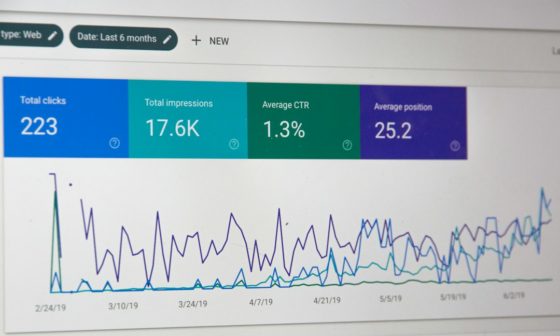
The modern financial landscape is defined by speed, latency, and automated decision-making. High-Frequency Trading (HFT) and sophisticated algorithmic strategies have fundamentally redefined how prices are discovered and how liquidity is structured, creating an environment where traditional methods of reading the Level 2 order book are often insufficient. Understanding The HFT Impact: How Algorithmic Trading Shapes Order Book Dynamics and Liquidity Pools is crucial for any serious participant aiming to accurately identify genuine support, resistance, and market intent, rather than being misled by algorithmic noise.
Analyze financial data and fundamentals for better investment decisions
View Financial DataUnderstanding the HFT Ecosystem and Market Microstructure
HFT firms deploy specialized algorithms that execute trades and manage orders in fractions of a millisecond. Their influence is so profound that they often account for the majority of daily volume in major equity, futures, and crypto markets (Market Depth Differences: Analyzing Crypto Order Books Versus Traditional Equity Markets). HFT systems operate under the principle of exploiting minute price discrepancies and informational advantages, primarily derived from superior infrastructure (co-location) and low-latency data feeds.
This reliance on speed transforms the order book from a static representation of supply and demand into a highly volatile, rapidly updating data stream. For institutional and retail traders who cannot compete on latency, the challenge lies in distinguishing between genuine liquidity interest and fleeting, algorithmic messages designed primarily for arbitrage or manipulation.
The Dual Role of HFT in Liquidity
- Liquidity Provision: HFTs are essential market makers, continuously posting bids and offers, thereby tightening the bid-ask spread (Minimizing Trading Costs: Analyzing the Bid-Ask Spread and Market Impact in High-Volume Trading). This improves execution prices for passive traders.
- Liquidity Consumption (Toxic Flow): When HFTs detect mispricing or imbalance, they quickly consume available depth, leading to rapid price moves and contributing to market volatility. This aggressive behavior is often termed toxic liquidity.
The Immediate Effect on Order Book Dynamics: Quote Velocity and Volatility
The most immediate and visible impact of HFT is the massive increase in quote velocity—the rate at which orders are posted, modified, and cancelled. This phenomenon creates several challenges for traditional order book analysis:
- Flickering Quotes: The best bid and offer (BBO) can change dozens of times per second. This speed makes manual observation of the Level 2 book ineffective, necessitating advanced automated tools for How to Read the Level 2 Order Book: A Beginner’s Guide to Market Depth and Order Flow.
- Quote Stuffing: Some algorithms intentionally flood the order book with rapid, non-binding orders and subsequent cancellations. While not always manipulative, Quote Stuffing increases network traffic and latency for non-HFT participants, creating a temporary informational asymmetry that HFTs can exploit.
- Depth Instability: Large blocks of orders often appear and vanish near the spread within milliseconds. What appears to be a strong support level five ticks below the market can dissolve entirely when a price probe tests it, indicating that the liquidity was algorithmic and passive, designed to be withdrawn instantly upon market movement.
HFT Strategies and Their Observable Order Book Footprints
Successful order book analysis requires the ability to look past the surface noise and identify the footprints of underlying HFT strategies. These footprints often reveal themselves as patterns of aggressive order clustering or rapid, synchronous cancellations.
Advanced Footprint 1: Spoofing and Layering
Spoofing (or Layering) is perhaps the most notorious HFT strategy impacting perceived liquidity. It involves placing large, often intimidating, limit orders on one side of the book (e.g., the bid) with no genuine intention of execution. The goal is to deceive market participants into believing that strong support exists, thereby pushing prices in the desired direction (upwards, if buying) or masking the HFT’s true intent to sell.
Sophisticated detection systems must analyze the ratio of cancellations to executed orders, particularly orders placed far from the BBO. A crucial insight is that orders placed by legitimate liquidity providers are typically sticky, whereas spoofed orders are instantly withdrawn once an aggressive order approaches them. This is covered in detail in Detecting Hidden Intent: Unmasking Iceberg Orders and Order Book Spoofing Techniques.
Advanced Footprint 2: Latency Arbitrage and Order Flow Toxicity
Latency arbitrage strategies exploit the time delay between when an order signal reaches one exchange versus another (or when a consolidated data feed reports it). When an HFT detects a trade on Exchange A that has not yet been reflected in the BBO on Exchange B, they aggressively place an order to capture the difference. The observable impact on the order book is a sudden, aggressive burst of market orders, often causing an immediate one-sided order flow imbalance (Building Custom Indicators Based on Order Flow Imbalance and Real-Time Market Depth Skew).
When analyzing liquidity pools, traders must consider Adverse Selection Risk. If an HFT consistently detects that when they post liquidity, they are executed against immediately by other faster participants who possess information about future price movement, that liquidity is considered “toxic.” HFTs adapt by rapidly widening the spread or withdrawing all passive orders, creating sudden order book gaps (The Psychology of Liquidity: How Order Book Gaps and Density Affect Trader Behavior and Panic Selling).
Case Studies: Observing HFT Behavior in Real-Time Liquidity Pools
Case Study 1: The Zero-Width Spread Collapse
In highly liquid instruments (like major futures contracts), HFTs continuously compete to offer the tightest possible spread. It is common to observe the spread momentarily collapse from one tick to zero (bid equals ask) for a few milliseconds, especially during quieter times or before scheduled news. This phenomenon is often the result of two HFT algorithms momentarily crossing their quotes in an attempt to be the first to capture passive flow, or in a rapid inter-market arbitrage trade. Once the arbitrage is captured, both sides instantly cancel and repost at the standard one-tick minimum spread. For an advanced trader, this zero-spread event is not an opportunity, but a warning sign that the available liquidity is highly brittle and dominated by ultra-fast participants.
Case Study 2: Detecting Algorithmic Liquidity Pockets (A-LPs)
Imagine the order book shows 1,000 contracts resting at $50.05 (ask) and $49.95 (bid). A large institution enters the market seeking to buy 10,000 contracts. They use a smart order router to execute slowly. As the price moves from $50.00 to $50.04, the 1,000 contracts remain sticky. However, as soon as the price hits $50.05, instead of filling just 1,000 contracts, the order book suddenly shows 5,000 contracts at $50.05. This surge is an Algorithmic Liquidity Pocket (A-LP)—an HFT algorithm that detected the large incoming order flow pressure and instantly layered additional liquidity just before the price level, hoping to get filled immediately at the higher price before the market moves further up. Identifying A-LPs helps in correctly pricing the market impact of large trades (Optimizing Trade Execution: Integrating VWAP with Real-Time Order Book Data for Best Fill Price).
Mitigating HFT Interference: Strategies for Retail and Institutional Traders
To overcome the challenges posed by HFT-driven order book dynamics, traders must adopt analytical strategies focused on identifying the persistence and intent of liquidity, rather than its volume:
1. Focus on Time-Weighted Depth:
Instead of looking at instantaneous order volume at a given price, look at how long that volume has been present. Genuine support and resistance are formed by depth that persists over time, not volume that flashes for 100 milliseconds. Advanced custom indicators can be built to track liquidity longevity, allowing traders to distinguish between “hard” vs. “soft” depth.
2. Use Execution Algorithms Wisely:
For institutional orders, relying solely on passive limit orders leaves you vulnerable to HFT Iceberg Order Hunters. Employ dynamic execution algorithms (such as Adaptive VWAP or TWAP) that integrate real-time market depth skew (Exploiting Market Depth Skew: Advanced Custom Strategies for Predicting Short-Term Price Movement). These systems slice orders into smaller pieces and adapt their posting strategy based on the toxicity and stability of the current order book.
3. Monitor Net Order Flow Imbalance (NOFI):
The raw Level 2 data is often too noisy. Instead, create metrics that track the net change in aggressive market order volume versus the change in passive limit order cancellations. A sustained, heavy imbalance in aggressive market buying, even if masked by rapid bid layering, is a stronger predictor of short-term price movement than raw depth volume alone. Predicting Price Movement with AI: Machine Learning Models Applied to Level 3 Order Book Data often rely heavily on this net imbalance data.
Conclusion: Navigating the Algorithmic Landscape
The HFT impact fundamentally alters the interpretation of liquidity pools. While HFT enhances overall market efficiency and tightens spreads, it introduces significant noise, manipulation risk (like spoofing), and adverse selection for slower traders. Mastering order book depth in this environment means moving beyond static volume analysis and focusing on the dynamic interplay of order velocity, cancellation rates, and persistent liquidity clusters. By identifying these algorithmic footprints, traders can truly discern genuine support and resistance from fleeting algorithmic decoys, ultimately enhancing their proficiency in Mastering Order Book Depth: Advanced Strategies for Identifying Liquidity, Support, and Resistance.
Frequently Asked Questions (FAQs)
- What is the difference between genuine liquidity and HFT-driven liquidity in the order book?
- Genuine liquidity is “sticky” and persists over measurable time periods, indicating committed interest in transacting at that price. HFT-driven liquidity is often placed and canceled instantly (flickering quotes) or withdrawn milliseconds before execution, serving primarily to provide minimal price improvement or to deceive other participants.
- How does Quote Stuffing affect a non-HFT trader?
- Quote stuffing is the rapid insertion and cancellation of non-binding orders, which bloats market data feeds. For slower participants, this increases data latency, meaning they are trading or reacting based on outdated order book information, giving the HFTs an exploitable time advantage.
- Can HFT algorithms detect and exploit my limit orders?
- Yes. HFTs specialize in detecting large resting passive orders (especially Iceberg orders). By using small, aggressive “ping” orders, they test the liquidity until the hidden volume is partially revealed, allowing them to front-run or scalp the remaining volume before the price moves, increasing the risk of adverse selection.
- What is “toxic liquidity” and how do I spot it using order book analysis?
- Toxic liquidity refers to passive quotes that are consistently executed against by informed participants (often faster HFTs) who possess short-term predictive information. You spot it by observing moments where wide bid/ask spreads suddenly collapse, followed immediately by aggressive order flow and price movement in one direction, indicating the liquidity provider was caught on the wrong side.
- How can time-weighted depth help mitigate the impact of HFT spoofing?
- Spoofing relies on displaying massive volume temporarily. By using time-weighted depth metrics, a trader can filter out the instantaneous, non-persistent volume. Only orders that remain posted for a significant duration (e.g., several seconds) are counted as true resting liquidity, providing a clearer picture of actual market support or resistance.