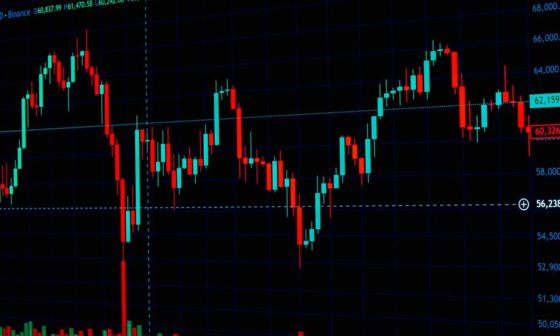
Understanding why your trading strategy fails without proper psychology – Jared Tendler is the first step toward achieving professional consistency. Many traders believe that a mathematically sound edge is enough to succeed, yet they find themselves sabotaging their own results through repeated emotional errors. According to Jared Tendler, the gap between a strategy’s theoretical performance and its actual results is caused by unresolved psychological triggers that override logical decision-making. Without addressing the underlying flaws in your mental game, even the most robust system will eventually crumble under the weight of fear, greed, or frustration. This exploration is a vital component of Mastering the Mental Game of Trading: A Comprehensive Guide to Jared Tendler’s System.
Validate your strategy with instant backtesting
Backtest LibraryThe “Emotional Hijack” and Systemic Failure
The primary reason a strategy fails in practice is the “emotional hijack.” When emotions like fear or anger reach a certain threshold, the prefrontal cortex—the part of the brain responsible for executing your strategy—shuts down. This leaves the “emotional brain” in charge, leading to impulsive decisions that are not part of your plan.
To combat this, traders must learn to recognize the early warning signs of emotional escalation. By overcoming trading anxiety, you can keep your logical mind online longer, ensuring that you follow your entry and exit rules even under pressure.
Case Study 1: The Breakout Trader and Revenge Trading
Consider a trader with a high-probability breakout strategy. After three consecutive losses—a statistically normal occurrence—the trader becomes consumed by frustration. Instead of waiting for the next valid signal, they “force” a trade to recoup losses.
In this scenario, the strategy didn’t fail; the trader’s psychology did. By utilizing how to stop revenge trading using the mental hand history, this trader could have identified the root cause of their anger and stepped away before the “C-Game” took over their account.
The Role of the Inchworm Concept in Execution
Many traders fail because they expect linear progress. Jared Tendler introduces the “Inchworm Concept” to explain how the back end of your performance (your worst mistakes) must be dragged forward to improve your overall results.
If you don’t focus on building trading discipline through the inchworm concept, your strategy will always be vulnerable to your worst emotional habits. You might perform well for weeks, only to wipe out all gains in a single afternoon of undisciplined trading.
Case Study 2: Scaling Risk and Emotional Capacity
A common point of failure occurs when a trader tries to increase their position size. A strategy that works perfectly with $1,000 risk often “fails” at $10,000 risk because the trader’s emotional capacity hasn’t been developed.
The trader might begin closing winning trades too early or “fat-fingering” orders due to nerves. Understanding the psychology of scaling your trading size safely is essential for ensuring your strategy remains effective as your capital grows.
Managing Strategy Performance During Drawdowns
Strategies often fail because traders abandon them prematurely during a normal drawdown. Without a strong mental foundation, a period of losses feels like a permanent failure of the system rather than a temporary variance.
Learning Jared Tendler’s approach to handling trading drawdowns allows traders to distinguish between a strategy that is no longer working and a strategy that is simply going through a rough patch. This emotional intelligence is what keeps professional futures traders in the game while others quit.
Actionable Insights for Strategy Preservation
To stop your psychology from ruining your strategy, implement these Tendler-inspired tactics:
- Map Your Patterns: Start identifying your trading A-Game, B-Game, and C-Game to see exactly where your execution breaks down.
- Pre-Market Prep: Use a pre-market routine for peak mental performance to prime your brain for logical decision-making.
- Address FOMO: If you trade crypto or volatile assets, focus on managing Fear of Missing Out (FOMO) to prevent chasing trades outside your system.
- Enhance EQ: Understand the role of emotional intelligence in professional futures trading to maintain composure during high-volatility events.
Conclusion
Ultimately, a trading strategy is only as effective as the person executing it. When you understand why your trading strategy fails without proper psychology – Jared Tendler, you shift your focus from finding the “perfect indicator” to perfecting your mental response to the market. By integrating Tendler’s tools—such as the Mental Hand History and the Inchworm Concept—you bridge the gap between strategy and execution. To dive deeper into these psychological frameworks, visit our main pillar page: Mastering the Mental Game of Trading: A Comprehensive Guide to Jared Tendler’s System.
Frequently Asked Questions
Why does my strategy work in backtesting but fail in live trading?
In backtesting, emotions are absent, allowing for perfect execution. In live trading, the “emotional hijack” causes you to deviate from the rules you tested, leading to a performance gap that Tendler attributes to unresolved mental game flaws.
Can a good strategy overcome poor psychology?
No, because even the best strategy requires consistent execution. Poor psychology leads to “C-Game” errors, such as revenge trading or closing winners too early, which quickly erodes the mathematical edge of any system.
How does the Mental Hand History help strategy execution?
The Mental Hand History helps you identify the specific emotional triggers—like fear or greed—that lead to strategy deviations. By resolving these root issues, you ensure your logical mind remains in control during live market hours.
Is trading discipline a skill that can be learned?
Yes. Jared Tendler teaches that discipline is a byproduct of resolving emotional conflicts. By using the Inchworm Concept to address your worst mistakes, you naturally improve your baseline discipline and strategy adherence.
What is the biggest psychological threat to a trading strategy?
The biggest threat is usually an accumulation of “emotional baggage” that leads to a blowout. When traders don’t process losses or frustrations, they eventually reach a breaking point where they abandon their strategy entirely during a moment of high stress.
How do I know if my strategy is failing or if I am failing?
If you are deviating from your written rules, the failure is psychological. If you are following your rules perfectly and still losing beyond the expected variance of the system, the strategy itself may need adjustment.
Why is a pre-market routine important for psychology?
A pre-market routine prepares the mind to handle the emotional stresses of the day. It helps you enter the market in your “A-Game,” making it much more likely that you will execute your strategy exactly as planned.