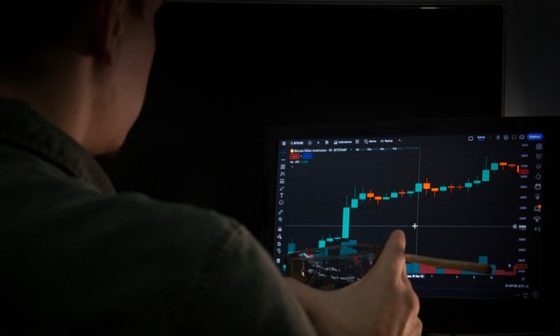
In the world of professional speculation, Understanding Expectancy: The Core of Van Tharp’s Trading Success is the fundamental shift that separates amateurs from consistently profitable professionals. While beginners often obsess over finding the “perfect entry” or achieving a 90% win rate, Tharp argues that your edge lies in how much you win on average relative to the risk you take. This concept is a cornerstone of his seminal work, Trade Your Way to Financial Freedom: The Ultimate Guide to Van Tharp’s Trading Philosophy. By mastering expectancy, you stop chasing “the holy grail” and start focusing on the statistical reliability of your system to generate long-term wealth.
What is Expectancy and Why Does It Matter?
Expectancy is the average amount you can expect to win (or lose) per dollar at risk over a large sample of trades. Van Tharp defines this through the lens of R-multiples, where “R” represents your initial risk. If you risk $1,000 and make $3,000, you have a 3R gain. If you lose $1,000, you have a -1R loss.
To calculate expectancy, you multiply the probability of a win by the average win size and subtract the probability of a loss multiplied by the average loss size. A system with a low win rate can still have a massive positive expectancy if the winners are significantly larger than the losers. This is why R-Multiples: A Revolutionary Way to Track Trading Performance – Van Tharp are so vital; they strip away the currency value and reveal the raw mathematical efficiency of your strategy.
Example 1: The Trend Follower vs. The High-Frequency Scalper
Consider two traders to understand how expectancy works in practice:
- Trader A (Trend Follower): Has a win rate of only 35%. However, their average win is 5R and their average loss is 1R. Their expectancy is (0.35 * 5) – (0.65 * 1) = 1.1R. For every dollar they risk, they make $1.10 over time.
- Trader B (Scalper): Boasts a 90% win rate. They take tiny profits of 0.1R but don’t use hard stops, leading to occasional “black swan” losses of 5R. Their expectancy is (0.90 * 0.1) – (0.10 * 5) = -0.41R. Despite winning 9 out of 10 times, this trader is mathematically guaranteed to go broke.
This illustrates why The Myth of the Holy Grail: Finding Your Personal Trading Style – Van Tharp is so dangerous; many traders seek the “feeling” of winning (high win rate) rather than the “reality” of positive expectancy.
Example 2: Applying Expectancy to Modern Crypto Markets
In highly volatile environments, Applying Van Tharp’s Principles to Modern Crypto Trading requires a deep understanding of expectancy. Because crypto assets can move 50% in a week, a trader might experience a string of -1R losses followed by a single 20R “moon bag” runner. Without a grasp of expectancy, a trader would likely quit during the losing streak, unaware that their system is statistically sound.
Actionable Insights to Improve Your System’s Expectancy
To increase your expectancy, you don’t necessarily need a better entry signal. Instead, focus on these three levers:
- Cutting Losses Early: Strict adherence to a -1R stop loss ensures that your “probability of loss” remains manageable. This is a core component of Position Sizing Mastery: Protecting Your Portfolio from Ruin – Van Tharp.
- Letting Winners Run: Using trailing stops rather than fixed targets can turn a 2R win into a 10R win, drastically shifting your expectancy positive. Review Advanced Exit Strategies: When to Get Out for Maximum Profit By Van Tharp for specific techniques.
- Filtering for Quality: Use the System Quality Number (SQN): Evaluating Your Strategy’s Performance – Van Tharp to rank your setups and only trade those that historically yield the highest expectancy.
By Backtesting for Success: How to Verify Your Trading System – Van Tharp, you can objectively measure these variables before risking real capital.
Conclusion
Understanding Expectancy: The Core of Van Tharp’s Trading Success is about moving from a mindset of “being right” to a mindset of “being profitable.” A positive expectancy system is your only true edge in the markets. By combining large R-multiples with disciplined risk management, you build a mathematical engine for wealth. To see how expectancy fits into the larger picture of your financial journey, return to our master guide on Trade Your Way to Financial Freedom: The Ultimate Guide to Van Tharp’s Trading Philosophy.
Frequently Asked Questions
What is the basic formula for trading expectancy?
The basic formula is: (Win Probability × Average Win Size) – (Loss Probability × Average Loss Size). In Tharp’s terms, this is usually calculated using R-multiples to normalize the data across different trades and account sizes.
Can a system with a 30% win rate be successful?
Yes, absolutely. As long as the average win (in R) is significantly larger than the average loss, the system will have positive expectancy. For example, a 30% win rate with a 4R average win and 1R average loss results in a very profitable 0.5R expectancy.
How does psychology affect expectancy?
Even with a high-expectancy system, many traders fail because they cannot handle the losing streaks inherent in the math. This is explored in The Psychology of the Trader: Why Mindset Trumps Method – Van Tharp, highlighting that the trader’s discipline is what allows expectancy to manifest.
How many trades do I need to determine my system’s expectancy?
Van Tharp generally suggests a minimum of 30 to 100 trades to get a statistically significant measure. Small sample sizes are prone to “luck” or “noise,” which is why Backtesting for Success is vital for long-term verification.
Does expectancy change over time?
Yes, expectancy is not static. Market conditions change (volatility, trend vs. range), which is why Tharp emphasizes Building a Robust Trading Business Plan Based on Van Tharp’s Teachings to monitor and adjust your system as performance shifts.
What is a “good” expectancy number?
While any number above zero is technically profitable, Tharp often looked for systems with an expectancy of 0.5R or higher. However, the total profit also depends on your “opportunity factor,” or how often your system generates trades.