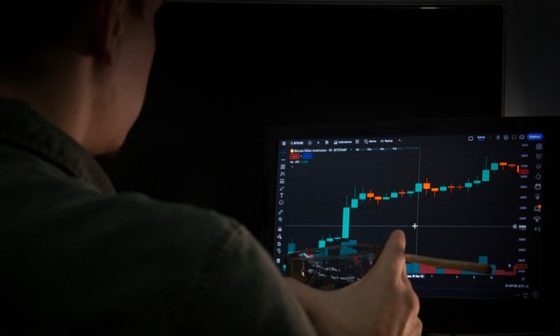
In the world of professional speculation, The Psychology of the Trader: Why Mindset Trumps Method – Van Tharp serves as the foundation for long-term success. While most beginners spend years searching for the perfect entry signal, Van Tharp argues that your mental state accounts for 60% of your success, while position sizing accounts for 30%, and the actual system only 10%. By mastering your internal dialogue and emotional triggers, you move closer to the principles outlined in Trade Your Way to Financial Freedom: The Ultimate Guide to Van Tharp’s Trading Philosophy. Understanding that you trade your beliefs about the market rather than the market itself is the first step toward becoming a consistently profitable trader.
The Core Pillar: Why Your Brain is Your Biggest Asset (and Liability)
According to Van Tharp, the most significant obstacle to success is not the lack of a good strategy, but the psychological baggage a trader brings to the desk. This concept is often referred to as “the internal game.” Most traders fail because they are searching for external solutions to internal problems. Tharp emphasizes that we do not trade the markets; we trade our perceptions of the market.
To master this mindset, traders must address several psychological barriers:
- The Need to Be Right: This leads to holding losing trades too long, hoping they will turn around.
- Fear of Missing Out (FOMO): This results in chasing prices and ignoring established Backtesting for Success data.
- The Gambler’s Fallacy: The belief that if a stock has gone up for five days, it “must” come down today.
By shifting focus from “the method” to “the person behind the method,” you can begin to view losses simply as the cost of doing business, or an “R-multiple” expense, rather than a personal failure. This mental shift is essential for accurately executing Advanced Exit Strategies without hesitation.
Actionable Insights for Developing a Professional Mindset
Developing a professional trading mindset requires more than just willpower; it requires a structured approach to self-analysis. Van Tharp suggested that traders treat their trading as a business. This starts with Building a Robust Trading Business Plan that accounts for your personal strengths and weaknesses.
Practical steps include:
- Daily Mindfulness: Spend ten minutes before the market opens to visualize your trading plan and acknowledge any emotional stress you are carrying.
- Belief Auditing: Write down your beliefs about the market (e.g., “The market is rigged” or “I need to win every trade”). Challenge these beliefs against the reality of Understanding Expectancy.
- Process Over Outcome: Grade yourself based on how well you followed your rules, not how much money you made on a single trade.
Case Studies in Trader Psychology
Case Study 1: The “System Jumper”
An intermediate trader finds a strategy with a high System Quality Number (SQN). However, after three consecutive small losses, the trader experiences “recency bias,” feels the system is “broken,” and abandons it for a new strategy. By failing to understand the psychology of drawdown, the trader misses the subsequent winning streak that would have made the year profitable. This highlights why mindset trumps method; the method was sound, but the trader’s psychology was not.
Case Study 2: The “Fear of Losing” in Crypto
A trader Applying Van Tharp’s Principles to Modern Crypto Trading enters a volatile Bitcoin trade. Despite having a plan based on R-Multiples, the trader exits early for a tiny profit because they cannot handle the anxiety of a fluctuating balance. By prioritizing emotional comfort over the mathematical expectancy of the system, they fail to capture the “Big Wins” necessary to cover future losses.
The Myth of the Holy Grail
Van Tharp’s teachings often revolve around debunking the idea that there is a secret indicator or magical formula for wealth. This is explored deeply in The Myth of the Holy Grail: Finding Your Personal Trading Style. The real “Holy Grail” is the realization that total responsibility for your results lies within you, not the market. Once you accept this, you can focus on Position Sizing Mastery to protect your capital while your psychology remains steady.
Conclusion
In summary, The Psychology of the Trader: Why Mindset Trumps Method – Van Tharp teaches us that the most sophisticated algorithm in the world cannot compensate for a trader who lacks discipline and self-awareness. By mastering your internal state, auditing your beliefs, and focusing on the process rather than the profits, you align yourself with the elite 5% of successful market participants. To see how this psychological foundation integrates with position sizing and expectancy, return to our pillar guide: Trade Your Way to Financial Freedom: The Ultimate Guide to Van Tharp’s Trading Philosophy.
FAQ: The Psychology of the Trader
| Question | Answer |
| Why did Van Tharp emphasize psychology over strategy? | Tharp believed that even a perfect system will fail in the hands of a trader who cannot follow rules due to fear, greed, or bias. Strategy only works if the human executing it is disciplined. |
| What is the “60/30/10” rule in Tharp’s philosophy? | It suggests that success is comprised of 60% psychology, 30% position sizing, and only 10% the actual trading system or entry criteria. |
| How can I identify my trading biases? | Keep a detailed trading journal that records your emotions during a trade, and compare your actions against your written business plan to see where you deviated. |
| Does a good mindset help with position sizing? | Yes, because a stable mindset allows you to apply position sizing rules mathematically without letting the fear of loss cause you to trade too small or too large. |
| Can backtesting improve my trading psychology? | Absolutely. Seeing the historical performance and drawdown of a system provides the “statistical confidence” needed to stay disciplined during losing streaks. |
| How does psychology relate to R-Multiples? | Thinking in R-Multiples shifts your focus from “money” to “risk units,” which helps detach your emotions from the dollar value of a trade. |
| Is trading psychology different for crypto traders? | The core principles remain the same, but the extreme volatility of crypto requires even greater psychological fortitude to avoid emotional decision-making. |