The rapid deployment of fifth-generation wireless technology is fundamentally reshaping the global landscape of connectivity. The Intersection of 5G and Digital Infrastructure: Investment Opportunities offers a unique entry point for investors looking to capitalize on the next wave of technological evolution. Unlike previous generational shifts, 5G is not merely about faster smartphones; it is the critical connective tissue that enables autonomous systems, the Internet of Things (IoT), and real-time data processing at the edge. To understand this landscape, investors must look beyond the telecommunications carriers and focus on the physical assets—cell towers, fiber optic networks, and specialized data centers—that make high-speed, low-latency communication possible. This exploration is a vital component of The Ultimate Guide to Digital Infrastructure Investment: Data Centers, Cloud, and AI Demand, providing a granular look at how connectivity drives value across the entire digital ecosystem.
Master Percentage Price Oscillator signals for profitable trading
Analyze Percentage Price OscillatorThe Three Pillars of 5G Infrastructure Investment
Investing in 5G requires an understanding of the three primary physical layers that support the network. Each layer offers different risk-return profiles and operational characteristics:
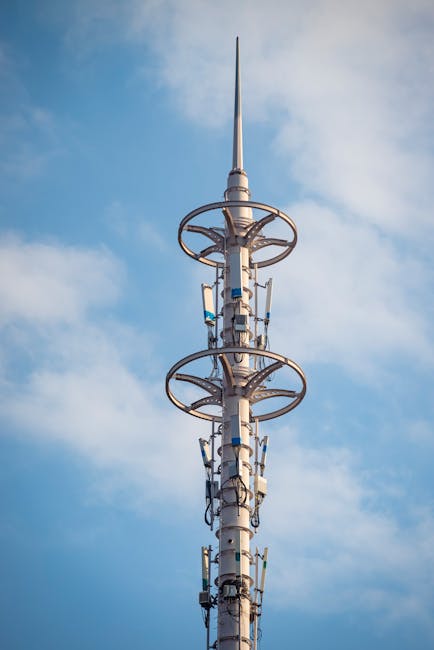
- Macro Cell Towers: These remain the “high ground” of wireless infrastructure. Tower Real Estate Investment Trusts (REITs) lease space to multiple carriers, creating a high-margin, recurring revenue model with significant barriers to entry.
- Small Cell Networks: Because 5G uses higher-frequency waves (millimeter wave) that travel shorter distances, urban density requires thousands of small cells attached to street lamps and buildings. This represents a massive growth area for broadband expansion projects.
- Fiber Backhaul: 5G is only as fast as the wires connecting the towers to the core network. Deep fiber investment is essential to handle the massive data throughput generated by 5G devices.
Edge Computing: The 5G Multiplier
One of the most significant investment opportunities at the intersection of 5G and digital infrastructure is edge computing. 5G’s primary promise is ultra-low latency, but this cannot be achieved if data must travel hundreds of miles to a centralized data center. This has led to the rise of edge computing infrastructure, where processing power is located geographically closer to the end-user.
For investors, this means a shift in real estate strategy. While massive “hyperscale” data centers continue to thrive, there is an increasing demand for “micro-data centers” located at the base of cell towers or within repurposed urban office buildings. This trend is closely linked to analyzing data center growth, as the location and proximity of these assets become more valuable than their sheer square footage.
Synergy with AI and Data Demand
The rollout of 5G is happening concurrently with the explosion of generative AI. 5G provides the “pipe” through which AI-driven applications deliver insights to mobile users. This creates a “supercycle” where 5G enables more data collection, which fuels AI models, which in turn require more infrastructure to run. Investors should monitor how companies are meeting AI infrastructure demand by integrating 5G connectivity into their facility designs.
Furthermore, managing the energy consumption of these integrated 5G and AI systems is becoming a critical operational challenge. Smart investors are looking at firms utilizing machine learning models for predicting data center energy efficiency to maintain margins in an environment of rising power costs and stricter ESG requirements in digital infrastructure.
Case Studies in 5G Infrastructure Investment
Case Study 1: The Tower REIT Transition (Crown Castle)
Crown Castle provides a compelling example of an infrastructure provider evolving with 5G. Originally focused on macro towers, the company pivotally invested billions into small cell nodes and over 85,000 route miles of fiber. This “fiber-fed small cell” strategy allows them to capture the densification needs of 5G in major metropolitan areas, creating a multi-layered revenue stream from the same geographic footprint.
Case Study 2: Equinix and the 5G Open Edge
Equinix, a leader in interconnection data centers, launched 5G “Proof of Concept” centers to allow companies to test how 5G and edge computing interact. By positioning their data centers as the meeting point between 5G carriers and cloud providers, they have secured a vital spot in the value chain, demonstrating how cloud infrastructure financing models are adapting to include connectivity-as-a-service.
Actionable Insights for Investors
Navigating The Intersection of 5G and Digital Infrastructure: Investment Opportunities requires a tactical approach. Consider the following steps:
- Focus on Interconnection: Look for assets where multiple 5G carriers meet. Neutral-host infrastructure (owned by third parties, not the carriers themselves) often yields better returns due to the “multi-tenant” effect.
- Evaluate Regulatory Support: Many 5G projects benefit from public-private partnerships. Governments are increasingly subsidizing 5G rollout in underserved areas to bridge the digital divide.
- Prioritize Security: As 5G increases the number of connected devices, the attack surface for cyber threats grows. Companies that integrate cybersecurity infrastructure into their 5G offerings will likely command a premium.
Comparison of 5G Infrastructure Asset Classes
| Asset Type | Primary Revenue Driver | Risk Profile | Investor Appeal |
|---|---|---|---|
| Macro Towers | Long-term Leases | Low | Inflation-protected, stable cash flow |
| Small Cells | Urban Densification | Moderate | High growth potential in smart cities |
| Edge Data Centers | Low-latency Demand | High | Crucial for AI and autonomous tech |
| Dark Fiber | Bandwidth Leasing | Moderate | Essential “real estate” of the internet |
Conclusion
The The Intersection of 5G and Digital Infrastructure: Investment Opportunities represents more than just a faster mobile network; it is the foundation of the modern digital economy. By focusing on the physical assets—towers, fiber, and edge facilities—investors can find stable, long-term returns that are decoupled from the volatility of individual tech stocks. As 5G continues to mature, its integration with AI and edge computing will create new frontiers for capital allocation. To gain a holistic view of how these trends fit into the broader market, revisit The Ultimate Guide to Digital Infrastructure Investment: Data Centers, Cloud, and AI Demand, which provides the strategic context needed to build a resilient digital infrastructure portfolio.
Frequently Asked Questions
How does 5G differ from 4G in terms of infrastructure investment?
Unlike 4G, which relied heavily on large macro towers, 5G requires a much higher density of “small cells” and significantly more fiber optic backhaul to support higher speeds and lower latency. This creates a broader range of investment opportunities in urban real estate and specialized fiber providers.
What role does fiber play in the 5G ecosystem?
Fiber is the backbone of 5G; without it, the high-speed data transmitted wirelessly cannot be moved to the core network or the cloud. Investment in fiber is often considered a “picks and shovels” play for the 5G revolution.
Are 5G infrastructure investments considered “green” or sustainable?
While 5G is more energy-efficient per bit of data than 4G, the sheer volume of data leads to higher overall consumption. Investors are increasingly looking at companies that implement sustainable power solutions and efficient cooling in their 5G-related facilities.
Is edge computing necessary for 5G to work?
5G can function without edge computing, but it cannot reach its full potential for ultra-low latency applications like autonomous driving or remote surgery without processing data physically closer to the user. This makes edge data centers a critical companion investment to 5G.
How do interest rates affect 5G infrastructure investments?
Since digital infrastructure is capital-intensive and often financed with debt, rising interest rates can increase costs. However, the long-term, inflation-linked contracts common in tower and fiber leases often provide a hedge against these pressures.
What is the biggest risk to 5G infrastructure investors?
The primary risks include regulatory hurdles regarding equipment placement (zoning), the high capital expenditure required for rollout, and the potential for technological obsolescence if satellite-based connectivity (like Starlink) becomes a viable competitor for certain use cases.
Can individual investors participate in 5G infrastructure?
Yes, individual investors can gain exposure through specialized REITs (Real Estate Investment Trusts) that focus on cell towers and data centers, as well as ETFs that track the digital infrastructure and telecommunications sectors.