The global landscape of computing is undergoing its most significant transformation since the industrial revolution. As artificial intelligence evolves from simple predictive models to massive generative systems, the physical world must adapt to meet the insatiable demand for compute power. This transition is not merely a software evolution but a massive physical undertaking involving the construction of hyper-scale data centers, the procurement of tens of thousands of specialized processors, and the complete redesign of power grids. This comprehensive guide explores the multifaceted nature of the global AI infrastructure boom, serving as a hub for understanding how hardware, software, energy, and capital are converging to build the intelligence engines of tomorrow. Throughout this pillar page, we will delve into technical architecture, environmental impacts, and the economic forces driving this unprecedented expansion, providing links to detailed analyses on the critical components of the modern AI stack.
The Foundation of Compute: Architecting GPU Clusters
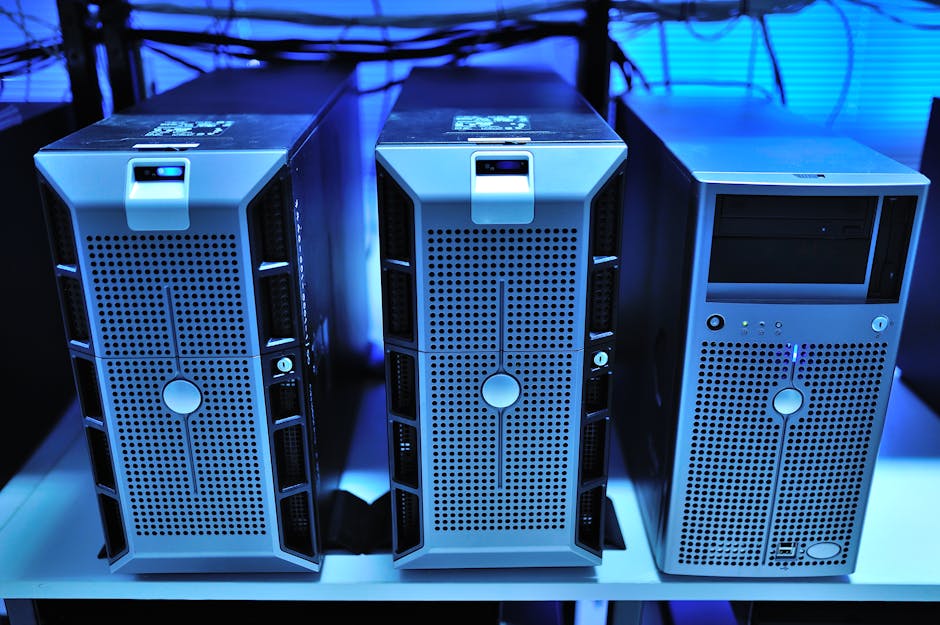
Building a modern data center for AI requires a complete departure from traditional server architecture. In the past, data centers were designed for general-purpose CPUs handling disparate tasks like web hosting or database management. Today, the focus has shifted toward massive parallelization. To support the training of trillion-parameter models, engineers are now Architecting GPU Clusters: The Backbone of Modern AI Hardware Infrastructure that function as a single, massive supercomputer rather than a collection of individual servers.
This architecture relies heavily on high-bandwidth interconnects like NVIDIA’s NVLink and InfiniBand. These technologies allow thousands of GPUs to communicate with one another with minimal latency, ensuring that data can flow between processing units as if they were on a single chip. Without this level of integration, the “tail latency” between nodes would bottleneck the entire training process, leading to underutilized hardware and wasted capital. The goal of modern cluster design is to maximize throughput while maintaining the flexibility to handle diverse AI workloads, ranging from computer vision to complex natural language processing.
The Environmental Impact: Addressing AI Energy Consumption
As the scale of AI infrastructure grows, so does its appetite for electricity. The power density of a modern AI rack is significantly higher than that of a standard cloud server rack. While a traditional rack might pull 10 to 15 kilowatts, AI-optimized racks housing the latest accelerators can demand upwards of 100 kilowatts. This surge in power requirements has led to a renewed focus on sustainability and efficiency, as researchers and operators are Addressing AI Energy Consumption Trends to mitigate the carbon footprint of the digital revolution.
The energy challenge is two-fold: we must find ways to make the hardware more efficient while also sourcing the massive amounts of energy required from carbon-neutral sources. Many hyperscalers are now investing directly in renewable energy projects, such as solar and wind farms, to offset their consumption. However, the intermittent nature of renewables poses a challenge for data centers that require 24/7 “five-nines” reliability. Consequently, the industry is exploring nuclear energy and battery storage as viable paths to sustain the AI boom without compromising global climate goals.
Scaling Large Language Models: Infrastructure Strategies
The leap from specialized AI to Large Language Models (LLMs) has necessitated a shift in how we think about scalability. Training a model like GPT-4 or Llama 3 is not just about having more GPUs; it is about managing the orchestration of data and compute across those units. When Solving AI Scalability Challenges: Infrastructure Strategies for Large Language Models, organizations must consider the entire lifecycle of the data, from ingest and preprocessing to the final weights being distributed across the cluster.
Effective scalability strategies involve a combination of hardware redundancy and software orchestration. Using frameworks like Kubernetes and specialized AI scheduling tools, engineers can ensure that training jobs are resilient to individual node failures. This is critical because a single training run for a frontier model can take months and cost tens of millions of dollars; an unhandled error in the infrastructure could result in catastrophic data loss or timeline delays. Scalability also extends to inference, where the infrastructure must be able to serve millions of users simultaneously with low latency.
The Financial Frontier: Investing in AI Infrastructure
The massive capital expenditure required to build these facilities has created a unique opportunity for investors. We are seeing a “gold rush” where the primary beneficiaries are the “picks and shovels” providers—those who build the chips, the cooling systems, and the physical buildings. For those looking to capitalize on this trend, identifying the Investing in AI Infrastructure: Top Stocks and ETFs Driving Data Center Growth is essential for a balanced portfolio in the technology sector.
Investment is flowing not just into semiconductor giants, but also into real estate investment trusts (REITs) that specialize in data center properties and utility companies that can provide the necessary power. The market has recognized that AI is not just a software fad but a structural shift in the global economy. As a result, companies involved in the supply chain—from copper mining for electrical wiring to specialized thermal management systems—have seen significant valuation increases, reflecting the broad-based nature of the infrastructure boom.
Thermal Management: Advanced Cooling Solutions
With the concentration of high-performance GPUs in a single space comes the immense challenge of heat. Traditional air cooling, which relies on fans and CRAC (Computer Room Air Conditioning) units, is rapidly reaching its physical limits. As power density increases, data center operators are increasingly Advanced Cooling Solutions for AI Data Centers: Managing Heat and Energy to keep their hardware running at optimal temperatures and prevent thermal throttling.
Liquid cooling has emerged as the front-runner for modern AI facilities. Technologies such as Direct-to-Chip (D2C) cooling and immersion cooling—where servers are submerged in a non-conductive dielectric fluid—are becoming more common. These systems are far more efficient at transferring heat away from the processors than air. By reducing the energy spent on cooling, data centers can lower their Power Usage Effectiveness (PUE) ratio, allowing more of the incoming electricity to be used for actual computation rather than climate control.
The Hardware Roadmap: Next-Generation GPU Hardware
The hardware at the heart of this boom is evolving at a breakneck pace. We are currently in a cycle where new architectures are being released every 12 to 18 months, each offering significant jumps in FLOPS (Floating Point Operations Per Second) and memory bandwidth. This rapid iteration is Next-Generation GPU Hardware: Powering the Future of AI Clusters, enabling the training of even more sophisticated models that were previously thought to be computationally impossible.
The shift toward specialized AI silicon—such as NVIDIA’s Blackwell architecture or custom TPUs from Google—highlights the move toward “accelerated computing.” These chips are designed specifically for the matrix multiplications that underpin neural networks. Beyond just raw speed, next-generation hardware focuses on memory capacity (HBM3e and beyond), allowing larger portions of a model to reside on the chip itself, which drastically reduces the energy and time required to move data during the training process.
Optimizing Throughput: Distributed AI Training
As models grow to sizes that cannot fit on the memory of a single GPU, distributed training becomes a necessity. This involves splitting the model or the data across thousands of processors. However, this distribution introduces communication overhead that can degrade performance. Therefore, Distributed AI Training: Overcoming Scalability Bottlenecks in Data Centers is a top priority for researchers and systems engineers alike.
Strategies such as data parallelism, model parallelism, and pipeline parallelism are used to balance the load. Data parallelism involves giving each GPU a different slice of the training data, while model parallelism involves splitting the actual layers of the neural network across different chips. The complexity lies in the synchronization of these parts; the gradients must be shared and updated across the entire cluster constantly. Optimizing the network fabric to handle this “all-reduce” traffic is what separates a world-class AI data center from a standard server farm.
Grid Stability: Powering the AI Revolution
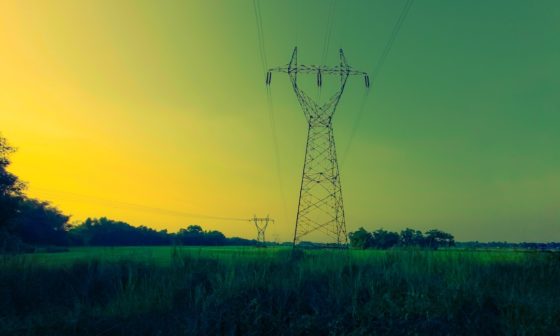
The AI boom is colliding with an aging and often strained electrical grid. In many regions, data center developers are facing multi-year wait times for grid connections. This bottleneck has made Powering the AI Revolution: Grid Stability and Energy Infrastructure Needs a central topic of discussion between tech companies and policymakers. The sheer volume of power required—often hundreds of megawatts for a single campus—can equal the consumption of a small city.
To ensure grid stability, data center operators are exploring behind-the-meter solutions. This includes on-site generation through natural gas turbines or Small Modular Reactors (SMRs) in the future. Furthermore, data centers are beginning to act as “grid citizens,” using their massive battery arrays to provide frequency regulation services back to the grid during times of peak demand. This symbiotic relationship will be vital as we move toward an electrified economy where both AI and electric vehicles compete for the same energy resources.
Maximizing Efficiency: Software Strategies for Optimization
While hardware provides the raw power, software is what determines how effectively that power is used. A poorly optimized software stack can lead to GPUs sitting idle for 30-40% of the time, waiting for data to arrive. By implementing Maximizing GPU Efficiency: Software Strategies for AI Infrastructure Optimization, developers can squeeze every last bit of performance out of their expensive hardware investments.
Software optimization involves everything from using low-precision arithmetic (such as FP8 or INT8) to reduce the data footprint, to using advanced compilers like Triton that generate highly efficient machine code. Furthermore, software-defined infrastructure allows for the dynamic allocation of resources, moving compute power to where it is most needed in real-time. By optimizing the “compute utilization” metric, organizations can significantly reduce the total cost of ownership (TCO) for their AI clusters and accelerate their time-to-market.
The Macroeconomics of Data Centers: CapEx and Growth
The scale of investment in AI infrastructure is reshaping global capital flows. The world’s largest technology companies, often referred to as hyperscalers, are earmarking hundreds of billions of dollars for capital expenditure over the next several years. Understanding The Macroeconomics of AI Data Centers: Capital Expenditure and Growth Projections is crucial for understanding the broader economic trajectory of the 2020s.
This spending has a massive multiplier effect. It drives demand for specialized labor, construction materials, and high-tech components. Economists are closely watching whether this surge in CapEx will lead to a corresponding “productivity miracle” in the wider economy. If AI can successfully automate complex tasks and accelerate scientific discovery, the massive investment in infrastructure will be viewed as one of the most productive capital allocations in history. However, the pressure is on for these companies to show a return on investment as these facilities come online and begin serving the next generation of AI applications.
Conclusion
The global AI infrastructure boom represents a fundamental shift in how we build and interact with technology. From the intricate designs of GPU clusters to the macroeconomic implications of multi-billion dollar capital expenditures, every layer of the stack is being reimagined for an intelligence-first world. As we have explored, this journey involves overcoming significant hurdles in energy consumption, cooling, and grid stability, while simultaneously pushing the boundaries of what is possible in hardware and software optimization. The convergence of these fields—finance, engineering, physics, and computer science—will define the next decade of progress. By understanding the components of this massive expansion, from the physical chips to the global power networks that sustain them, we can better prepare for a future where compute is the most valuable commodity on earth.
Frequently Asked Questions
Why are GPUs used for AI instead of CPUs?
GPUs are designed for parallel processing, meaning they can perform thousands of small calculations simultaneously. This is ideal for the matrix mathematics required by neural networks. CPUs, while versatile, are designed for sequential processing and cannot match the throughput of a GPU for training large models.
How much power does a typical AI data center use?
A modern AI data center can use anywhere from 50 megawatts to over 500 megawatts. To put this in perspective, 100 megawatts is enough to power approximately 80,000 homes. The latest “gigawatt-scale” data centers currently being planned will require their own dedicated power plants.
What is “Liquid Cooling” and why is it necessary?
Liquid cooling involves using a fluid (like water or a specialized coolant) to carry heat away from components. It is necessary because modern AI chips generate so much heat that traditional air cooling cannot move the air fast enough to keep the chips from overheating, which would cause them to slow down or fail.
How does AI infrastructure impact the stock market?
The AI boom has created significant value in the semiconductor, utility, and real estate sectors. Investors look for companies that provide the essential building blocks for data centers, such as chipmakers, power management firms, and data center REITs, as these are seen as the primary beneficiaries of the increased capital expenditure.
What are the biggest bottlenecks in AI scaling today?
Currently, the biggest bottlenecks are the availability of high-end GPUs, the lead times for electrical grid connections, and the shortage of specialized data center space equipped with advanced cooling. On the software side, communication latency between chips in a cluster remains a primary technical challenge.