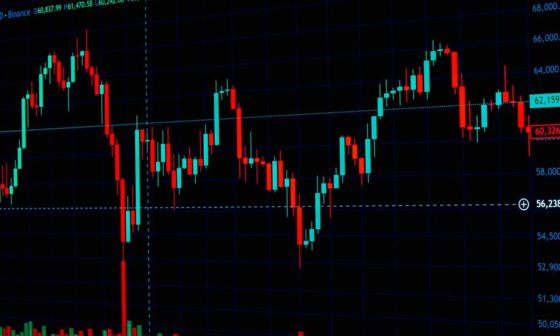
Optimizing Strategy Filters: Enhancing Performance in Quant Models – Ernest Chan is a critical component of professional system development. As detailed in The Definitive Guide to Quantitative Trading: Mastering Ernest Chan’s Algorithmic Frameworks, filtering involves adding conditional layers to basic entry signals to eliminate false positives. By focusing on variables like volatility regimes or trend strength, traders can minimize unnecessary losses during unfavorable market conditions. Effective filtering ensures that a model only executes trades when the statistical edge is at its peak, directly improving the strategy’s profit factor and long-term sustainability.
Master Intraday Momentum Index signals for profitable trading
Analyze Intraday Momentum IndexThe Philosophy of Strategy Filtering
In the framework established by Ernest Chan, a filter is not merely an additional indicator; it is a fundamental tool for regime identification. The primary goal is to ensure the underlying assumptions of your model—be it mean reversion or trend following—are currently valid in the market. Without proper optimization, a strategy may suffer from “death by a thousand cuts” during choppy or sideways price action.
When developing these filters, it is vital to adhere to Backtesting Best Practices: Avoiding Overfitting in Quantitative Strategies – Ernest Chan. A common pitfall is adding too many parameters, which creates a model that performs perfectly on historical data but fails in live trading. Chan advocates for “parsimonious” filtering—using the fewest number of conditions necessary to achieve the desired risk-adjusted return.
Key Types of Quantitative Filters
To enhance a model, quant traders typically utilize several categories of filters to refine their entry and exit logic:
- Trend Intensity Filters: Using tools like the Average Directional Index (ADX) to distinguish between trending and ranging markets.
- Volatility Filters: Utilizing the Average True Range (ATR) or VIX levels to adjust exposure. High volatility might necessitate wider stops or smaller position sizes, as discussed in Risk Management and Capital Allocation in Quantitative Portfolios – Ernest Chan.
- Volume and Liquidity Filters: Ensuring that signals only execute when there is sufficient liquidity to minimize slippage, particularly important in Futures and Options: Applying Quantitative Methods to Derivative Markets.
- Time-Based Filters: Restricting trading to specific hours when the strategy’s historical edge is most pronounced.
Implementing Filters with Modern Technology
Automation is essential for testing the efficacy of filters. By utilizing Python for Finance: Automating Ernest Chan’s Quantitative Trading Systems, traders can run vectorized backtests to see how a strategy’s Sharpe ratio changes with various filter thresholds. Furthermore, some practitioners are now Machine Learning for Algorithmic Trading: Integrating AI with Chan’s Principles to create dynamic “meta-labels” that predict the probability of a primary signal’s success.
Case Study 1: Filtering Mean Reversion with the ADX
Consider a standard Bollinger Band mean reversion strategy. In a strongly trending market, price can “walk the bands,” leading to significant drawdowns. By applying an ADX filter (e.g., only enter if ADX < 25), the trader ensures they are only trading when the market lacks a strong directional bias. This is a staple technique in Mean Reversion and Cointegration: Practical Applications of Ernest Chan’s Models. In historical simulations, this single filter often reduces the maximum drawdown by 30% or more while maintaining a high percentage of profitable trades.
Case Study 2: Statistical Arbitrage and Half-Life Filters
In pairs trading, the speed of mean reversion is critical. As explored in Statistical Arbitrage and Pairs Trading: A Quantitative Deep Dive – Ernest Chan, calculating the half-life of mean reversion using an Ornstein-Uhlenbeck process acts as a powerful filter. If the calculated half-life suddenly increases, indicating that the pair is taking longer to converge, the model can automatically filter out new signals, preventing the trader from entering a “broken” relationship where cointegration has failed.
Actionable Insights for Strategy Optimization
To successfully optimize your strategy filters, consider the following steps:
| Step | Action | Expected Outcome |
|---|---|---|
| 1 | Identify “Fail” Regimes | Isolate periods where the strategy performs poorly. |
| 2 | Correlation Analysis | Determine if a specific indicator (e.g., VIX) correlates with losses. |
| 3 | Out-of-Sample Testing | Validate the filter on data not used during the discovery phase. |
| 4 | Psychological Review | Ensure the filtered strategy is tradable and aligns with The Psychology of Systematic Trading: Managing Emotions in Automated Systems – Ernest Chan. |
Conclusion
Optimizing strategy filters is an essential skill for any quantitative trader looking to move beyond “toy” models into institutional-grade systems. By carefully selecting filters based on trend, volatility, and regime-switching logic, you can protect your capital during adverse conditions and maximize returns during favorable ones. For a complete understanding of how these filters fit into a holistic trading workflow, refer back to The Definitive Guide to Quantitative Trading: Mastering Ernest Chan’s Algorithmic Frameworks, which serves as the foundation for all these advanced techniques. Mastering these Essential Lessons from Ernest Chan’s Quantitative Trading Series will significantly enhance your ability to build robust, profitable trading algorithms.
Frequently Asked Questions
1. What is the primary purpose of optimizing strategy filters?
The primary purpose is to reduce “noise” and false signals by adding conditions that ensure the market environment is conducive to the strategy’s core logic, thereby increasing the Sharpe ratio.
2. How does Ernest Chan suggest avoiding overfitting when adding filters?
Chan recommends using simple filters with strong economic justifications and performing rigorous out-of-sample testing to ensure the filter isn’t just “cherry-picking” historical data points.
3. Can volatility be used as an effective strategy filter?
Yes, volatility filters (like the VIX or ATR) are highly effective at preventing entries during periods of extreme market stress or stagnation where the signal-to-noise ratio is low.
4. How does filtering impact the psychology of a systematic trader?
Well-optimized filters reduce the frequency of losing trades, which helps traders maintain discipline and avoid emotional interference during the execution of the algorithm.
5. Should filters be applied differently to mean reversion vs. trend following?
Absolutely. Mean reversion requires low-trend (low ADX) filters, while trend following requires high-momentum or “breakout” filters to ensure the trend is actually established.
6. How can Python be used to test different filter combinations?
Python allows for rapid iteration through parameter grids, enabling traders to test hundreds of filter combinations simultaneously to find the optimal balance between trade frequency and profit factor.
7. Is it better to have one complex filter or multiple simple ones?
Ernest Chan generally favors simplicity. Multiple simple filters that represent different market dimensions (e.g., one for trend, one for volume) are usually more robust than a single hyper-complex mathematical filter.