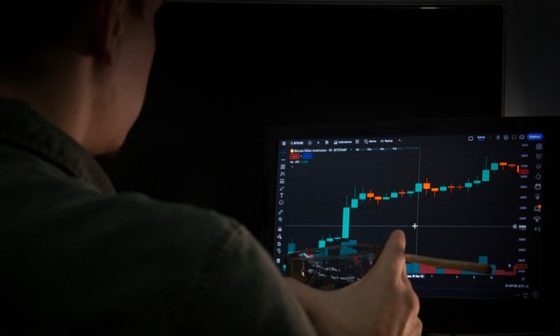
Effective Liquidity Risk Management in Crypto and Futures Markets is a cornerstone of professional trading, particularly when navigating the high-volatility environments described in Risk Management for Traders: The Definitive Guide Based on Davis Edwards’ Principles. Liquidity risk occurs when a trader cannot exit a position at the prevailing market price due to a lack of buyers or sellers. In futures and crypto markets, where leverage is common, a sudden drop in liquidity can lead to cascading liquidations and significant slippage. Proper management involves analyzing order book depth, monitoring volume-to-volatility ratios, and ensuring that trade sizes remain proportional to the market’s ability to absorb them without excessive price impact.
Understanding the Mechanics of Liquidity Risk
In both crypto and futures markets, liquidity is often illusory. During periods of relative calm, order books may appear deep, but this “top-of-book” liquidity can vanish instantly during high-volatility events. Traders following Davis Edwards’ principles recognize that liquidity risk is intrinsically linked to market impact. If your position represents a significant percentage of the average daily volume (ADV), you are exposed to the risk of being “trapped.”
To mitigate this, traders should focus on The Mathematics of Position Sizing: Protecting Your Trading Capital – Davis Edwards. By limiting position sizes based on current liquidity metrics rather than just account balance, you ensure that exits remain manageable even when the bid-ask spread widens. Furthermore, utilizing Stop-Loss Strategies: Technical vs. Volatility-Based Approaches helps in defining exit points before liquidity dries up.
Case Studies in Liquidity Failure
To understand the gravity of these risks, we can look at specific historical examples where liquidity risk management failed or was tested:
- The 2020 Negative Oil Futures Event: In April 2020, WTI Crude Oil futures dropped into negative territory. This was a classic liquidity crisis where long holders were forced to sell into a market with zero buyers, as physical storage was full. Traders who didn’t account for the contract’s “exit risk” faced catastrophic losses.
- The LUNA/UST Collapse (2022): In the crypto space, the de-pegging of UST created a liquidity vacuum. As holders rushed to exit, the lack of depth on decentralized and centralized exchanges led to slippage exceeding 90%. This highlights why Stress Testing and Scenario Analysis: Preparing for Market Crashes – Davis Edwards is vital for crypto-native assets.
- Flash Crashes on Leveraged Exchanges: Crypto exchanges often see “long squeezes” where a small price drop triggers automated liquidations. If the exchange’s insurance fund and order book cannot handle the volume, the price can drop 20% in seconds, bypassing many standard stop-losses.
Advanced Strategies for Mitigating Liquidity Risk
Managing liquidity risk requires more than just looking at the current price. It requires a deep dive into market microstructure. Traders should consider the following:
- Fragmented Liquidity Analysis: In crypto, liquidity is spread across dozens of exchanges. Using aggregators can help, but traders should also be aware of how The Impact of Correlation on Portfolio Risk Management – Davis Edwards can cause liquidity to disappear across all venues simultaneously during a market-wide panic.
- Real-Time Monitoring: Modern traders are increasingly Leveraging AI and Machine Learning for Real-Time Risk Monitoring to detect early signs of order book thinning or abnormal “spoofing” activity.
- Calculating Value at Risk: Integrating liquidity-adjusted VaR helps in Calculating Value at Risk (VaR): A Practical Approach for Retail Traders – Davis Edwards by adding a penalty for illiquid assets.
The Role of Derivatives in Liquidity Management
Futures traders often use options to hedge liquidity risk, but this introduces its own set of complexities. Understanding the Greeks is essential here. For instance, Understanding Delta, Gamma, and Vega: Managing Options Risk – Davis Edwards allows a trader to hedge their delta while remaining conscious of the liquidity costs associated with rebalancing those hedges in a fast-moving market.
Conclusion
Mastering Liquidity Risk Management in Crypto and Futures Markets is what separates professional operators from gamblers. By understanding that liquidity is dynamic and often disappears when it is needed most, you can build a more resilient trading framework. Integrating these concepts with Risk Management for Traders: The Definitive Guide Based on Davis Edwards’ Principles provides the necessary foundation to survive extreme market events and handle Psychological Resilience: How to Handle Drawdowns Like a Pro – Davis Edwards effectively. Always remember that the ultimate risk is not just being wrong on direction, but being unable to exit when you realize you are wrong.
Frequently Asked Questions
1. What is the main difference between market risk and liquidity risk?
Market risk is the risk of price moving against your position, while liquidity risk is the risk that you cannot execute a trade at all (or only at a significant loss) due to a lack of market participants. In crypto, market risk is high, but liquidity risk can be even more dangerous during flash crashes.
2. How does leverage affect liquidity risk in futures trading?
Leverage magnifies liquidity risk because it requires larger positions relative to your capital. If the market becomes illiquid, a small price move can trigger a margin call, forcing a liquidation into a “thin” market, which further drives the price against you.
3. Why is crypto liquidity considered “fragmented”?
Unlike traditional stocks that trade on centralized exchanges like the NYSE, crypto trades across hundreds of global exchanges and decentralized protocols. This fragmentation means that liquidity in one venue may not reflect the global state of the market, as discussed in Reviewing ‘Risk Management for Traders’ by Davis Edwards: Key Takeaways.
4. Can a stop-loss order fully protect me from liquidity risk?
Not entirely. In a liquidity vacuum, a stop-loss becomes a market order that may be filled at a price much worse than your trigger price. This is why volatility-based stops are often preferred over simple price-based stops.
5. What is “Slippage” and how is it calculated?
Slippage is the difference between the expected price of a trade and the price at which the trade is actually executed. It is usually calculated as the percentage difference and increases significantly when trading large sizes in illiquid futures or crypto pairs.
6. How do market makers influence liquidity risk?
Market makers provide liquidity by placing bids and asks. However, in times of extreme stress, market makers often pull their orders to avoid “toxic flow,” causing liquidity to evaporate instantly and leaving retail traders exposed.
7. How does Davis Edwards suggest managing liquidity in “Risk Management for Traders”?
Davis Edwards emphasizes that liquidity is a component of total risk. He suggests that traders should never hold a position so large that it would take more than a small fraction of the average daily volume to exit, ensuring that “the door is always wider than the crowd.”