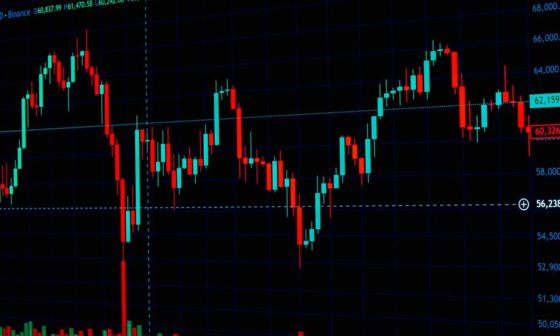
Understanding How to Eliminate Fear and Greed: Lessons from Trading in the Zone – Mark Douglas requires shifting from a results-oriented focus to a process-oriented one. As detailed in A Summary to Trading in the Zone by Mark Douglas, fear and greed are not personal defects but symptoms of flawed expectations. To trade effectively, you must align your internal belief system with the reality of the market. This involves neutralizing the emotional charge of a win or loss by viewing every trade as a single outcome in a series of probabilistic events, eventually leading to consistent success.
Master Intraday Momentum Index signals for profitable trading
Analyze Intraday Momentum IndexShifting from Certainty to Probability
To eliminate the emotional grip of fear, Douglas suggests that traders must stop trying to predict the outcome of every single trade. Fear often stems from the “fear of being wrong” or the “fear of losing money.” When you expect a specific trade to be a winner, you are setting yourself up for emotional pain if the market disagrees.
By Developing a Probabilistic Mindset for Consistent Trading Success – Mark Douglas, you realize that any individual trade has a random outcome. However, over a large sample size of trades, your “edge” will produce a positive result. This shift removes the pressure of being “right” and allows you to execute your plan without hesitation.
The Mechanics of Eliminating Greed
Greed is often the flip side of fear—the fear of missing out or the desire to make up for previous losses. It manifests when a trader ignores their exit signals in hopes of “one more candle.” To master How to Eliminate Fear and Greed: Lessons from Trading in the Zone – Mark Douglas, you must adhere to a strict structure.
- Pre-define your risk: Decide exactly where you will exit if you are wrong before you even enter.
- Accept the risk: Truly internalize that the money put into the trade is the price of finding out if the edge works this time. Refer to Mark Douglas’s Guide to Accepting Risk in Every Trade for deeper insights.
- Automate the exit: Use hard stop-losses and take-profit orders to remove the temptation to negotiate with the market.
Practical Advice: Actionable Insights
Eliminating these emotions isn’t a one-time event; it is a discipline. Here are actionable steps to integrate Douglas’s philosophy:
- The 20-Trade Exercise: Commit to taking 20 trades based on a single set of criteria without changing anything. This helps in Backtesting Your Psychology: Applying Mark Douglas to Strategy Testing.
- Journaling Beliefs: Document your thoughts during a trade. Are you hoping? Are you scared? Understanding The Impact of Belief Systems on Your Trading Performance – Mark Douglas is key to spotting these patterns.
- Focus on the Edge: Remind yourself of The 5 Fundamental Truths of Trading Psychology from Mark Douglas daily to reinforce the reality that the market is neutral.
Case Studies: Fear and Greed in Action
Case Study 1: The Hesitating Professional
A trader with a high-probability strategy enters a losing streak of three trades. On the fourth setup—which is technically perfect—the trader hesitates due to fear of another loss. The trade runs to its target without them. By failing to accept that “anything can happen,” the trader allowed past losses to dictate future actions, violating the core principles found in The Role of Self-Discipline in Mark Douglas’s Trading Philosophy.
Case Study 2: The “Just a Little More” Trap
An aggressive trader hits their daily target within the first hour. Driven by greed and the “gambler’s high,” they ignore their plan and take a larger, unvetted position. The market reverses, wiping out the day’s profits and half the account balance. This demonstrates Why Technical Analysis Fails Without the Right Trading Psychology – Mark Douglas; the trader had the right charts but the wrong mindset.
Transitioning to Professionalism
To move from an emotional roller coaster to a steady equity curve, you must undergo the process of Transitioning from a Gambler to a Professional Trader: The Zone Method – Mark Douglas. Professionals treat trading as a business of probabilities, while gamblers treat it as a source of emotional validation.
| Emotional Trader | Professional (In the Zone) |
|---|---|
| Views every trade as a win/loss. | Views every trade as a statistical data point. |
| Feels elation when winning, despair when losing. | Remains neutral regardless of the outcome. |
| Hopes the market will move in their favor. | Knows exactly what they will do in any scenario. |
For more information on structuring your approach, see How to Build a Winning Trading Plan Based on Trading in the Zone – Mark Douglas.
Conclusion
Mastering How to Eliminate Fear and Greed: Lessons from Trading in the Zone – Mark Douglas is not about suppressing emotions, but about removing the cause of those emotions. By accepting that the market is an environment of uncertainty and that your edge is merely a higher probability of one thing happening over another, you eliminate the threat that causes fear and the unrealistic expectations that cause greed. To truly integrate these concepts into your daily routine, it is essential to revisit the core principles found in A Summary to Trading in the Zone by Mark Douglas, ensuring your mental environment is as disciplined as your technical strategy.
FAQ: Eliminating Fear and Greed
Q1: Why does Mark Douglas say fear is the biggest hurdle for traders?
Fear creates a state of mind where the trader perceives information as threatening. This causes them to freeze, hesitate, or misinterpret market signals, leading to the very losses they were trying to avoid.
Q2: How does a probabilistic mindset eliminate greed?
When you understand that your edge only provides a statistical advantage over time, you stop expecting every trade to be a “big win.” This makes it easier to take profits at pre-defined levels rather than holding on for more.
Q3: Can technical analysis help eliminate fear?
No, Douglas argues that Technical Analysis Fails Without the Right Trading Psychology. Even the best indicators cannot help a trader who is afraid to execute their plan or who lacks the discipline to follow it.
Q4: What is the most important lesson in Trading in the Zone for overcoming greed?
The most important lesson is to pre-define the risk and the profit target. By making these decisions before the trade is active, you remove the emotional tug-of-war that occurs once your capital is at risk.
Q5: How long does it take to eliminate fear and greed?
It is a process of retraining your brain. By following exercises like the “20-trade sample,” most traders can begin to see a significant reduction in emotional interference within a few weeks of disciplined practice.
Q6: How does accepting risk differ from just having a stop loss?
Accepting risk means being “at peace” with the potential loss. If you have a stop loss but still feel anxious, you haven’t truly accepted the risk, and fear will still influence your decision-making.
Q7: Where can I find a condensed version of these concepts?
You can find a comprehensive breakdown of Douglas’s core philosophies by visiting A Summary to Trading in the Zone by Mark Douglas.