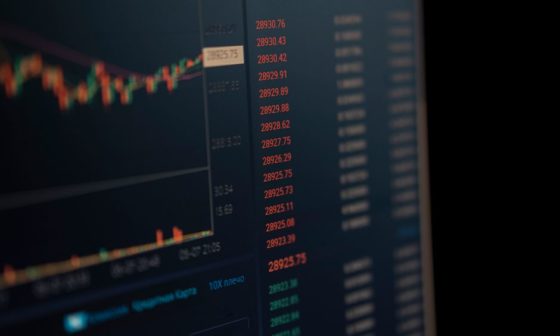
The financial landscape is undergoing a seismic shift as institutional and retail investors alike observe how AI trading algorithms are outperforming traditional quantitative models in increasingly volatile markets. For decades, quantitative finance relied on static mathematical formulas and linear regressions to predict price movements. However, as global markets become more interconnected and data-heavy, these traditional methods are struggling to keep pace. By leveraging deep learning, natural language processing, and reinforcement learning, artificial intelligence provides a level of adaptability that was previously impossible. This evolution is a core component of The Ultimate Guide to AI in Financial Markets: Revolutionizing Trading with Algorithms and Forecasting Tools, which explores how technology is redefining the edges of alpha generation.
Validate your strategy with instant backtesting
Backtest LibraryThe Fundamental Shift: Linear vs. Non-Linear Modeling
Traditional quantitative models are often built on the assumption that market relationships are linear and “normal.” They use historical data to find correlations, such as the relationship between interest rates and bank stocks. The limitation is that markets are inherently non-linear and chaotic. AI trading algorithms outperform traditional models by utilizing neural networks that can identify complex, hidden patterns in multidimensional data that a human or a standard regression would never see.
While a traditional quant might look at ten variables, machine learning and AI models can process thousands of data points simultaneously, including alternative data sources. This allows the AI to detect “regime changes”—moments when the rules of the market change—far faster than a human analyst could update their spreadsheet formulas.
Processing Unstructured Data and Alternative Signals
One of the primary reasons how AI trading algorithms are outperforming traditional quantitative models is their ability to ingest unstructured data. Traditional models typically only “understand” price, volume, and basic economic indicators. In contrast, modern AI can analyze:
- Social Media Sentiment: Real-time analysis of millions of tweets and posts to gauge retail investor sentiment.
- Earnings Call Transcripts: Using Natural Language Processing (NLP) to detect subtle shifts in a CEO’s tone that might indicate future trouble.
- Satellite Imagery: Monitoring retail parking lots or oil tankers to predict supply chain health.
By using AI strategy filters to reduce noise, traders can ignore the “random walk” of the market and focus on high-probability signals derived from these diverse data sets.
Real-Time Adaptability and Reinforcement Learning
Traditional quantitative strategies often suffer from “model decay.” A strategy that worked in 2015 might fail in 2024 because market participants have exploited the edge. AI algorithms, particularly those using reinforcement learning, are designed to learn from their mistakes in real-time. Instead of a static set of rules, the algorithm is given an objective—such as maximizing returns while staying below a 5% drawdown—and it constantly experiments with different tactics to achieve that goal.
This is particularly evident in high-speed environments. For example, AI in cryptocurrency trading allows for predictive analytics in a 24/7 market where volatility is the norm and traditional moving averages are often too slow to react.
Case Study 1: The Resilience of AI During Market Flash Crashes
In several instances of extreme market volatility, traditional quant models triggered mass sell-offs because their pre-programmed thresholds were hit simultaneously, creating a feedback loop of falling prices. In contrast, advanced AI models used by top-tier hedge funds have shown the ability to recognize the “liquidity vacuum” associated with flash crashes. By recognizing the pattern as a temporary anomaly rather than a fundamental change in value, these AI systems can pause or even trade against the panic, capturing profit where traditional models capture losses.
Case Study 2: Institutional Adoption and the “Medallion” Effect
While proprietary, the success of firms like Renaissance Technologies has long hinted at the power of algorithmic superiority. Recent benchmarks comparing generic “Smart Beta” ETFs (which use traditional quant rules) against AI-driven hedge fund indices show a widening gap. In 2023, while many traditional quant funds struggled with the rapid rotation from growth to value stocks, AI-driven funds that utilized custom AI indicators were able to pivot their portfolios weeks ahead of the trend by spotting early accumulation patterns in institutional order flow.
Actionable Insights for Transitioning to AI-Driven Trading
For those looking to move beyond traditional technical analysis, the transition requires a change in mindset and tools. Here are practical steps to integrate AI into your workflow:
- Replace Indicators with Models: Instead of relying on a static RSI or MACD, look into top 10 AI trading platforms that offer dynamic forecasting.
- Focus on Risk Management: Use AI in futures trading to manage risk with real-time insights, allowing the machine to set dynamic stop-losses based on current volatility rather than fixed percentages.
- Backtest with Rigor: Traditional backtesting often leads to curve-fitting. Ensure you are backtesting AI-powered trading systems using walk-forward optimization to ensure the model can handle unseen data.
Comparison Table: Traditional Quant vs. AI Models
| Feature | Traditional Quantitative Models | AI Trading Algorithms |
|---|---|---|
| Data Processing | Mainly structured (Price, Volume, Ratios) | Structured and Unstructured (News, Sentiment, Satellite) |
| Adaptability | Static; requires manual recalibration | Dynamic; learns and updates via Reinforcement Learning |
| Complexity | Linear relationships (e.g., if X then Y) | Non-linear patterns and neural networks |
| Execution Speed | High (rule-based) | Ultra-High (optimized via machine learning) |
| Market Logic | Assumes market efficiency and normality | Detects inefficiencies and behavioral anomalies |
Overcoming the Psychology of the “Black Box”
Perhaps the biggest hurdle in seeing how AI trading algorithms are outperforming traditional quantitative models is the human element. Traditional models are transparent—you can see the math. AI can often feel like a “black box” where the reasoning behind a trade is obscured. However, the industry is moving toward “Explainable AI” (XAI), which helps traders understand why a model took a specific position. Understanding the psychology of trusting AI is essential for any modern trader; it is not about replacing human intuition but augmenting it with superior data processing. For example, integrating AI market forecasting tools into your options trading strategy can provide the statistical confidence needed to hold trades through temporary turbulence.
Conclusion
The evidence is clear: how AI trading algorithms are outperforming traditional quantitative models is a result of their superior ability to handle complexity, ingest diverse data types, and adapt to changing market regimes. While traditional quantitative methods provided the foundation for modern finance, they are increasingly relegated to “beta” strategies, while AI captures the “alpha.” By embracing these tools—from sentiment analysis to reinforcement learning—traders can gain a significant edge in an era where data is the most valuable commodity. To see how these advancements fit into the larger picture of financial evolution, refer back to The Ultimate Guide to AI in Financial Markets: Revolutionizing Trading with Algorithms and Forecasting Tools.
Frequently Asked Questions
1. Why are AI trading algorithms specifically better than traditional quant models?
AI algorithms excel because they can process non-linear relationships and unstructured data, such as news sentiment, whereas traditional models are mostly limited to linear price and volume data. This allows AI to adapt to complex market changes that traditional models miss.
2. Can retail investors access the same AI tools as institutional hedge funds?
While institutions have proprietary systems, retail investors now have access to sophisticated platforms that utilize machine learning. Many of these are listed in our guide to the Top 10 AI Trading Platforms for Retail Investors.
3. Do AI models require constant human intervention?
No, one of the main advantages of AI, particularly those using reinforcement learning, is their ability to self-correct and adapt to new market conditions without manual code changes. However, human oversight is still recommended to monitor for black-swan events.
4. Is the “black box” nature of AI a significant risk in trading?
It can be, but modern developments in “Explainable AI” allow traders to see which factors influenced a specific prediction. Proper risk management and rigorous backtesting are essential to mitigate the risks of the black box.
5. How does AI handle market volatility compared to traditional models?
Traditional models often use fixed volatility measures which can lag during a crash. AI algorithms analyze real-time order flow and sentiment, allowing them to adjust risk parameters instantly as volatility spikes.
6. Can AI help in specialized markets like options or futures?
Yes, AI is highly effective in these markets due to the high dimensionality of the data (Greeks, time decay, etc.). Many traders now use AI to filter noise and identify high-probability setups in these complex instruments.
7. Does this mean traditional quantitative analysis is dead?
Not entirely. Traditional quant provides the foundational logic and “sanity check” for many strategies. The most successful modern approaches often combine traditional financial theory with AI-driven execution and filtering.