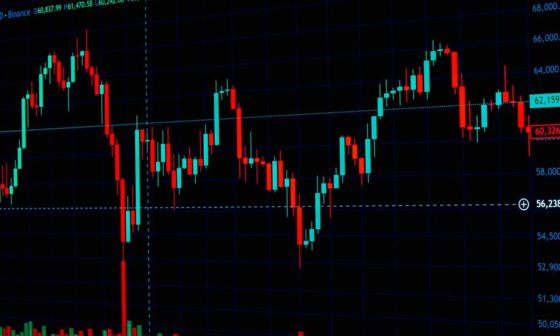

In the realm of professional derivatives trading, mastering **Delta, Gamma, and Vega: Managing the Greeks in Volatile Markets – Sheldon Natenberg’s Methodology** is essential for surviving turbulent price action. Natenberg emphasizes that these Greeks are not static figures but dynamic sensitivities that shift rapidly as market conditions evolve. By understanding how Delta measures price sensitivity, Gamma tracks the rate of change in Delta, and Vega captures the impact of implied volatility shifts, traders can construct robust portfolios. This approach is central to the broader principles outlined in Option Volatility and Pricing: The Definitive Guide to Sheldon Natenberg’s Methodology, providing a practical roadmap for risk mitigation when volatility spikes unexpectedly.
Validate your strategy with instant backtesting
Backtest LibraryUnderstanding the Interplay of Delta and Gamma
According to Natenberg, Delta is the most immediate concern for any trader, representing the equivalent stock position. However, in volatile markets, the stability of that Delta is governed by Gamma. High Gamma means your Delta will change rapidly as the underlying asset moves, which can lead to significant “path dependency” risks. Traders often use Synthetic Positions: Creating Flexible Risk Profiles – Sheldon Natenberg’s Methodology to offset these risks, ensuring that a delta-neutral stance remains stable even during sharp price swings.
When managing Gamma, Natenberg suggests that traders must choose between being “long Gamma” (profiting from large moves through frequent rebalancing) or “short Gamma” (profiting from stability but risking heavy losses in breakouts). This decision is often influenced by whether the trader believes the current market environment reflects The Importance of the Normal Distribution in Option Theory – Sheldon Natenberg or if “fat tails” are more likely.
Vega: The Volatility Sensitivity
Vega measures the dollar impact of a 1% change in implied volatility (IV). In Natenberg’s methodology, managing Vega is distinct from managing price direction. During periods of market stress, Vega often becomes the dominant Greek. Traders must distinguish between historical volatility and implied volatility, a concept explored in depth in Mastering Implied Volatility: How to Forecast Market Moves – Sheldon Natenberg’s Methodology.
Effective Vega management involves understanding how different strikes and expirations react to news. For instance, short-term options have lower Vega but higher Gamma, whereas long-term options have higher Vega. Natenberg teaches that a Vega-neutral portfolio can still be crushed if the Understanding Volatility Skew and Smile in Equity Options – Sheldon Natenberg’s Methodology shifts asymmetrically, requiring traders to look beyond simple aggregate Greek totals.
Practical Advice and Case Studies
To implement these concepts, consider the following practical applications of Natenberg’s framework:
| Greek | Market Condition | Natenberg’s Recommended Action |
|---|---|---|
| Delta | High Directional Bias | Use delta-hedging to lock in profits or cap losses. |
| Gamma | Choppy/Rangebound | Short Gamma to collect theta, but stay alert for breakouts. |
| Vega | Pre-Earnings Spike | Identify overinflated IV and consider neutral spreads. |
Example 1: The Long Straddle Rebalance
A trader enters a Straddles and Strangles: Profiting from Volatility Shifts – Sheldon Natenberg’s Methodology before a major economic announcement. As the market moves, the Delta shifts from 0 to 0.30. Natenberg advises “gamma scalping”—selling a portion of the underlying to return to delta-neutral, effectively locking in the volatility gain while maintaining the long Vega position.
Example 2: Protecting Against Volatility Crush
During a market recovery, IV often collapses. A trader holding long-dated calls may find that even if the price rises (positive Delta), the loss from falling IV (negative Vega impact) results in a net loss. This highlights why The Black-Scholes Model vs. Reality: Natenberg’s Take on Pricing is so critical; the model assumes constant volatility, but Natenberg’s real-world application accounts for the “crush.”
Advanced Greek Management
Beyond the primary Greeks, Natenberg highlights the importance of secondary factors. For example, The Impact of Dividends and Interest Rates on Option Pricing – Sheldon Natenberg’s Methodology can subtly alter Delta and Rho, especially in long-term LEAPS. Furthermore, modern traders should utilize Backtesting Volatility Surface Strategies for Consistent Returns – Sheldon Natenberg’s Methodology to see how their Greek exposures would have performed during previous black swan events, applying Risk Management Lessons from Sheldon Natenberg for Modern Traders to size positions appropriately.
Conclusion
Managing Delta, Gamma, and Vega is an iterative process that requires constant monitoring and adjustment. Sheldon Natenberg’s methodology provides the mathematical foundation to decompose price movement into manageable risks. By balancing the need for delta neutrality with the realities of volatility shifts and time decay, traders can move from gambling on direction to professionally managing a volatility book. For a deeper exploration of how these Greeks integrate into a complete trading system, return to our pillar guide on Option Volatility and Pricing: The Definitive Guide to Sheldon Natenberg’s Methodology.
Frequently Asked Questions
- How does Natenberg define the relationship between Gamma and Delta? Natenberg views Gamma as the “acceleration” of Delta, indicating how much a trader’s directional exposure will change for every point move in the underlying asset. In volatile markets, high Gamma requires more frequent rebalancing to maintain a neutral posture.
- Why is Vega management critical during earnings season? During earnings, implied volatility typically rises sharply and then “crushes” immediately after the news. Natenberg emphasizes managing Vega to ensure that the drop in IV doesn’t outweigh the gains from the stock’s price movement.
- Can a position be Delta-neutral but still lose money? Yes, if the position is “short Gamma” and the market moves significantly, or if it is “long Vega” and implied volatility drops. This is why Natenberg stresses a multi-Greek approach to risk management.
- What is Gamma Scalping in Natenberg’s methodology? It is the process of adjusting the Delta of a long Gamma position by buying or selling the underlying asset as price moves. This allows a trader to capture small profits that help offset the daily cost of Theta (time decay).
- How does the “Volatility Smile” affect Greek management? The smile indicates that IV is not constant across all strikes. Natenberg teaches that traders must account for how Delta and Vega change differently for out-of-the-money options compared to at-the-money options when the surface shifts.
- How does Natenberg reconcile the Black-Scholes model with real market Greeks? He acknowledges that while the model provides a baseline, it often fails to account for “fat tails” and non-constant volatility. Traders must adjust their Greek expectations based on observed market skew and historical distributions.