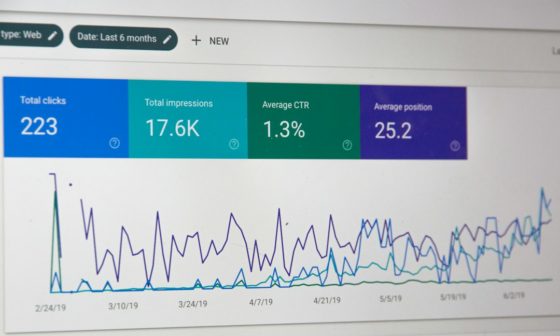
In his seminal work, Nassim Taleb explores the critical distinction between Signal vs. Noise: How to Filter Market Data for Better Decisions – Nassim Taleb. Most traders are bombarded with a constant stream of data, yet they fail to realize that the more frequently they observe the market, the more random “noise” they consume. In the context of Fooled by Randomness: Mastering the Role of Chance in Markets and Life from Nassim Taleb, Taleb argues that true signals—meaningful information that indicates a change in underlying value—are rare. Conversely, noise represents the meaningless volatility that often triggers irrational emotional responses and poor decision-making.
Analyze financial data and fundamentals for better investment decisions
View Financial DataThe Mathematics of Misinterpretation: Signal-to-Noise Ratios
According to Taleb, the ratio of signal to noise decreases as the frequency of observation increases. If you examine your portfolio every minute, the price fluctuations are 99% noise. If you examine it once a year, the price change is more likely to represent a genuine signal of value growth or decay. This phenomenon often leads traders to suffer from The Problem of Induction: Why Historical Data Can Mislead Quantitative Models – Nassim Taleb, where they mistake short-term clusters of noise for a predictable pattern.
To make better decisions, traders must understand that more data does not equal more information. In fact, more data often leads to more confusion. Practitioners should focus on ergodicity—the idea that long-term survival is the only metric that matters. For more on this, see Ergodicity in Trading: Why Long-Term Survival Outweighs Short-Term Gains – Nassim Taleb.
Practical Advice for Filtering Market Noise
Filtering data requires a disciplined approach to information consumption. Here are actionable insights to help you distinguish signal from noise:
- Reduce Frequency: Check market prices less often. Weekly or monthly reviews provide more signal than hourly updates.
- Ignore Financial Journalism: News outlets are paid to find “reasons” for every minor market move, which is essentially narrating noise.
- Focus on Volatility: Understand that price movement within a certain range is mathematically expected and does not require a “why.”
- Build Emotional Barriers: Protect your Emotional Resilience: Managing the Psychological Toll of Market Volatility – Nassim Taleb by automating exits and entries to avoid reacting to noise.
Case Study 1: The Portfolio Observer’s Paradox
Imagine a trader with a portfolio that has an expected return of 10% with 20% volatility. Statistically, the probability of seeing a positive return over a one-year period is high (about 68%). However, if that same trader checks the portfolio every second, the probability of seeing a positive “tick” is barely over 50%. By checking frequently, the trader experiences a 50/50 split of joy and pain, leading to “emotional burnout.” This trader is being fooled by noise, whereas the yearly observer sees the signal of steady growth. This highlights the importance of Nassim Taleb’s Wisdom: Key Lessons for Modern Options Traders regarding patience and time horizons.
Case Study 2: The “Breaking News” Fallacy
During a minor market correction, a financial news network might attribute a 2% drop in a tech stock to a specific political tweet. A “noise-driven” trader might sell immediately, fearing a trend. However, an analysis of Alternative Histories: Evaluating Trading Strategies Beyond the Realized Path – Nassim Taleb would show that such fluctuations happen thousands of times without leading to a crash. By filtering out the “news” (noise) and focusing on the long-term distribution of returns, a trader can avoid the The Monte Carlo Fallacy of assuming every recent event is a precursor to a future trend.
Comparison Table: Signal vs. Noise
| Feature | Signal | Noise |
|---|---|---|
| Definition | Meaningful information/Trends | Random fluctuations/Static |
| Source | Fundamental shifts, Black Swan Events | Market microstructure, liquidity gaps |
| Observation Period | Long-term (Years) | Short-term (Seconds/Days) |
| Actionable? | Yes, drives strategy | No, drives overtrading |
Conclusion: Mastering the Art of Ignoring
The ability to distinguish Signal vs. Noise: How to Filter Market Data for Better Decisions – Nassim Taleb is what separates professional survivors from amateur gamblers. By understanding that most data is simply random variance, you can focus on strategies that leverage Skewness and Asymmetry rather than being tossed around by the daily waves of the market. Always remember that the goal is to survive long enough for the signal to manifest, avoiding the pitfalls of The Survivorship Bias. To dive deeper into the mechanics of chance, revisit our pillar guide on Fooled by Randomness: Mastering the Role of Chance in Markets and Life from Nassim Taleb.
FAQ: Signal vs. Noise in Market Data
Signal represents the underlying truth or trend in a dataset, while noise represents the random fluctuations that obscure that truth. In markets, price moves over years are usually signals, while moves over minutes are almost entirely noise.
2. Why does checking the market frequently lead to worse decisions?
Frequent checking increases your exposure to noise, which triggers emotional reactions. Since noise is random, reacting to it is essentially “trading on randomness,” which leads to high transaction costs and poor performance.
3. How can I apply the Signal vs. Noise concept to my trading strategy?
You can apply this by increasing your holding periods and using filters (like volatility bands) to ignore price movements that fall within the range of standard market noise.
4. Does “Big Data” help in finding better signals?
Not necessarily. Taleb argues that in “Big Data,” the number of false correlations (noise) grows faster than the number of real functional relationships (signal), often leading to The Problem of Induction.
5. How does this topic relate to Fooled by Randomness?
A core theme of Fooled by Randomness is that humans are evolutionarily hardwired to see patterns in noise, leading us to believe we understand the market when we are actually just lucky.
6. Can technical analysis distinguish signal from noise?
Most technical analysis focuses on short-term patterns that Taleb would classify as noise. Only analysis that accounts for long-term survival and Ergodicity truly captures signal.
7. Is news ever considered a signal?
Rarely. Most news is “journalistic noise” designed to explain random variance. A true signal in news would be a structural shift, such as a major regulatory change or a Black Swan Event that fundamentally alters market conditions.