Understanding The Psychology of Shorting: Managing Risk and Fear in a Bullish Market – Kathryn Staley is essential for any contrarian investor. While going long relies on optimism, shorting requires a cold, analytical mindset to combat the “herd mentality.” In her seminal work, The Art of Short Selling: Kathryn Staley’s Blueprint for Profiting from Market Declines, she emphasizes that the psychological pressure of betting against a rising market can be overwhelming. Success hinges on decoupling emotional reactions from price action, ensuring that fear doesn’t dictate decisions when momentum seems unstoppable. By mastering these mental hurdles, traders can maintain objectivity and execute trades based on financial reality rather than market euphoria.
Validate your strategy with instant backtesting
Backtest LibraryThe Asymmetry of Fear: Why Shorting is Psychologically Taxing
Shorting is inherently more stressful than long-only investing because the math is skewed against the seller. In a long position, your risk is capped at 100%, while your upside is theoretically infinite. In shorting, the reverse is true: your profit is capped at 100% (if the stock goes to zero), but your losses can be infinite. This creates a unique psychological environment where The Psychology of Shorting: Managing Risk and Fear in a Bullish Market – Kathryn Staley becomes the determining factor between a disciplined exit and a catastrophic “blow-up.”
To manage this, Staley advocates for a rigorous focus on Risk Management in Short Selling. Emotional resilience is built through preparation; if you understand the structural weaknesses of a company, a temporary price spike is less likely to trigger a panic cover.
Practical Advice for Maintaining Psychological Discipline
Managing fear during a bull run requires more than just “thick skin.” It requires actionable systems that override the fight-or-flight response.
- Focus on Facts, Not Price: Use Analyzing Balance Sheets for Short Opportunities to ground your thesis in objective data. If the numbers are deteriorating while the price is rising, your psychological conviction should remain firm.
- Incremental Position Sizing: Never go “all-in” on a short at once. Scaling into a position allows you to manage the anxiety of “being early” to a top.
- Utilize Technical Confirmation: To avoid the psychological drain of “fighting the tape,” use Technical Indicators for Timing Short Entries to ensure the trend is actually shifting before committing significant capital.
- Acknowledge the “Squeeze”: Accept that short squeezes are a part of the game. Having a pre-defined exit strategy reduces the fear of the unknown.
Case Studies: Psychology in the Face of Euphoria
Example 1: The Dot-Com Bubble Skeptic
During the late 1990s, many short sellers followed Staley’s principles by targeting companies with zero earnings and high cash burn. Psychologically, this was brutal; as these stocks doubled and tripled, the “fear of missing out” (FOMO) shifted into a “fear of being crushed.” Those who survived used Identifying Financial Red Flags to maintain their bias, eventually profiting when the bubble burst.
Example 2: Navigating the Crypto Volatility
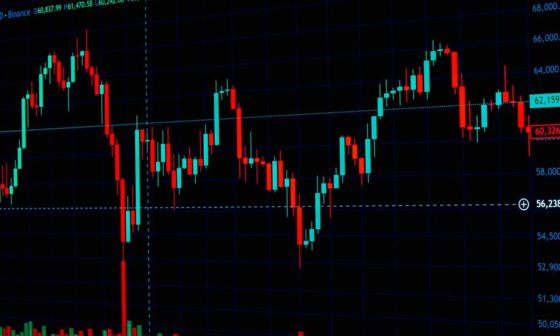
In modern markets, Short Selling in Crypto presents the ultimate psychological test. Traders applying Staley’s methods to digital assets must manage extreme volatility. By using Using Chart Patterns to Confirm Short Bias, traders can wait for “Head and Shoulders” or “Double Top” formations, providing the psychological safety net needed to enter a trade against a parabolic move.
The Role of Objective Tools in Emotional Control
One of the best ways to remove fear is to look at historical data. By Backtesting Short Selling Strategies, an investor can see that even the most successful shorts often experienced “pain periods” where the stock rose 20-30% against the position before collapsing. This historical perspective is a powerful sedative for the anxious mind.
Furthermore, understanding the difference between direct shorting and derivatives can help. Analyzing Short Selling vs. Put Options shows that puts have a defined risk, which can be easier for some personality types to manage psychologically than the “infinite risk” of a naked short.
Conclusion: The Stalwart Mindset
Mastering The Psychology of Shorting: Managing Risk and Fear in a Bullish Market – Kathryn Staley is not about eliminating fear, but about managing it through superior research and rigid discipline. By studying Famous Short Sellers and Their Greatest Trades, we see a common thread: the ability to stand alone against the crowd.
In summary, psychological success in short selling requires:
- Rigorous fundamental analysis to build conviction.
- Strict risk management to prevent emotional exhaustion.
- Technical confirmation to avoid being “run over” by momentum.
To truly excel in this difficult craft, you must integrate these mental strategies into the broader framework found in The Art of Short Selling: Kathryn Staley’s Blueprint for Profiting from Market Declines.
FAQ: The Psychology of Shorting
| Question | Answer |
| What is the primary psychological challenge of shorting? | The primary challenge is the “asymmetry of risk,” where the potential for infinite loss creates high levels of anxiety compared to long-only investing. |
| How did Kathryn Staley suggest managing the fear of a rising stock? | She advocated for deep fundamental research into financial red flags, ensuring the investor’s conviction is based on data rather than price action. |
| Can technical indicators help with the psychology of shorting? | Yes, using chart patterns and indicators provides objective “entry” and “exit” signals, which helps remove emotional hesitation during volatile periods. |
| Is it harder to short in a bull market? | Psychologically, yes; “fighting the tape” in a bullish environment requires extreme discipline and the ability to ignore social pressure and market euphoria. |
| Should beginners start with shorting or put options? | Put options are often easier psychologically because the risk is capped at the premium paid, preventing the fear of unlimited losses. |
| How does position sizing affect shorting psychology? | Smaller position sizes reduce the emotional impact of adverse price moves, allowing the trader to stay in the trade long enough for the thesis to play out. |
| What can we learn from famous short sellers regarding mindset? | The greatest short sellers possess a “contrarian” mindset and the emotional fortitude to remain short even when the rest of the market is irrationally exuberant. |