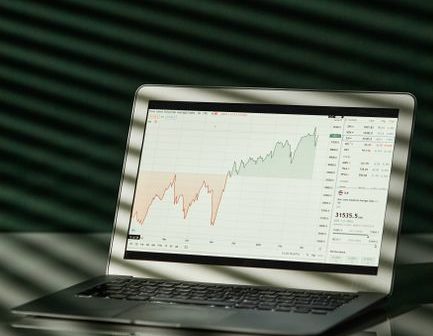
Transitioning From Retail to Pro: Scaling Your Algorithmic Trading Desk like Ernest Chan requires a fundamental shift from manual oversight to automated, institutional-grade infrastructure. As highlighted in The Ultimate Guide to Algorithmic Trading: Mastering the Strategies of Ernest Chan, scaling involves migrating from local desktop setups to robust cloud-based environments that ensure 24/7 execution and minimal latency. This professional evolution demands a rigorous focus on data integrity, moving beyond free data sources to high-fidelity feeds that minimize survivorship bias. By adopting these advanced standards, traders can transition from hobbyist experimentation to managing a diversified, market-neutral portfolio that remains resilient under volatile conditions.
Validate your strategy with instant backtesting
Backtest LibraryThe Professional Infrastructure: Moving Beyond the Desktop
Scaling your desk begins with the hardware and software environment. While many begin by Reviewing ‘Quantitative Trading’ by Ernest Chan: A Blueprint for Retail Traders, a professional setup requires moving to a Virtual Private Server (VPS) or cloud infrastructure like AWS or Google Cloud. This ensures that your Backtesting Best Practices translate into live execution without the risk of home internet outages or power failures.
- Automated Execution: Utilize APIs (such as Interactive Brokers or Alpaca) to eliminate manual order entry errors.
- Database Management: Implement SQL or NoSQL databases to store historical tick data for local analysis rather than relying on real-time API calls.
- Error Handling: Professional desks use robust logging and “heartbeat” monitors to alert the trader if a strategy disconnects.
Scaling Through Multi-Strategy Diversification
To scale like Ernest Chan, a trader must stop relying on a single “holy grail” strategy. Instead, professional desks build a “portfolio of strategies.” This often involves combining Mean Reversion Strategies with Momentum Trading Systems to ensure performance across different market regimes.
| Strategy Type | Market Regime | Role in Portfolio |
|---|---|---|
| Mean Reversion | Ranging/Flat Markets | Steady income, high win rate |
| Momentum | Strongly Trending | Capturing tail events and outliers |
| Statistical Arbitrage | High Correlation | Market-neutral risk reduction |
Implementing Advanced Risk Management
Scaling your capital requires a professional approach to Risk Management in Quant Trading. Professionals don’t just use stop-losses; they manage volatility at the portfolio level. For example, implementing Pair Trading Fundamentals allows a trader to hedge out systematic market risk, ensuring the desk remains profitable even during market crashes.
Case Studies: Scaling in Practice
Case Study 1: The Transition to Cloud-Based Automation
A retail trader using a local Python script experienced a 15% drawdown due to a local ISP outage during a high-volatility event. By scaling to a professional VPS and implementing a heartbeat monitoring system—techniques often advocated by Chan—the trader eliminated technical downtime and recovered the losses through consistent 24/7 execution in Applying Ernest Chan’s Algorithmic Strategies to Crypto Currencies.
Case Study 2: Moving from Single Tickers to Statistical Arbitrage
Initially trading individual stocks based on The Role of Technical Indicators in Ernest Chan’s Quantitative Models, a desk scaled by moving to a market-neutral pairs trading model. By trading the spread between two highly correlated ETFs rather than directional movement, the desk reduced its Beta to the S&P 500 from 0.85 to 0.05, allowing for higher leverage with lower total risk.
Leveraging Modern Technology: AI and Machine Learning
The final step in scaling is the integration of advanced computation. In his more recent work, Machine Trading: How Ernest Chan Integrates AI and ML in Modern Markets, Chan demonstrates how to use “metalearning” to predict the probability of a trade’s success before execution. This allows a professional desk to dynamicallly size positions based on the confidence level of an AI model.
Conclusion
Scaling your algorithmic trading desk From Retail to Pro is a journey of increasing sophistication in both technology and methodology. By transitioning to cloud-based infrastructure, diversifying across multiple strategies, and implementing rigorous institutional-grade risk management, you move closer to the professional standards set by industry leaders. For a deeper dive into the specific mathematical models and execution techniques required for this transition, refer back to our comprehensive resource, The Ultimate Guide to Algorithmic Trading: Mastering the Strategies of Ernest Chan.
FAQ
Q1: What is the first sign that I am ready to scale my trading desk?
You are ready to scale when you have a strategy with a statistically significant Sharpe ratio over a minimum of 200-300 trades and your execution is fully automated without manual intervention.
Q2: How much capital is typically required to move from retail to a pro-level desk?
While technology can be scaled cheaply, a professional desk usually requires enough capital to diversify across at least 5-10 non-correlated assets to effectively manage portfolio risk.
Q3: Why is cloud infrastructure better than a high-end local computer?
Cloud infrastructure offers redundant power, high-speed internet backbones with lower latency to exchange servers, and 99.9% uptime, which a home setup cannot match.
Q4: How does Ernest Chan’s approach to scaling differ from traditional retail trading?
Chan emphasizes statistical significance and “stationary” time series, focusing on mathematical proof rather than subjective chart patterns often used by retail traders.
Q5: Can I scale my desk using only technical indicators?
While possible, professional scaling usually involves moving beyond simple indicators toward statistical arbitrage and Machine Trading techniques for a more robust edge.
Q6: Does scaling increase the risk of overfitting?
Yes, as you add more parameters and strategies, the risk increases; this is why professional desks use walk-forward analysis and out-of-sample testing as part of their Backtesting Best Practices.
Q7: What programming language is best for scaling a professional desk?
Python is the industry standard for research and strategy development, while C++ or Java is often used for the high-frequency execution components of a professional desk.