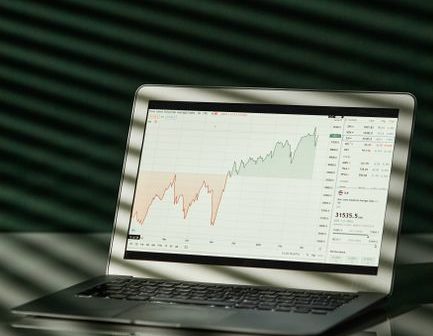
Welcome to our comprehensive resource hub dedicated to the methodologies of one of the industry’s most respected quantitative researchers. This guide serves as a central repository for mastering systematic trading, offering deep dives into everything from basic statistical arbitrage to advanced machine learning applications. By exploring the linked subtopics below, you will gain a holistic understanding of how to build, test, and scale a professional-grade trading operation.
Validate your strategy with instant backtesting
Backtest LibraryReviewing the Foundation of Quantitative Trading
Success in the world of automated finance begins with a shift in mindset from intuition to data-driven decision-making. For many, the journey starts by Reviewing ‘Quantitative Trading’ by Ernest Chan: A Blueprint for Retail Traders, a resource that highlights the importance of finding a “trading edge” that is both statistically significant and repeatable.
Dr. Chan emphasizes that retail traders have a unique advantage in smaller, less efficient markets that institutional players often ignore. By following a structured blueprint, traders can develop a systematic workflow that includes hypothesis testing, data acquisition, and automated execution, ensuring that every trade is backed by rigorous logic rather than emotional impulse.
Mastering Mean Reversion and Statistical Arbitrage
Mean reversion is a cornerstone of quantitative finance, predicated on the idea that asset prices will eventually return to their historical average. Implementing Mean Reversion Strategies: Implementing Ernest Chan’s Statistical Arbitrage Techniques involves using mathematical tools like the Johansen test to identify cointegrated pairs that move together over time.
These techniques allow traders to profit from temporary price divergences. By understanding the underlying physics of price movement, quants can set precise entry and exit points based on standard deviations, effectively turning market noise into a predictable stream of statistical opportunities.
The Evolution of Machine Trading and AI
As markets become more competitive, traditional linear models are often supplemented with advanced artificial intelligence. Modern Machine Trading: How Ernest Chan Integrates AI and ML in Modern Markets focuses on using random forests and gradient boosting to capture non-linear relationships that simple moving averages might miss.
Integrating these technologies requires a balance between complexity and interpretability. Dr. Chan’s approach ensures that AI is not a “black box” but a tool used to enhance feature selection and improve the predictive power of existing algorithmic frameworks.
Rigorous Backtesting to Avoid Market Pitfalls
The most common reason for strategy failure is not a bad idea, but a flawed testing process. Utilizing Backtesting Best Practices: Avoiding Overfitting with Ernest Chan’s Methodology helps traders distinguish between genuine alpha and random patterns that appear only in historical data.
Traders must be vigilant against “p-hacking” and data snooping. By employing out-of-sample testing and walk-forward analysis, you can ensure that your strategy is robust enough to handle shifting market regimes without crumbling when live capital is at stake.
Designing Robust Momentum Trading Systems
While mean reversion bets on a return to the norm, momentum strategies capitalize on the persistence of existing trends. Building Momentum Trading Systems: Lessons from Ernest Chan’s Algorithmic Approach requires identifying assets with high relative strength and utilizing time-series analysis to confirm the trend’s validity.
Dr. Chan teaches that momentum is often driven by behavioral biases and institutional flows. By quantifying these movements, traders can create objective rules for trend following that remove the guesswork from “buying high and selling higher.”
Essential Risk Management for Long-Term Survival
In quantitative trading, your ability to manage downside is more important than your ability to predict upside. Mastering Risk Management in Quant Trading: Protecting Capital the Ernest Chan Way involves applying the Kelly Criterion to determine optimal position sizing and prevent catastrophic drawdowns.
Proper risk management also includes stress testing your portfolio against “black swan” events. By calculating Value at Risk (VaR) and maintaining strict stop-loss protocols, quants can ensure that a single bad trade does not end their career.
Pair Trading and Market-Neutral Strategies
Pair trading is a sophisticated form of statistical arbitrage that seeks to eliminate market risk by going long one asset and short another. Learning Pair Trading Fundamentals: Building a Market-Neutral Portfolio with Ernest Chan is essential for traders who want to remain profitable regardless of whether the broader market is bullish or bearish.
This market-neutral approach relies on the correlation between two historically related securities. When the spread between them widens beyond a certain threshold, the trader bets that the spread will eventually close, capturing the difference as profit.
Redefining Technical Indicators in a Quant Framework
Standard technical analysis is often dismissed by quants, but when used correctly, it can provide valuable signals. The Role of Technical Indicators in Ernest Chan’s Quantitative Models involves transforming traditional tools like RSI or MACD into mathematically verifiable inputs for a larger model.
Rather than looking at charts manually, quants program these indicators to act as filters or secondary confirmation tools. This objective application ensures that indicators are only used if they have demonstrated predictive power in a backtest.
Scaling Your Operations from Retail to Professional
Moving from a single-strategy script to a full-scale trading desk requires a significant upgrade in infrastructure. From Retail to Pro: Scaling Your Algorithmic Trading Desk like Ernest Chan covers the transition into cloud computing, high-frequency data handling, and multi-strategy diversification.
Scaling also means dealing with slippage and liquidity constraints. As your capital grows, you must adapt your execution algorithms to ensure that your large orders do not move the market against you.
Navigating the Crypto Markets with Quantitative Rigor
The cryptocurrency market offers a 24/7 laboratory for algorithmic traders. Applying Ernest Chan’s Algorithmic Strategies to Crypto Currencies allows quants to exploit the high volatility and fragmentation found in digital asset exchanges.
Because crypto markets are often retail-heavy, they exhibit strong mean-reverting and momentum characteristics that have faded in more mature equity markets. Using Dr. Chan’s rigorous framework in this new frontier can yield significant opportunities for those who manage the unique risks of the space.
Conclusion
Mastering algorithmic trading is a continuous journey of learning, testing, and refining. By following the structured methodologies established by Ernest Chan, traders can move away from speculative gambling and toward a professional, evidence-based approach to the financial markets. Whether you are focusing on the intricacies of pair trading or the cutting-edge potential of machine learning, the key to success lies in consistency, discipline, and a commitment to statistical truth.
Frequently Asked Questions
| What programming language is best for Ernest Chan’s strategies? | While many quants use Python for its extensive libraries, Dr. Chan’s early work often utilized MATLAB. However, Python is now the industry standard for implementing these algorithmic models. |
| Do I need a PhD to succeed in algorithmic trading? | No. While a strong mathematical background is helpful, Dr. Chan’s “Quantitative Trading” is specifically designed to provide a blueprint for retail traders without advanced degrees. |
| How much capital is required to start? | Modern brokers allow for fractional shares and low minimums, but many mean reversion strategies require enough capital to diversify across multiple pairs to be effective. |
| What is the biggest mistake new quants make? | The most common pitfall is overfitting a strategy to historical data, leading to a system that looks great on paper but fails immediately in live trading. |