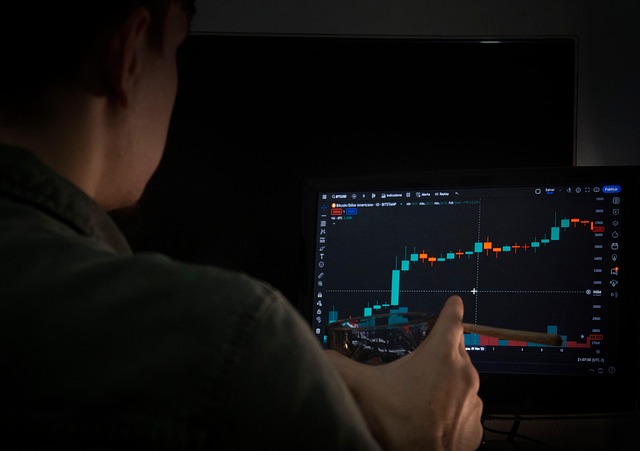
Applying Van Tharp’s Principles to Modern Crypto Trading is essential for navigating the extreme volatility and 24/7 nature of the digital asset market. In the context of Trade Your Way to Financial Freedom: The Ultimate Guide to Van Tharp’s Trading Philosophy, traders must adapt classic risk management to assets that can swing 20% in a single day. By focusing on expectancy and mathematical position sizing rather than just seeking the next “moon” coin, crypto enthusiasts can build sustainable wealth. This approach shifts the focus from picking winners to managing the process, ensuring that sudden market crashes do not result in total portfolio ruin.
Mastering Expectancy and R-Multiples in the Crypto Market
In the fast-paced world of decentralized finance, many traders fall into the trap of looking for high win rates. However, Understanding Expectancy: The Core of Van Tharp’s Trading Success reveals that a system’s profitability is determined by the average gain per dollar risked. In crypto, where “fat-tail” events are common, tracking R-Multiples: A Revolutionary Way to Track Trading Performance – Van Tharp is critical. A single 10R trade (where the profit is ten times the initial risk) can compensate for several 1R losses, which are frequent during volatile consolidation phases.
Position Sizing: The Shield Against Volatility
Crypto markets are notorious for liquidations. To survive, traders must implement Position Sizing Mastery: Protecting Your Portfolio from Ruin – Van Tharp. Instead of allocating a fixed percentage of their capital to a coin, Tharpian traders define a specific risk amount (the “R”) based on a technical stop-loss. This ensures that even if a token drops significantly, the total account impact is limited to a small, predetermined percentage (e.g., 1%).
Psychology and the Crypto Mindset
The “Fear of Missing Out” (FOMO) and “Fear, Uncertainty, and Doubt” (FUD) are the primary drivers of crypto price action. Tharp argued that The Psychology of the Trader: Why Mindset Trumps Method – Van Tharp is the most important factor in success. In crypto, where social media hype can cloud judgment, maintaining a neutral psychological state is the only way to execute a strategy consistently. A trader must stop viewing Bitcoin or Ethereum as “magical” assets and start seeing them as symbols that move according to human emotion.
Building a Robust Crypto Trading Business Plan
Treating crypto as a hobby is a recipe for disaster. Success requires Building a Robust Trading Business Plan Based on Van Tharp’s Teachings. This plan should include objective entry and exit criteria. Because crypto never sleeps, Advanced Exit Strategies: When to Get Out for Maximum Profit By Van Tharp are vital to lock in gains during parabolic runs and protect capital during “flash crashes.”
Practical Examples of Tharpian Principles in Crypto
To better understand how these theories apply in practice, consider the following case studies:
- The Bitcoin Breakout Case: A trader identifies a resistance level at $50,000. Instead of “going all in,” they set a 1R risk of $1,000 with a stop-loss at $48,000. If Bitcoin hits $60,000, they have achieved a 5R return. By using Backtesting for Success: How to Verify Your Trading System – Van Tharp, the trader knows this setup has a positive expectancy over 100 trades.
- The Altcoin Portfolio Rebalance: During a “meme coin” season, a trader uses the System Quality Number (SQN): Evaluating Your Strategy’s Performance – Van Tharp to realize their speculative strategy is high-variance. They adjust their position sizing to only risk 0.25% per trade, protecting their core Bitcoin holdings while still participating in the upside of smaller tokens.
Finding Your Personal Crypto Style
There is no “one size fits all” strategy in digital assets. The Myth of the Holy Grail: Finding Your Personal Trading Style – Van Tharp suggests that the best system is the one that fits your personality. Whether you are a long-term “HODLer” using trend-following exits or a scalp trader using mean reversion, the principles of risk and psychology remain the constant foundations of success.
Conclusion
Applying Van Tharp’s Principles to Modern Crypto Trading transforms a chaotic gamble into a disciplined business. By mastering expectancy, utilizing rigorous position sizing, and managing the psychological pitfalls of FOMO, you can navigate the crypto markets with confidence. Remember that your goal is not to predict the future, but to trade a system with a positive edge. For a deeper dive into these concepts, refer back to our main pillar page: Trade Your Way to Financial Freedom: The Ultimate Guide to Van Tharp’s Trading Philosophy.
Frequently Asked Questions
| How do R-multiples apply to highly volatile crypto assets? | R-multiples are even more important in crypto because they provide a standardized way to measure profit against the massive price swings, allowing you to ignore the dollar amount and focus on the risk-to-reward ratio. |
| Is the System Quality Number (SQN) reliable for crypto? | Yes, SQN helps crypto traders determine if their strategy is performing well or if their profits are simply a result of a lucky bull market “tail wind.” |
| How does Tharp’s “Holy Grail” myth apply to crypto bots? | Many crypto traders seek the perfect “Holy Grail” bot, but Tharp teaches that the real grail is internal; a bot is only as good as the trader’s ability to manage it and follow the plan during drawdowns. |
| Why is position sizing more critical in crypto than in stocks? | Because crypto can gap down 50% or more instantly, proper position sizing ensures that a single catastrophic event does not wipe out your entire account. |
| How can I practice Van Tharp’s mindset principles during a crypto crash? | By viewing the market as a series of probabilities and detaching your self-worth from individual trade outcomes, you can stay calm and execute your pre-planned exit strategies without hesitation. |
| Do Van Tharp’s exit strategies work for 24/7 markets? | Absolutely; using trailing stops and profit-taking targets is essential in crypto to ensure that gains made while you are asleep are not lost by the time you wake up. |