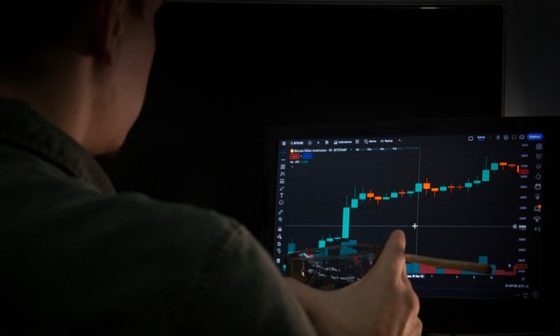
Backtesting for Success: How to Verify Your Trading System – Van Tharp is a critical step for any trader seeking consistent profitability. Unlike traditional backtesting which often focuses solely on net profit, Van Tharp’s approach emphasizes verifying the distribution of R-multiples to understand how a system performs across various market regimes. This process is essential for building confidence in your strategy as part of the broader Trade Your Way to Financial Freedom: The Ultimate Guide to Van Tharp’s Trading Philosophy. By rigorously verifying your system, you ensure that your expectancy is positive and that your strategy is robust enough to survive real-world market volatility.
The Van Tharp Framework for System Verification
For Van Tharp, backtesting is not about “predicting the future” but about “defining the statistical profile” of your edge. To verify a system successfully, you must move beyond the “Holy Grail” myth and focus on whether your system fits your personality and objectives. This verification process is the cornerstone of building a robust trading business plan.
When verifying your system, focus on these three core pillars:
- Expectancy: The average R-multiple you expect to earn per trade.
- System Quality Number (SQN): A score that measures the reliability of your system’s performance.
- Market Regimes: Testing how the system handles bull, bear, and sideways markets.
Practical Advice for Robust Backtesting
To avoid the trap of curve-fitting—where a system looks great on paper but fails in live trading—traders should follow these actionable insights:
| Action | Van Tharp’s Reasoning |
|---|---|
| Focus on R-Multiples | Standardizes risk and allows for a clear understanding of position sizing. |
| Test Exit Strategies | Verification must include advanced exit strategies to capture the full R-multiple distribution. |
| Incorporate Psychology | Simulate your ability to execute the system, as mindset often trumps method. |
Case Studies: Verification in Action
Example 1: The Trend-Following Verification
A trader develops a trend-following system. Initial backtesting shows a low win rate of 35%. However, by applying Van Tharp’s System Quality Number (SQN) analysis, the trader discovers that the large “Big Wins” (10R+) create a high positive expectancy. Verification proves the system is viable, provided the trader has the discipline to endure frequent small losses.
Example 2: Verifying for the Crypto Market
When applying Van Tharp’s principles to modern crypto trading, a trader backtests a mean-reversion strategy. The verification reveals that while the system works in high-volatility sideways markets, it suffers catastrophic losses in “parabolic” bull runs. This insight allows the trader to add a volatility-based filter to their business plan.
Avoiding the “Holy Grail” Trap During Testing
Many traders fail during the verification phase because they are searching for a system that never loses. Van Tharp teaches that the myth of the Holy Grail prevents traders from accepting the inevitable “R” losses that come with any statistical edge. Verification should confirm your system’s flaws just as much as its strengths.
Conclusion: The Path to Verification Success
Backtesting for Success: How to Verify Your Trading System – Van Tharp is about more than numbers; it is about creating a psychological and statistical bridge to professional trading. By focusing on expectancy, SQN, and R-multiples, you transform a set of rules into a verified business asset. Remember that verification is a continuous process that evolves as market conditions change. For a deeper understanding of how these metrics fit into a complete strategy, revisit our main guide: Trade Your Way to Financial Freedom: The Ultimate Guide to Van Tharp’s Trading Philosophy.
FAQ: Backtesting for Success – Van Tharp
1. How many trades are needed for a valid backtest according to Van Tharp?
Van Tharp typically suggested a minimum of 30 to 100 trades to get a statistically significant distribution of R-multiples. This sample size helps ensure that your SQN score is a reliable indicator of future performance.
2. What is the biggest mistake traders make in backtesting?
The biggest mistake is curve-fitting, or optimizing parameters to perfectly fit past data. Van Tharp emphasized that a robust system should work across varying parameters and market regimes rather than just one specific historical period.
3. How does SQN help in the verification process?
The System Quality Number (SQN) measures how easily a system can be traded to achieve specific objectives. It tells you if your expectancy is high enough and consistent enough to warrant aggressive position sizing.
4. Can I backtest my exits separately from my entries?
Yes, Van Tharp often argued that exits are more important than entries. Verifying how different exit strategies affect your R-multiple distribution is a key part of professional system development.
5. How does backtesting relate to “Trade Your Way to Financial Freedom”?
Backtesting is the objective proof that your chosen “way” actually works. It provides the statistical confidence necessary to execute your plan without emotional interference, which is a central theme of Tharp’s philosophy.
6. Should I include commissions and slippage in my verification?
Absolutely. Van Tharp insisted on treating trading as a business; failing to account for “cost of goods sold” (slippage and commissions) will result in a false expectancy and a failing business plan.
7. How do I verify a system for highly volatile assets like Bitcoin?
You must test the system across specific “regime” segments. A system verified for a 2019 crypto market may fail in a 2024 market unless you have accounted for volatility adjusted position sizing and exits.