Building a Robust Trading Business Plan Based on Van Tharp’s Teachings requires moving beyond simple entry signals to treat the market as a professional enterprise. Most participants fail because they treat trading as a hobby, whereas Van Tharp emphasizes that your business is not the “market,” but your “trading system” and your “self.” To achieve success, your plan must integrate psychological discipline, statistical expectancy, and rigorous position sizing to survive various market regimes. By aligning your personal goals with a structured operational framework, you can move toward the concepts outlined in Trade Your Way to Financial Freedom: The Ultimate Guide to Van Tharp’s Trading Philosophy. This approach ensures that every decision is governed by logic rather than emotion.
Validate your strategy with instant backtesting
Backtest LibraryThe Foundation: Your Trading Business Mission Statement
Every successful business starts with a mission. In a Tharpian business plan, this involves identifying your “Why” and your “How.” Van Tharp often argued that you do not trade the markets; you trade your beliefs about the markets. Therefore, your business plan must explicitly state your beliefs regarding market behavior. Are you a trend follower? A mean-reversion trader? Understanding your personal style is critical to avoiding The Myth of the Holy Grail: Finding Your Personal Trading Style – Van Tharp.
Your plan should detail the following administrative and psychological components:
- Disaster Recovery: What happens if your internet fails or your broker goes bust?
- Psychological Prep: Daily routines for maintaining a “peak performance” state, as explored in The Psychology of the Trader: Why Mindset Trumps Method – Van Tharp.
- Capitalization: How much capital is dedicated to the business and what is the maximum drawdown you can psychologically handle?
Operational Components: Expectancy and System Quality
A robust business plan must quantify the “product” you are selling. In trading, your product is your system’s edge. This is defined by Understanding Expectancy: The Core of Van Tharp’s Trading Success. Without a positive expectancy, your business is guaranteed to fail over time. Your plan should document your Backtesting for Success: How to Verify Your Trading System – Van Tharp results to prove the system works before risking real capital.
Furthermore, you must use the System Quality Number (SQN): Evaluating Your Strategy’s Performance – Van Tharp to determine how “tradable” your system is. A high SQN allows for more aggressive position sizing, while a low SQN may require more conservative management or further refinement.
Strategic Execution and Risk Management
The core of your business plan’s operations lies in how you manage risk and exits. Van Tharp famously taught that position sizing is responsible for up to 90% of the variation in professional trader performance. Your business plan must have a dedicated section for Position Sizing Mastery: Protecting Your Portfolio from Ruin – Van Tharp, detailing exactly how much capital is at risk on any single trade (your “R”).
Additionally, the plan should outline Advanced Exit Strategies: When to Get Out for Maximum Profit By Van Tharp. This includes initial stops, trailing stops, and profit targets, all tracked through R-Multiples: A Revolutionary Way to Track Trading Performance – Van Tharp.
Case Studies in Tharpian Business Planning
Case Study 1: The Trend-Following Enterprise
A systematic trend follower developed a business plan focused on high-R winners and low win rates (35%). Their plan explicitly prohibited manual intervention during drawdowns. By tracking their R-multiples, they realized their “business” was profitable because their average winner was 5R while their average loser was 1R. This clarity allowed them to scale their capital during a major bull market because they had a pre-defined position sizing model based on their SQN.
Case Study 2: Transitioning to Crypto Markets
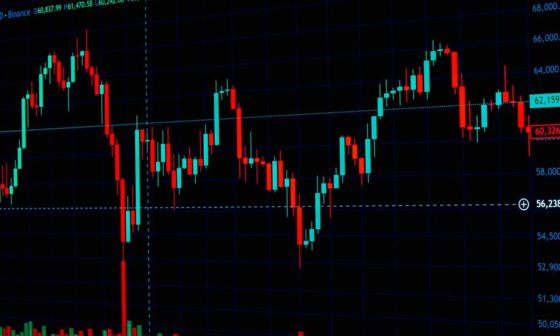
A traditional equity trader used Tharp’s framework for Applying Van Tharp’s Principles to Modern Crypto Trading. Their business plan accounted for the extreme volatility of Bitcoin by reducing their “percent risk” per trade from 1% to 0.25%. This adjustment, documented in their written plan, saved their business during a 50% market flash crash, as their total portfolio drawdown remained under 5%.
Conclusion
Building a robust trading business plan based on Van Tharp’s teachings is the difference between gambling and professional investing. By focusing on your psychology, quantifying your system through expectancy and SQN, and mastering position sizing, you create a repeatable process for wealth generation. Your plan should be a living document that evolves as you gain more data through R-multiple tracking. To truly master these concepts and integrate them into a holistic strategy, revisit the foundations in Trade Your Way to Financial Freedom: The Ultimate Guide to Van Tharp’s Trading Philosophy.
Frequently Asked Questions
| Why is a business plan more important than a trading strategy? | A strategy only tells you when to enter and exit, but a business plan covers capitalization, psychology, and risk management, which are the true drivers of long-term survival. |
| How does SQN help in a trading business plan? | The System Quality Number (SQN) tells you how easily you can meet your financial objectives with your system, helping you decide how much to “work” that specific strategy. |
| What is the “R” in a Tharpian business plan? | “R” stands for your initial risk. A robust plan focuses on achieving high R-multiples (returns relative to risk) rather than just a high win/loss percentage. |
| How often should I update my trading business plan? | You should review your plan quarterly to ensure your market beliefs are still valid and adjust your position sizing based on the latest performance data. |
| Does a Tharp-based plan work for crypto trading? | Yes, the principles of expectancy and position sizing are universal and are especially effective in managing the high volatility found in modern crypto markets. |
| What is the most common mistake in a trading plan? | The most common mistake is focusing entirely on entry rules while ignoring position sizing and the psychological requirements needed to execute the plan. |