Understanding Martin Pring’s Core Principles: Mastering Market Momentum and Trend Analysis is essential for any trader seeking to navigate volatile markets with precision. These principles emphasize that price trends are not random but driven by shifts in investor psychology, which can be measured through systematic analysis. As a central component of Technical Analysis Explained: The Ultimate Guide to Martin Pring’s Trading Methodology, this approach focuses on the synergy between timeframes and the confirmation of price movements through momentum oscillators. By mastering these core tenets, traders can effectively identify when a trend is losing steam or gaining strength, allowing for high-probability entries and exits based on empirical evidence rather than speculation.
Validate your Momentum strategy with comprehensive backtesting
Backtest MomentumThe Synergy of Trend and Momentum
In Pring’s methodology, a trend is the general direction of price, while momentum acts as the “speedometer” of that trend. A healthy trend requires momentum to move in the same direction. When price makes a new high but momentum fails to do so, a divergence occurs, signaling a potential reversal. This is a foundational concept in The Psychology of Technical Analysis: Insights from Martin Pring’s Research, where the focus shifts from price action to the underlying strength of the participants.
To apply this practically, Pring often utilizes multi-stage momentum indicators. By combining different timeframes, he seeks to filter out “noise.” This is where his advanced tools come into play, such as those discussed in the guide on How to Use Martin Pring’s Special K Indicator for Long-Term Trend Identification. The Special K combines short, medium, and long-term momentum into a single curve, providing a holistic view of the market’s health.
Practical Application and Momentum Indicators
Actionable insights from Pring’s principles often involve the use of the Rate of Change (ROC) and Relative Strength Index (RSI). Unlike many modern traders who use these for overbought/oversold signals, Pring uses them to identify trend maturity. For instance, Backtesting Martin Pring’s Momentum Strategies: A Data-Driven Review shows that waiting for a momentum crossover to confirm a price breakout significantly increases the win rate compared to trading price alone.
Furthermore, Pring highlights the importance of volume as a secondary confirmation. He argues that a trend without volume is a house built on sand. For a deeper dive into this specific aspect, see The Role of Volume in Technical Analysis: Lessons from Martin Pring. Integrating volume helps traders avoid the “bull traps” often found in low-liquidity environments.
Examples and Case Studies
To illustrate Martin Pring’s Core Principles: Mastering Market Momentum and Trend Analysis, consider the following real-world applications:
- Case Study 1: The S&P 500 Divergence (2021-2022): During late 2021, the S&P 500 continued to reach new highs, but the ROC across multiple timeframes began to flatten. Applying Pring’s principles of momentum exhaustion allowed analysts to anticipate the volatility of early 2022 well before the price broke major moving averages.
- Case Study 2: Sector Rotation in Inflationary Periods: By using momentum to track relative strength between sectors, traders can identify shifts from growth to value stocks. This follows the strategies outlined in Martin Pring’s Guide to Sector Rotation and Theme Investing, where momentum serves as the primary signal for moving capital.
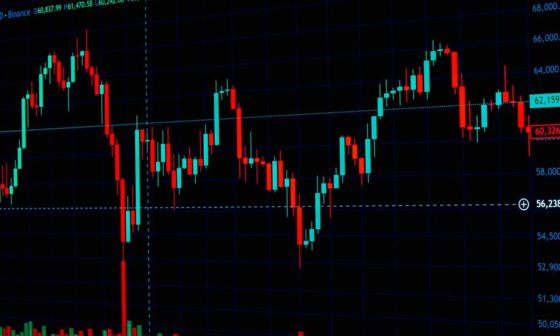
- Case Study 3: Bitcoin’s Parabolic Moves: Applying these classic techniques to digital assets reveals that momentum often peaks long before price. Traders using Pring’s methods in crypto often exit near the top by watching for “parabolic exhaustion” in momentum oscillators, a technique further explored in Applying Martin Pring’s Technical Analysis to Crypto Currencies and Volatile Assets.
Advanced Techniques: Patterns and Modern Integration
While momentum is vital, it should not be used in isolation. Pring integrates it with chart patterns and candlestick analysis. You can learn more about these combinations in Identifying High-Probability Chart Patterns Using Pring’s Methodology and Martin Pring’s Approach to Candlestick Patterns and Price Action. In the modern era, these “old school” rules are being tested against algorithms. For those interested in the future of the field, Martin Pring vs. Modern AI: Can Machine Learning Enhance Classic Technical Analysis? offers a fascinating look at how data science validates Pring’s original theories.
Conclusion
Mastering Martin Pring’s Core Principles: Mastering Market Momentum and Trend Analysis requires a disciplined focus on the interplay between price, momentum, and volume. By understanding that momentum leads price and that divergences are the ultimate warning signs, traders can move away from reactive trading toward a proactive, evidence-based strategy. These core principles remain as relevant today as they were decades ago, providing a robust framework for analyzing any liquid financial market. To see how these principles fit into the broader landscape of market theory, revisit our comprehensive guide on Technical Analysis Explained: The Ultimate Guide to Martin Pring’s Trading Methodology.
Frequently Asked Questions
| Question | Answer |
| What is the primary goal of Pring’s momentum analysis? | The primary goal is to identify the strength and maturity of a trend by observing whether the “speed” of price movement (momentum) is accelerating or decelerating relative to price. |
| How does Pring define a momentum divergence? | A divergence occurs when price hits a new high or low, but the momentum indicator fails to reach a corresponding new peak or trough, signaling the trend is losing steam. |
| Why is the Special K indicator unique in trend analysis? | The Special K is unique because it combines multiple timeframes (short, medium, and long-term) into one indicator, helping traders spot major trend reversals across the entire market cycle. |
| Can Pring’s principles be applied to high-volatility assets like Crypto? | Yes, Pring’s principles are universal; however, they require adjustments in oscillator settings to account for the increased price velocity found in assets like Bitcoin. |
| How does volume support Pring’s trend analysis? | Pring views volume as “fuel” for the trend; a rising price on falling volume suggests a weak trend that is likely to reverse soon. |
| Is Pring’s methodology still relevant in the age of AI and Algos? | Absolutely. While AI can process data faster, Pring’s core principles regarding investor psychology and momentum exhaustion are the same “human” factors that AI algorithms often exploit. |