The landscape of futures trading has fundamentally shifted. Relying solely on lagging indicators or simple trend lines is no longer sufficient to secure a sustainable edge in today’s highly competitive electronic markets. Success now belongs to the systematic, data-driven trader—one who seamlessly integrates cyclical market patterns (seasonality), microscopic market mechanics (order flow), predictive technology (AI/ML), and rigorous statistical validation (backtesting). This guide serves as the definitive resource, linking you to specialized deep-dives across the four pillars of modern quantitative futures trading. Whether you are seeking to optimize your entry timing using real-time market depth or deploy fully automated, AI-enhanced strategies, mastering these advanced concepts is the gateway to navigating the volatile and rewarding world of futures markets with superior confidence and precision.
Validate your strategy with instant backtesting
Backtest LibraryI. Mastering Seasonal and Cyclical Market Dynamics
Seasonality refers to the predictable, recurring price patterns that occur at the same time each year, driven by factors ranging from physical supply chains to institutional reporting cycles. While not a standalone signal, seasonality provides a high-probability context for initiating trades. By combining these cycles with fundamental macroeconomic analysis, traders can significantly improve their entry timing and trade duration.
Energy futures, in particular, exhibit strong and verifiable seasonal tendencies. Understanding these cycles is critical for capital preservation and growth. For traders focused on commodities, learning how to confirm and validate these recurring patterns is essential, particularly when Identifying High-Probability Seasonal Trades in Crude Oil and Natural Gas Futures. This analysis moves beyond simple calendar dates, incorporating concepts like weather forecasts, inventory reports, and global production schedules to confirm the validity of the expected price trajectory.
Moreover, robust long-term strategies often rely on identifying when markets have become fundamentally mispriced relative to their historical cyclical norms. This is the foundation of mean reversion. By integrating advanced volatility filters, traders can refine their setups, ensuring they only enter trades when volatility suggests an imminent snapback. This methodological approach ensures that strategies focused on Designing Mean Reversion Futures Strategies Using Advanced Seasonality and Volatility Filters yield the highest possible risk-adjusted returns by avoiding choppy, non-trending environments.
II. Leveraging Commitment of Traders (COT) Data
A crucial macro component that informs futures seasonality and trend direction is the positioning of large institutional players. The Commitment of Traders (COT) report, released weekly, offers a snapshot of how commercial hedgers, non-commercial speculators, and non-reportable small traders are positioned in various markets. This data provides invaluable insight into market sentiment and potential trend exhaustion.
However, simply reading the net long/short positions is insufficient. True advantage comes from transforming raw COT data into actionable trade signals. This involves normalization, calculating extremes, and comparing the sentiment across related markets. By focusing on positioning outliers, savvy traders are able to create predictive indicators. We provide a detailed look at how you can enhance your systematic approach by Developing Custom Filters Based on Commitment of Traders (COT) Data for Futures Strategies, moving beyond basic sentiment indicators to create highly specialized predictive tools.
III. Precision Order Flow Analysis and Execution
Order flow analysis provides the microscopic view needed to determine precisely when and where institutional money is actively entering or exiting the market. This method involves analyzing real-time trade data—not just price movement—to identify immediate supply and demand imbalances.
Mastering Volume Profile and Market Depth
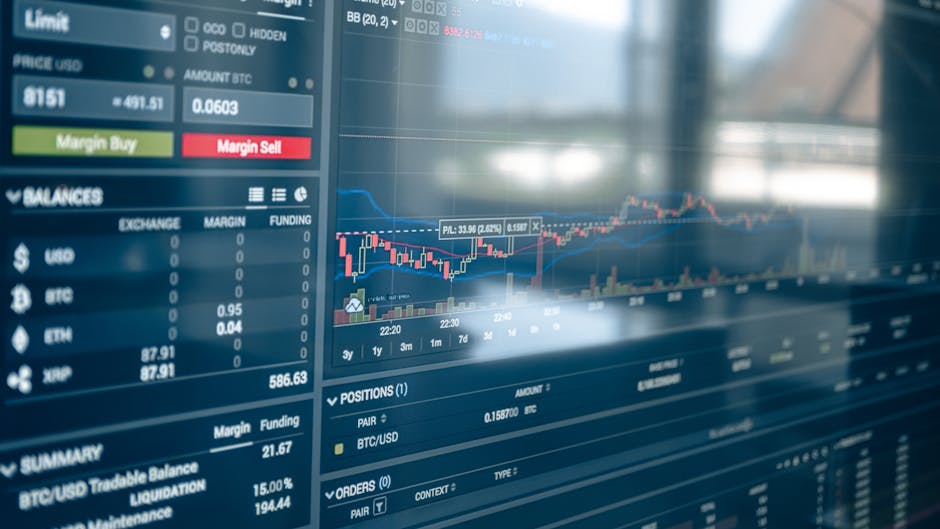
Volume Profile measures how much trading volume occurs at specific price levels over a designated period, helping identify high-volume nodes (HVN) and low-volume nodes (LVN) that act as key support and resistance. Simultaneously, analyzing market depth (the Level 2 order book) shows resting bids and offers, indicating current liquidity and potential price pivots. For systematic traders aiming for surgical entries, success hinges on Mastering Volume Profile and Market Depth for Precision Futures Entries. These tools allow the identification of institutional accumulation zones before the actual price movement begins.
Applying Order Flow to Fixed Income
The complexity of order flow analysis varies significantly across markets. Applying these techniques to low-volatility, deep markets like interest rates requires focused expertise. By systematically observing large block trades and sustained absorption in the depth of market, traders can confirm institutional interest. Specifically, learning the nuances of Applying Order Flow Analysis to Treasury Futures: Identifying Institutional Accumulation Zones provides a significant edge in navigating these highly liquid yet often slow-moving instruments.
Using Footprint Charts for Confirmation
Footprint charts take order flow analysis one step further by displaying the executed volume (delta) at each price level, distinguishing between buying and selling pressure. They provide essential confirmation just before or during execution. For seasonal strategies, where the macro setup is known, the Footprint chart offers the perfect execution filter. We explore exactly How to Use Footprint Charts to Confirm Seasonal Reversals in E-mini S&P Futures, ensuring that the expected reversal is actively being supported by aggressive institutional trading activity at key turning points.
IV. The Integration of Artificial Intelligence (AI) and Machine Learning (ML)
AI and ML have become indispensable tools for modern futures traders, moving far beyond simple signal generation into complex risk management and market detection.
Automated Strategy Deployment
Once a successful strategy is developed, the ability to execute it efficiently and without human error is paramount. Machine learning models can handle vast quantities of market data—combining seasonality, order flow, and external indicators—to generate high-confidence trading decisions. The operational challenge lies in transitioning a successful algorithm from the backtesting environment to live deployment. A comprehensive approach involves establishing robust data pipelines, minimizing latency, and continuous monitoring, all detailed in our guide on Building and Deploying Machine Learning Models for Automated Futures Strategy Execution.
AI for Risk Optimization
One of the most powerful applications of predictive AI is in optimizing risk management components that traditional strategies handle poorly. Determining the optimal stop-loss placement is highly dynamic and depends on current volatility, liquidity, and perceived institutional interest. Similarly, position sizing should be adjusted based on the model’s confidence level. Leveraging predictive technology allows traders to fine-tune these critical parameters. Our specialized content explores Using Predictive AI to Optimize Stop-Loss Placement and Position Sizing in Futures Trading, fundamentally improving the strategy’s overall risk profile.
Detecting Market Manipulation
In high-frequency environments, systematic traders must contend with manipulative behaviors designed to mislead the market, such as spoofing (placing large orders without intent to fill) and iceberg orders (large orders hidden through fragmentation). Detecting these sophisticated tactics manually is impossible. However, AI can analyze real-time order book submissions and execution patterns to flag suspicious activity immediately. Understanding how to apply this technology is key to maintaining a fair execution environment, particularly when Leveraging AI to Detect Spoofing and Iceberg Orders in High-Frequency Futures Trading.
V. Backtesting Mastery and Strategy Validation
A data-driven strategy is only as good as its backtest. Rigorous, realistic backtesting is the cornerstone of quantitative trading, verifying that an edge exists and is robust enough to withstand real-world market turbulence.
Selecting the Right Software
Futures trading requires precise data—tick-level information, accurate historical market depth, and low-latency execution simulation. Standard retail backtesting platforms often fall short in handling the complexity and volume of futures data, potentially leading to inaccurate results or curve-fitting. Choosing the appropriate tools is the first step toward validation. We provide a detailed comparison to assist you in Choosing the Best Backtesting Software for Futures: A Comparative Review of Features and Accuracy, emphasizing features critical for high-resolution analysis.
Metrics That Matter
Once a backtest is complete, the focus must shift from basic profitability to risk-adjusted performance. Metrics like win rate and total profit are often vanity statistics that hide fatal flaws in strategy design. A professional strategy validation process demands deep scrutiny of risk exposure. Traders must understand how to look Beyond Win Rate: Essential Metrics for Validating Futures Strategy Robustness (Drawdown, Sharpe Ratio). Metrics such as Maximum Drawdown (identifying worst-case capital exposure) and the Sharpe Ratio (return per unit of risk) are essential for determining the long-term viability and capital requirements of any futures strategy.
VI. The Psychology of Data-Driven Trading
Even the most perfectly engineered strategy can fail if the human operator succumbs to psychological pressures. Data-driven trading introduces a unique challenge: managing data overload and the temptation to override the algorithm.
Maintaining Discipline in Complexity
Modern data pipelines provide an overwhelming amount of real-time information: market depth changes, delta confirmation, COT signals, AI predictions, and macro news feeds. For human discretionary traders attempting to integrate this data manually, the risk of paralysis by analysis is extremely high. Understanding The Role of Data Overload in Trading Psychology: Maintaining Discipline in Data-Rich Futures Environments is paramount. Successful systematic traders establish rigid protocols, trusting the models and focusing only on the specific validation points needed for execution, thereby minimizing emotional interference and maintaining consistent discipline.
Conclusion
The ultimate guide to data-driven futures trading is not about mastering one tool, but integrating four distinct disciplines: predictive seasonality, high-resolution order flow analysis, automated AI deployment, and rigorous statistical validation. By treating these components as interconnected pillars—where seasonality provides context, order flow provides timing, AI optimizes risk, and backtesting ensures robustness—futures traders can build an enduring, systematic edge. This comprehensive approach is necessary to move past conventional limitations and achieve superior, risk-managed returns in the fiercely competitive futures market.
FAQ: Data-Driven Futures Trading
- What is the difference between seasonality and cyclical analysis?
- Seasonality refers to patterns that occur strictly tied to the calendar year (e.g., higher natural gas demand in winter). Cyclical analysis is broader, referring to recurring patterns that may not adhere to a calendar schedule but instead depend on the life cycle of the economy or the instrument itself (e.g., commodity supercycles or inventory cycles).
- Why is tick data crucial for futures backtesting?
- Futures, especially E-mini contracts, are high-frequency instruments. Strategies relying on order flow, Volume Profile, or intraday price action must have tick-level data fidelity. Using minute or hour bars introduces significant lookahead bias and inaccuracy, especially regarding execution prices and stop-loss placement.
- How does AI detect spoofing and iceberg orders?
- AI models, particularly those using time-series analysis and clustering algorithms, track submission rates, order size changes, and cancellation ratios in the market depth. Spoofing is identified by rapid order cancellation without execution, while iceberg orders are identified by large, continuous prints filling at a single price level, often indicating a hidden large resting order being executed incrementally.
- Is Order Flow analysis effective in highly automated markets?
- Yes, absolutely. While automation introduces noise (HFT activity), order flow analysis, particularly via Volume Profile, Market Depth, and Footprint Charts, remains the most effective way to identify levels where human-operated institutional funds are accumulating or distributing inventory, regardless of the HFT traffic occurring between those critical zones.