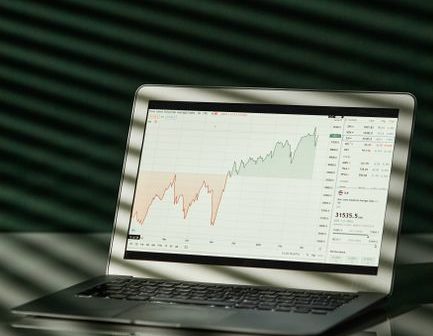
The transition from discretionary trading to automated algorithmic futures trading fundamentally shifts the primary challenge facing the trader. It moves from mastering market timing to mastering self-discipline. While the algorithm executes trades with perfect mechanical precision, the human operator remains the weak link, susceptible to fear, greed, and loss aversion. Achieving The Psychological Edge in Automated Trading: When to Intervene and When to Trust the Algorithm is the ultimate step in truly automating your strategy, separating profitable quants from those who consistently sabotage their own systems during periods of routine volatility.
Validate your strategy with instant backtesting
Backtest LibraryThe Illusion of Control: Why Human Intervention Fails
Algorithms are designed based on probabilities derived from historical data. They do not care if the last five trades lost money; if the sixth trade meets the statistical criteria, the algorithm executes it. Human traders, however, are wired for immediate emotional response. When a well-validated strategy enters a drawdown period—a statistically normal occurrence—the human instinct is to pause the system, widen a stop-loss, or override a signal, believing they can “see” something the code cannot.
This intervention, driven by the illusion of control, almost always destroys the strategy’s long-term Expected Value (EV). The overridden trade is often the one that was statistically due for a profit, validating the strategy’s inherent logic. When designing your trading bot, as discussed in Building Your First Algorithmic Futures Trading Bot: A Step-by-Step Guide to Execution, every line of code represents a deliberate choice. Disrupting that choice undermines the integrity of the entire system.
Defining Trust: Metrics and Validation
Trust in an algorithm must be quantitative, not emotional. It is earned through rigorous testing and consistent performance within expected statistical boundaries. Before deployment, a robust strategy must be extensively backtested and validated across multiple market regimes.
Key metrics that define the boundaries of trust include:
- Maximum Historical Drawdown (MDD): This is the crucial psychological boundary. If the algorithm has historically withstood a 10% drawdown, you must psychologically prepare to accept that 10% drawdown in live trading without interfering.
- Sharpe Ratio and Sortino Ratio: These measures confirm the quality of risk-adjusted returns. Trust is easier when you know the system generates high returns relative to its volatility.
- Systematic Risk Filters: The algorithm itself should incorporate pre-defined filters, such as those covered in Optimizing Futures Trading Algorithms: The Role of Strategy Filters (Stop-Loss and Take-Profit). If the algorithm adheres to these filters, it is fulfilling its trust contract.
As long as the strategy is trading within the 1-sigma or 2-sigma deviation of its historical performance metrics, the trader’s primary role is inaction.
The Intervention Protocol: When Action is Necessary
Intervention should never be market-driven (e.g., “The futures contract is dropping too fast!”) but must be based on a procedural failure. A successful algorithmic trader operates under a strict, written Intervention Protocol—a checklist of non-negotiable reasons to halt the system.
Case Study 1: The Systemic Breach
Imagine running an automated calendar spread strategy (Calendar Spread Strategies in Futures). The strategy’s hard-coded risk management dictates that if the daily loss exceeds 3% of capital, all open positions must be flat. If, due to a severe system lag or an API failure, the algorithm fails to execute the required stop-loss and the loss balloons to 5%, that is a procedural breach. Intervention is justified because the algorithm failed to execute its mandated risk controls, transforming a quantitative problem into a catastrophic operational error.
Justifiable Reasons for Intervention (The “Emergency Stop”):
- Technical Failure: Loss of connectivity, server crash, or API malfunction preventing orders from being sent or filled.
- Brokerage Issue: Unexpected margin calls, change in exchange rules, or technical errors on the broker’s side.
- Model Invalidation: A verified, statistically significant breach of historical maximum drawdown (e.g., exceeding 1.5 times the MDD), suggesting a fundamental and permanent shift in the market structure that invalidates the core assumptions of the strategy.
- Logic Error: Discovering a bug in the code that causes the strategy to violate its own risk parameters (e.g., trading double the intended contract size).
Maintaining the Psychological Edge Through Discipline
The psychological edge is maintained not by intervening successfully, but by not intervening unnecessarily. This requires shifting focus from the P&L curve to the operational health of the system.
One powerful technique is the “Fire-and-Forget” deployment model. Once the algorithm is vetted, robustly backtested, and placed into production, the quantitative trader should limit interaction to nightly or weekly monitoring of performance reports. Excessive screen time fosters emotional reactivity.
Case Study 2: The Drawdown Tolerance Test
A quantitative trader deploys a mean-reversion algorithm focused on crude oil futures spreads (Introduction to Futures Spread Trading). Backtests showed a maximum drawdown of $5,000. In live trading, the algorithm hits a $4,800 drawdown due to geopolitical volatility. The human trader is terrified and considers shutting it down, fearing a total collapse.
Trusting the algorithm means understanding that this volatility is within the expected statistical range. Shutting down the strategy at $4,800 prevents the system from capturing the subsequent mean reversion move, which would typically restore the equity curve. The true test of discipline is allowing the algorithm to execute the statistical path it was designed for, even when that path feels painful. Intervention here would convert a temporary drawdown into a permanent realized loss.
For further exploration of disciplined execution and risk management, review resources like Mastering Portfolio Risk: Using Futures Contracts for Effective Hedging and Delta Neutrality.
Conclusion
The promise of automated futures trading is to remove human error and emotion from execution. To realize this promise, the quantitative trader must develop a robust psychological firewall. The core principle is simple: Trust the statistics derived from your rigorous backtesting unless an operational or structural failure, defined by your pre-written Intervention Protocol, forces your hand. The psychological edge is not about making better trading decisions than the algorithm; it is about maintaining the discipline to let the algorithm do its job, thereby maximizing the strategy’s long-term statistical advantage.
To learn more about structuring reliable quantitative systems and integrating advanced strategies, return to the main resource: The Ultimate Guide to Algorithmic Futures Trading: Strategies, Hedging, and Automation.
Frequently Asked Questions (FAQ)
What is the difference between an emotional intervention and a necessary intervention?
An emotional intervention is reactive, triggered by real-time P&L fluctuations (fear or greed), and violates the strategy’s statistical probability. A necessary intervention is procedural, triggered by a technical malfunction (e.g., server failure, API disconnect) or a statistical breach that exceeds the historically accepted maximum deviation, indicating model failure rather than routine volatility.
How does paper trading help build trust in a live algorithm?
Paper trading (or simulation) allows the trader to observe the algorithm performing under real-time conditions without risking capital. This process validates that the code executes correctly and adheres to its risk limits during drawdowns and unexpected volatility, thus establishing the quantitative foundation required for psychological trust before going live.
Should I intervene if an unexpected ‘Black Swan’ event occurs (e.g., sudden pandemic or war)?
Intervention during Black Swan events is justified only if the event causes the strategy to violate its defined risk parameters (e.g., maximum daily loss is blown past). If the algorithm is structured with robust cross-market hedging or volatility filters (like those used in Cross-Market Hedging), it should manage the shock. Intervention based purely on fear of the news event, rather than statistical failure, should be avoided.
What is a ‘Runaway Algorithm’ and how do I prevent it?
A Runaway Algorithm is one that enters a feedback loop or a catastrophic error state, typically due to a coding bug or misinterpretation of market data, leading to uncontrolled accumulation of losses or positions. Prevention involves stringent testing, implementing hard-coded, external “circuit breaker” limits (like position size caps and daily loss limits), and regular code audits.
If my strategy performs well for six months but then enters a deep 50% drawdown, when is it time to halt the strategy permanently?
The halt condition should be predefined. If the 50% drawdown significantly exceeds the strategy’s Maximum Historical Drawdown (MDD) plus an established buffer (e.g., 1.5x MDD), it suggests the market regime has shifted fundamentally, invalidating the model’s core assumptions. At this point, the strategy needs to be shut down, recalibrated, and re-backtested against the new market realities, rather than being allowed to continue generating statistically improbable results.